
Mar 19,2026
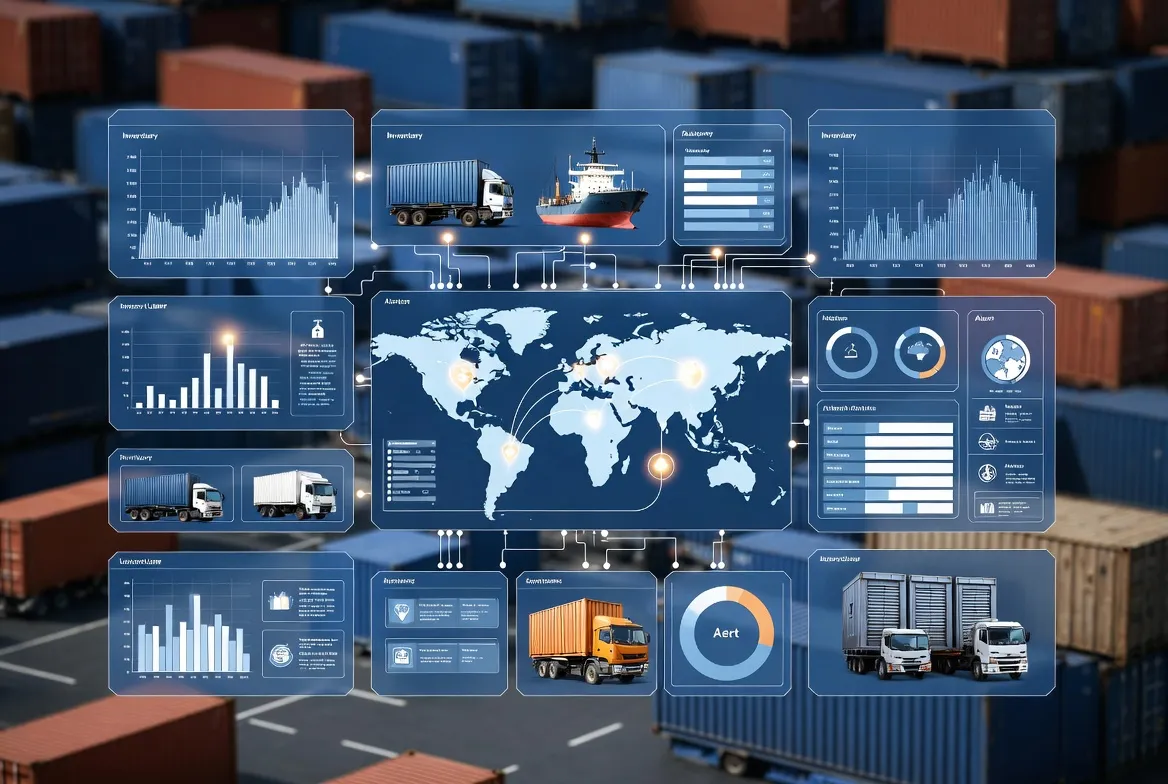
Key Capabilities of Supply Chain Data Visibility Solutions
Cross-border parcel shipping is the movement of individual packages between countries through postal, express or other delivery networks. It connects order processing, carrier selection, international transportation, customs clearance and last-mile delivery.
For e-commerce sellers, the main decision is how to balance delivery expectations with total shipping cost. For third-party logistics providers, parcel operators and consolidators, the challenge is to coordinate customers, carriers and destination partners while maintaining accurate shipment information.
This guide compares the main shipping models, explains the operational process and identifies the capabilities to look for in cross-border parcel-management software.
Cross-Border Parcel Shipping Options at a Glance
| Shipping model | Often suitable for | Main advantage | Main consideration |
|---|---|---|---|
| Economy postal | Lightweight parcels with flexible delivery expectations | Broad postal coverage and accessible services | Transit times and tracking detail vary |
| Commercial express | Urgent or customer-critical shipments | Faster service options and structured shipment visibility | Higher rates and additional charges |
| Dedicated-line delivery | Recurring volumes to specific markets | Routes designed around particular destinations | Performance depends on partner coordination |
| Overseas fulfilment | Predictable demand in established markets | Inventory closer to customers | Upfront inventory, storage and replenishment costs |
These models can coexist. A business may use express for urgent orders, dedicated lines for regular volumes and overseas fulfilment for established products.
Consolidation is a transportation process rather than a separate delivery model. It groups parcels for part of their journey and can support several shipping services.
Understanding the Main Shipping Models
Postal Parcel Services
Postal parcels move through origin and destination postal networks. Examples include China Post, Hongkong Post and Singapore Post.
Coverage, tracking events, compensation and delivery expectations depend on the specific service and destination. Economy postal products and postal express services such as EMS should be compared separately.
Advantages
Broad reach through postal networks
Accessible options for smaller shippers
Potentially economical services for lightweight parcels
Delivery through established destination operators
Considerations
Transit times may be less predictable than premium services
Tracking detail can change between operators
Investigating exceptions may involve several parties
Claims conditions differ by service
Before selecting a postal product, check its weight limits, tracking coverage, prohibited goods and compensation terms.
Read more about the postal parcel shipping process and China postal parcels.
International Commercial Express
Providers such as DHL, UPS and FedEx offer international shipping through their transport and delivery networks.
Express services are often considered for urgent orders, valuable products or shipments requiring a defined delivery service. The appropriate option depends on the route, goods and customer requirements.
Advantages
Faster delivery options on supported routes
Detailed shipment tracking
Structured pickup and customer-support processes
Services designed for time-sensitive shipments
Considerations
Higher transportation costs than some economy options
Fuel, remote-area and other charges may apply
Dimensional weight can affect the billed amount
Product eligibility and service availability vary
Compare the complete service conditions rather than the base price alone.
Our guide to the difference between postal and courier services explains the operating differences.
Dedicated-Line and Consolidated Delivery
Dedicated-line services focus on particular countries or regions. A provider may collect parcels from several merchants, consolidate them for international transportation and transfer them to destination partners for final delivery.
Linehaul refers to transportation between hubs. Direct injection refers to placing shipments into a destination delivery network. These activities can form part of a dedicated-line service, but the terms describe different stages.
Advantages
Services tailored to particular routes
Potential savings from consolidation
A balance between economy and premium delivery
Flexibility to combine international and local partners
Considerations
Coverage depends on supported routes
Service quality relies on several partners
Parcels must remain identifiable during consolidation and separation
Customs responsibilities and returns arrangements require clear agreements
For example, an operator consolidating parcels for the United Kingdom needs to maintain the connection between each customer order, parcel label, transport grouping and destination tracking number.
Overseas Warehousing and Local Fulfilment
Overseas fulfilment places inventory in the destination market before customers order. After purchase, the warehouse picks, packs and dispatches the order through a local delivery service.
The international movement happens during inventory replenishment rather than after every customer order.
Advantages
Shorter delivery distances after purchase
Access to local parcel services
More practical local returns
Potential cost benefits at sufficient volume
Considerations
Working capital is committed before sales
Storage and handling fees affect profitability
Forecasting errors can cause overstock or stockouts
Inventory, warehouse and delivery information must remain connected
A mixed model can be useful: local fulfilment for predictable demand and direct shipping for new markets or slower-moving products.
The Cross-Border Parcel Shipping Process
1. Receive and Validate Orders
Orders may arrive through customer APIs, e-commerce integrations, spreadsheets or manual entry.
Check recipient details, addresses, product descriptions, declared values, weights and dimensions. Validate the information required for the selected destination and service.
Correcting errors before dispatch reduces repeated work later.
2. Select the Carrier and Service
Match the shipment to an eligible service using destination coverage, parcel characteristics, delivery expectations and total cost.
A multi-carrier operation needs consistent selection rules, with a process for handling customer-specific exceptions.
3. Prepare Labels and Customs Information
Generate the carrier label and connect it to the original order.
Prepare the documents and electronic data required for the route. Requirements depend on the goods, service and destination. Software can help validate and organize information, but it does not guarantee customs acceptance.
4. Collect, Sort and Consolidate
Receive and scan parcels, then assign them to the appropriate route or transport grouping.
Preserve the relationship between individual orders, parcels, bags or containers and international transport references. This allows teams to locate a parcel even when it travels within a larger shipment.
5. Coordinate International Transportation and Clearance
Monitor transport milestones and clearance updates. Assign responsibility for missing information, holds and other exceptions.
Distinguish transport arrival from customs release: these are separate operational events.
6. Complete Last-Mile Delivery
Transfer parcels to the destination delivery network. Return delivery-attempt, exception and delivery-confirmation events to the central shipment record.
Customers and support teams should be able to follow the same shipment despite changes in carrier or tracking reference.
7. Manage Exceptions and Returns
Use a defined process for incorrect addresses, missed deliveries, damage, customs delays and returns.
Record the issue, responsible partner, next action and resolution. Retain the original order and shipment history throughout the process.
How to Evaluate a Shipping Partner
| Evaluation area | Questions to ask |
|---|---|
| Coverage | Which countries and postal codes are supported? |
| Delivery | What are the service commitments and cut-off times? |
| Product eligibility | Are the actual goods accepted on this route? |
| Total cost | Which surcharges, handling and returns charges apply? |
| Collection | What are the pickup requirements and minimum volumes? |
| Customs | Who prepares, submits and corrects declaration information? |
| Tracking | Which events are available, and how are they shared? |
| Exceptions | Who investigates delays and failed deliveries? |
| Claims | What evidence, deadlines and compensation terms apply? |
| Integration | Can orders, labels and tracking connect to your existing systems? |
Test a representative shipment before committing large volumes. Include an exception scenario, because routine deliveries alone do not show how the partnership will handle problems.
Why Manual Parcel Operations Become Difficult to Scale
As volumes grow, logistics teams often face:
Different order formats across customers
Repeated entry into carrier portals
Inconsistent labels and declaration information
Tracking references disconnected from internal orders
Delays hidden in separate partner systems
Manual customer updates
Carrier invoices requiring extensive reconciliation
Outsourcing transportation does not remove the need to manage data and responsibilities across partners.
See what parcel management involves for a closer look at this operational layer.
What to Look for in Parcel-Management Software
Cross-border parcel-management software connects order information, carrier services, shipping documents and shipment events. Its value depends on how well it supports the actual operating workflow.
Order Intake and Batch Processing
Look for reusable import templates, API connections, validation, bulk editing and clear error messages.
Test whether staff can correct rejected records without recreating the entire batch.
Carrier Rules and Label Generation
The system should apply the required service and label rules while retaining the relationship between customer orders and carrier tracking numbers.
Confirm which integrations are available and which require additional configuration.
Consolidation and Manifest Management
Where relevant, evaluate how parcels connect to bags, containers, manifests and transport references.
Order merging and consolidation should follow explicit operating rules.
Customs-Data Preparation
Review the data fields, validation rules and partner connections supported by the platform.
Distinguish document preparation from automated classification or direct customs submission. Those capabilities should be verified individually.
Tracking and Exception Management
Check how the platform collects carrier events, standardizes statuses and assigns exceptions.
Tracking normally reflects milestone events. Continuous location visibility requires a suitable data source.
Reporting and Reconciliation
Evaluate whether reports connect shipment volumes, carrier services, delivery exceptions and costs.
For invoice reconciliation, test the available comparison between shipment records, agreed rates and actual carrier charges.
Explore our guide to parcel-management software platforms for further evaluation criteria.
Managing Cross-Border Parcel Operations with eTower
eTower is a cross-border e-commerce logistics collaboration platform that connects parcel operations across customers and logistics partners.
For a practical evaluation, follow one shipment through:
Order intake and validation
Carrier and service selection
Label and shipment-data preparation
Processing and partner handoffs
Tracking updates
Exception handling
Operational reporting
Include customer APIs, batch uploads and the carrier connections your operation needs. Confirm the required capabilities and configuration during the demonstration.
Explore eTower parcel and carrier management to assess how it fits your workflow.
Frequently Asked Questions
What is the best cross-border parcel shipping method?
The appropriate method depends on destination, product, volume, delivery expectations and total cost. Many businesses use several models for different requirements.
Is consolidation the same as a dedicated line?
Consolidation groups shipments for transportation. A dedicated line is a service designed around a particular route or market. Dedicated lines often use consolidation, but other models can use it too.
Can parcel-management software replace a carrier?
Software manages information and workflows. Physical transportation, customs brokerage and delivery remain the responsibility of the relevant service providers.
Does tracking show a parcel’s live location?
Standard parcel tracking commonly records milestone scans. It does not automatically provide continuous GPS location.
Why use multiple carriers?
Different carriers offer different coverage, service options and pricing. Managing several carriers also requires consistent data, selection rules and exception processes.
Build a More Connected Parcel Operation
Cross-border parcel shipping depends on both the delivery network and the information connecting its participants.
Accurate orders, suitable services, connected tracking and clear exception handling help teams manage the full journey.
Arrange an eTower demonstration using your parcel routes, carrier requirements and operational scenarios.
Contact WallTech for an eTower Demo
Related Reading
```