Apr 28,2026
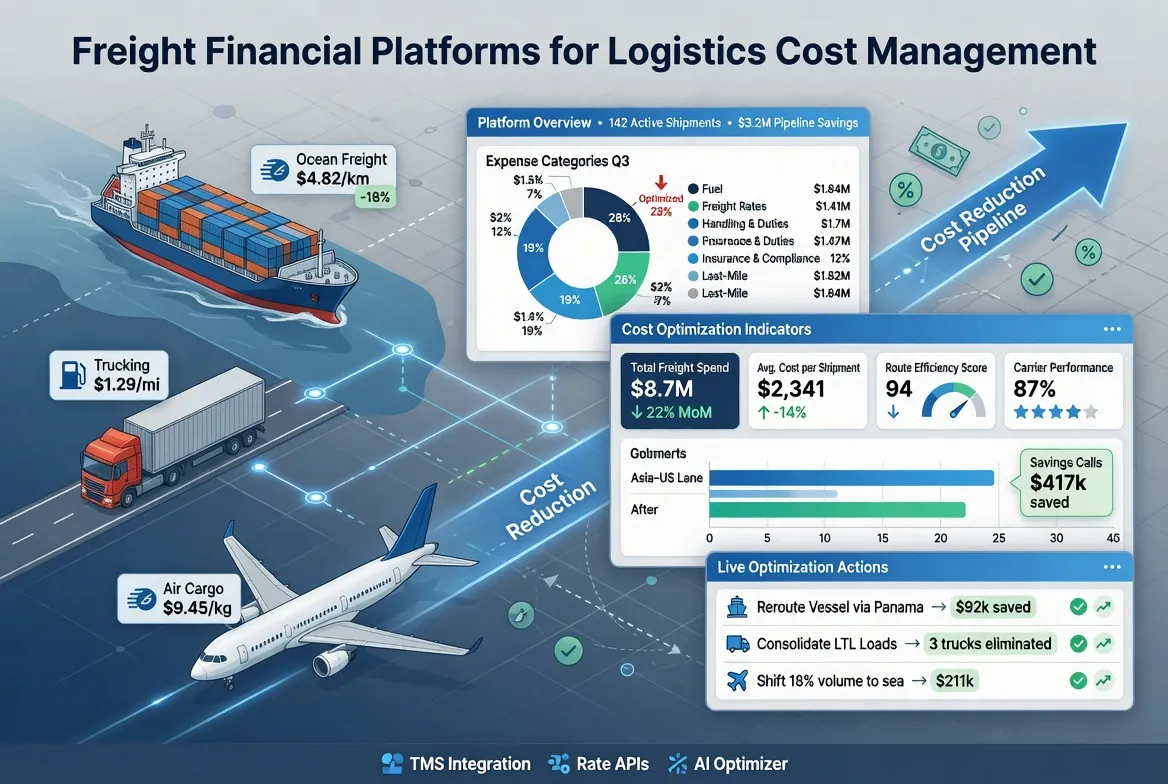
Freight Financial Platforms for Logistics Cost Management
In today’s global trade environment, cross-border logistics companies must operate across a rapidly expanding ecosystem of systems, including eCommerce marketplaces, carriers, warehouses, customs platforms, compliance tools, and financial systems. Traditional fragmented data flows, manual coordination, and siloed systems no longer suffice.
A modern cross-border logistics management system is no longer optional — it is the foundation for digital transformation, enabling unified data connectivity and end-to-end collaboration so that logistics enterprises can scale efficiently while maintaining control, visibility, and compliance across international supply chains. Solutions like eTower, developed by WallTech company, exemplify this new generation of software platforms.
Core Challenges of Multi-Platform Integration in Cross-Border Logistics
Fragmented Data Across Platforms Reduces Operational Efficiency
Cross-border logistics operations routinely span multiple sales channels, hundreds of carriers, multiple overseas warehouses, customs systems, and financial applications. Without standardized integrations, data remains fragmented and operations rely on manual data transfers — for example, downloading order lists from each marketplace, checking tracking on separate carrier portals, and manually updating warehouse inventory.
This fragmentation slows fulfillment, delays responses to customers, and prevents real-time visibility. Fragmented logistics processes can lead to operational bottlenecks, higher labor costs, and delayed shipments, spanning longer fulfillment cycles that diminish customer satisfaction.
Poor Data Compatibility Increases Error Rates and Compliance Risks
Logistics management platforms differ widely in data standards, formats, and API support. Legacy systems often rely on manual file imports and Excel spreadsheets, raising the risk of incomplete data, field mismatches, or formatting errors. These errors can cause mis-shipments, tracking disruptions, financial discrepancies, and costly customs declaration mistakes. Ineffective integrations may also weaken data security and create unstable interfaces that lose information or interrupt workflows.
High Integration Costs and Limited Scalability
Traditional one-to-one system integrations require significant upfront development and ongoing maintenance. Every platform update often triggers costly re-work. This linear growth model limits scalability — as logistics networks expand, adding a new marketplace, carrier, or warehouse may require a new integration cycle, delaying business expansion and increasing IT costs.
For smaller logistics enterprises, these expenses can be prohibitive. Even larger companies find that legacy models restrict agility and responsiveness, making it hard to adapt quickly to new market demands and regulatory changes.
Cross-Border Logistics Management Solution
Unified Integration Hub for End-to-End Data Connectivity
The core of modern logistics transformation is unified data flow.
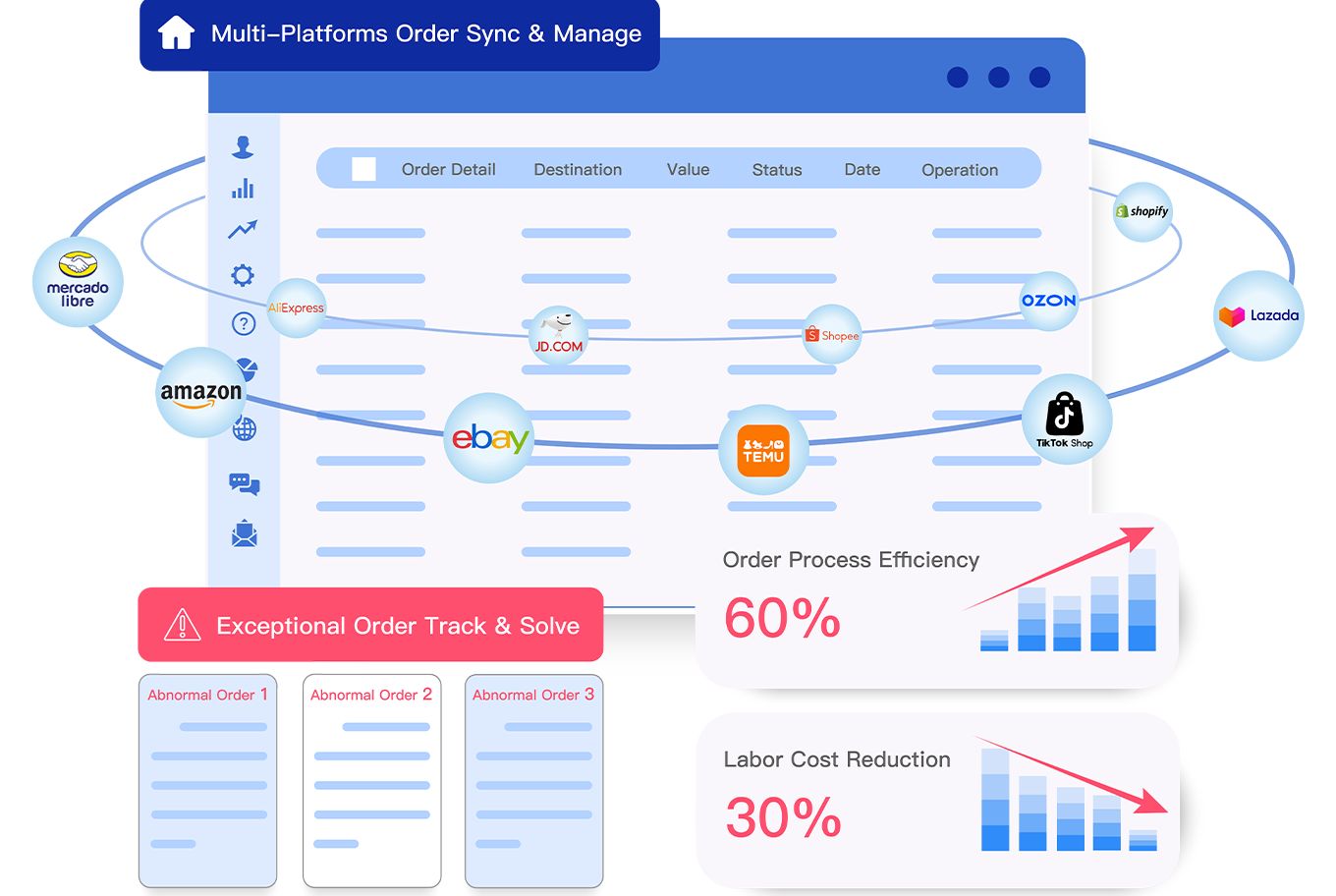
eTower is a cross-border logistics management software from WallTech, providing a centralized integration layer that connects with eCommerce marketplaces (Amazon, Shopee, TikTok, Shopify, etc.), multiple carriers (last-mile, global postal partners), overseas warehouses, customs systems, and financial tools via standardized APIs and adaptive integration modules.
With this unified hub, orders are automatically captured from upstream systems, real-time tracking data flows from carriers into one dashboard, warehouse inventory is synced instantly, and customs declarations are generated in compliance with regulatory standards, without manual intervention. This centralized integration establishes a single source of truth across the logistics ecosystem, eliminating data silos and enabling true end-to-end automation and visibility.
Advanced Data Mapping and Validation to Minimize Errors
To address compatibility challenges, eTower offers automated data mapping and validation frameworks. Incoming data from disparate systems is normalized into standardized platform-wide formats, while multi-layer validation checks ensure completeness, format correctness, and logical consistency before transactions proceed.
Automated alerts highlight exceptions, allowing teams to resolve issues before they impact shipments or compliance. This significantly reduces operational errors and boosts data integrity throughout the supply chain.
Flexible Architecture Designed for Scalable Growth
eTower is built with modular architecture that supports rapid onboarding. Pre-configured integration templates cover mainstream eCommerce platforms, carriers, and warehouses, enabling fast deployment with minimal development effort.
As logistics networks grow, whether into new trade corridors, carriers, or service partners, the system adapts without disrupting existing operations. Multi-tenant deployment support further allows logistics enterprises to extend operations globally while maintaining governance and control.
Advantages of a Cross-Border Logistics Management System
Broad Integration Coverage with High Adaptability
Modern global logistics platforms like eTower integrate with global eCommerce marketplaces, carriers, warehouses, and customs platforms. They support multiple integration methods, including API, EDI, and structured file exchange, ensuring compatibility with both modern and traditional systems.
This breadth of coverage enables enterprises to manage ocean, air, rail, parcel, and multimodal transportation system from one platform and respond quickly to dynamic marketplace changes.
Full-Chain Digitalization for Higher Efficiency
By enabling seamless real-time data flows across order, transportation, warehousing, customs, tracking, and finance, eTower delivers end-to-end digital logistics management. Automated workflows reduce manual tasks and errors, while real-time tracking and alerts empower logistics teams with full visibility and responsiveness.
Customizable Solutions for Diverse Business Models
Cross-border logistics providers have varied business models. Modern solutions offer configurable modules, custom reporting, and tailored integration strategies, adapting to each customer’s workflows, scale, and unique operational complexities. Dedicated onboarding support and ongoing technical guidance further accelerate adoption and long-term success.
Built-In Compliance and Risk Control
Cross-border trade is subject to complex customs and regulatory oversight across regions. A modern logistics system incorporates compliance checks aligned with international standards, validates declaration accuracy, and maintains audit traceability. Comprehensive log histories and record-keeping help enterprises confidently respond to regulatory inspections and reduce compliance-related costs.
How to Choose the Right Cross-Border Logistics Management System Provider?
Integration Capability: Assess whether the provider supports your key marketplaces, carriers, and warehouse partners, offers multiple integration methods, and can adapt to existing legacy systems.
Technology Strength and Stability: Robust technology ensures high processing volumes and secure data handling, including cloud-native architecture, data security, and continuous product iteration. Logistics SaaS platforms with cloud deployment also lower upfront costs and improve global accessibility.
Service Quality and Responsiveness: Responsive onboarding and support services are crucial, especially when operations span multiple time zones and partners. Structured support reduces operational risk and lowers total cost of ownership.
Industry Experience and Reputation: Providers with deep logistics expertise bring insights into trade compliance, global best practices, and regulatory nuances. Case studies and long-term customer relationships indicate solution maturity and reliability.
Cost Efficiency and Long-Term Value: Assess total costs over time, including integration fees, maintenance, scalability pricing, and upgrade models.
In cross-border logistics, the ability to integrate across platforms determines competitive advantage. Modern logistics management systems transform fragmented operations into cohesive, data-driven ecosystems, reducing costs, minimizing risk, and unlocking scalable growth.
By choosing logistic management solutions with strong integration capabilities, stable technology, responsive service, industry experience, and long-term value, logistics enterprises can successfully navigate complexity and compete effectively in global markets. Systems like eTower and CargoWare demonstrate how unified digital platforms empower logistics businesses to thrive amid the growing demands of global trade.