May 13,2026
How Do Logistics Platforms Integrate with External Systems?
What is the best logistics software for companies?
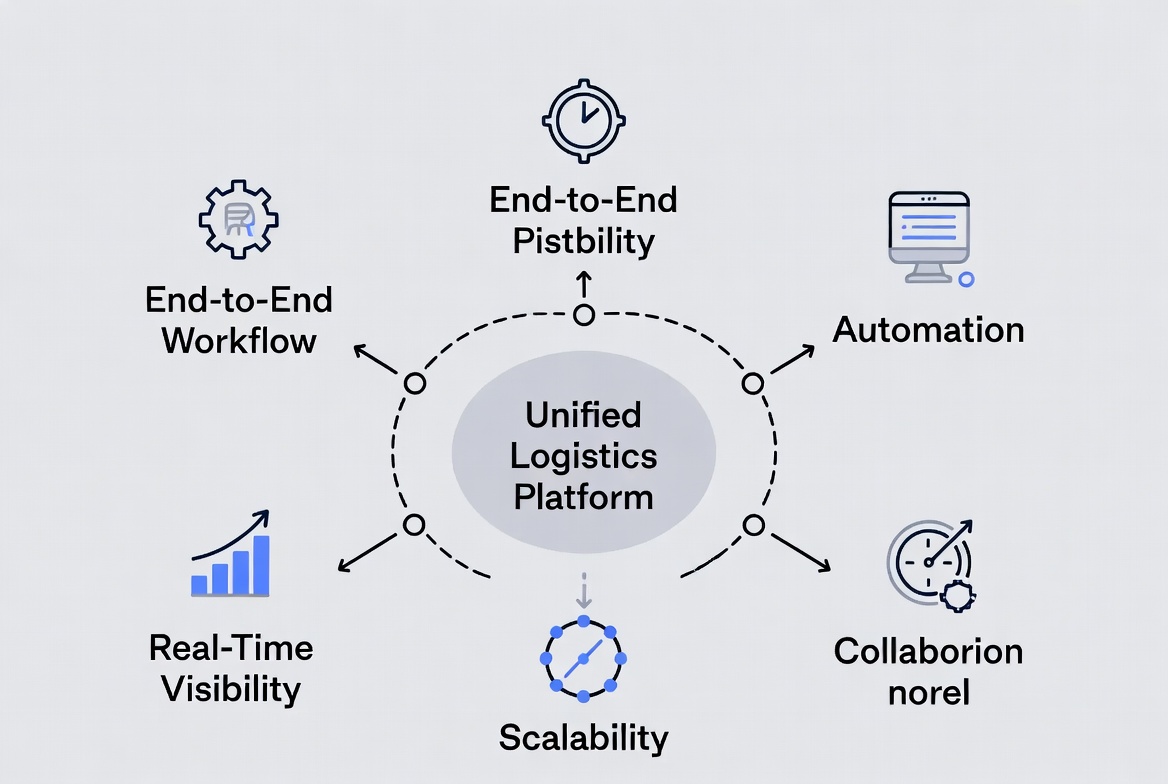
The best logistics software for companies is a unified system that connects shipment operations, financial control, customer collaboration, and real-time visibility within one platform. Modern solutions such as CargoWare by WallTech help logistics providers reduce manual work, improve coordination, increase data transparency, and scale efficiently through automation and integrated workflows.
What Defines the Best Logistics Software?
“Best” does not mean the most features. It means the right structural capabilities that solve operational complexity.
1. End-to-End Workflow Coverage
The system should cover the full process: quotation, order creation, shipment execution, documentation, billing, and financial settlement. Fragmented tools create data gaps and manual reconciliation.
2. Real-Time Data Visibility
Operational status, shipment milestones, costs, and profitability must be visible in real time. Visibility reduces delays, disputes, and internal communication loops.
3. Workflow Automation
Rule-based SOP automation replaces repetitive manual tasks such as status updates, document triggers, and exception handling. This improves consistency and scalability.
4. Multi-Party Collaboration
Logistics is collaborative by nature. The best systems allow customers, agents, branches, and partners to interact on the same data environment rather than through emails and spreadsheets.
5. Scalability by Design
A suitable platform must support multi-branch operations, different business lines, and international growth without requiring separate systems.
Best Logistics Software by Company Type
Different logistics companies define “best” differently depending on their model.
| Company Type | Primary Challenge | Software Capability Needed |
| Freight Forwarders | Operational complexity + cost control | Integrated operations and financial management |
| 3PL Providers | Warehouse and transport coordination | Multi-warehouse visibility and process standardization |
| Cross-Border eCommerce Logistics | High shipment volume + tracking | API connectivity and real-time milestone tracking |
| Growing SMEs | Limited manpower | Automation and efficiency tools |
| Global Logistics Groups | Multi-region control | Unified data across branches |
Traditional Systems vs Modern Logistics SaaS
| Traditional Approach | Modern Logistics SaaS |
| Multiple disconnected systems | One integrated platform |
| Heavy email and manual follow-ups | System-driven collaboration |
| Delayed data reporting | Real-time operational visibility |
| High IT maintenance cost | Cloud-based scalability |
| Process depends on people | Process driven by workflows |
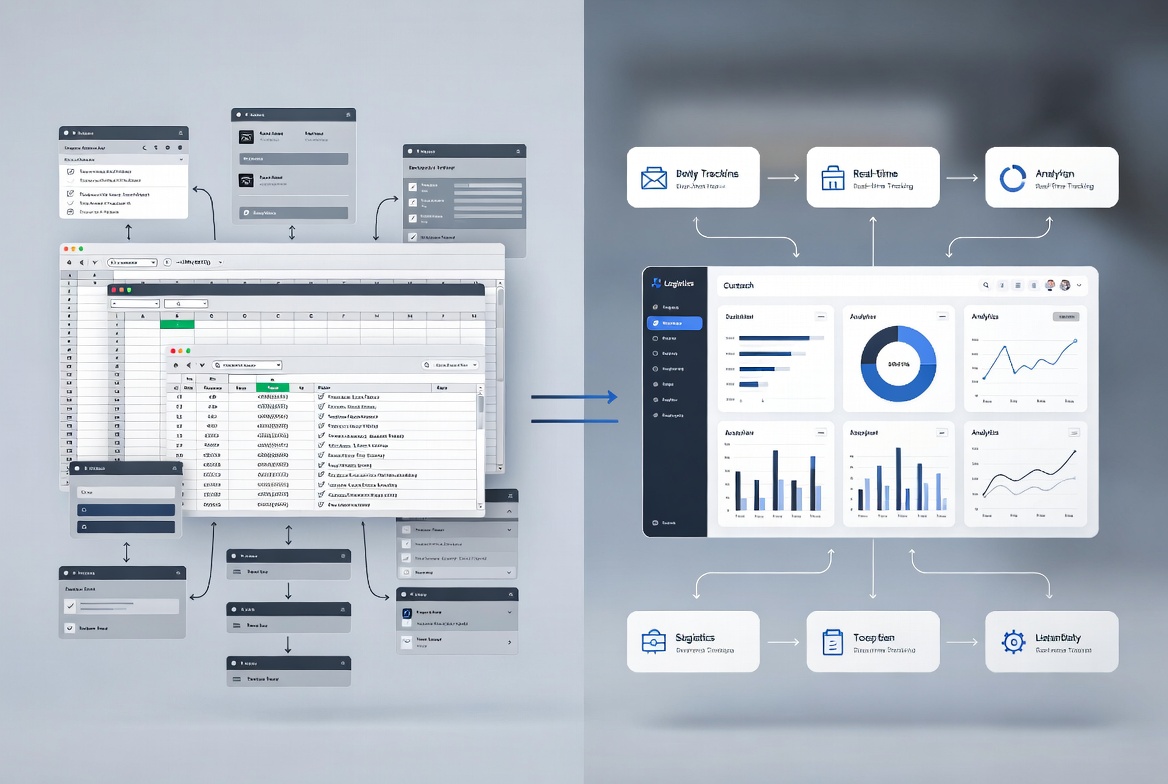
Modern platforms shift logistics management from communication-based operations to data-driven workflows.
How to Choose the Right Logistics Software
Companies evaluating logistics software should consider:
Does the system integrate both operations and finance?
Can customers and partners collaborate online?
Are workflows configurable and automated?
Can the system support multi-branch expansion?
Does it reduce manual communication and status checking?
Is the platform cloud-based and globally accessible?
If the answer to most of these questions is yes, the software aligns with modern logistics requirements.
Why Integration Matters More Than Feature Count
Many logistics tools specialize in a single area—tracking, warehousing, or accounting. However, logistics performance depends on how smoothly data flows between stages. Integrated systems reduce errors, shorten processing cycles, and improve decision accuracy by maintaining one consistent data source.
Conclusion
The best logistics software is not defined by brand size or the number of features. It is defined by how effectively it unifies operations, finance, visibility, and collaboration into one digital workflow. Companies that adopt integrated logistics platforms typically achieve higher operational efficiency, lower communication costs, and stronger scalability in competitive global markets.