
.webp "How Digital Freight Platforms Standardize Operational SOPs in Logistics Companies") How Digital Freight Platforms Standardize Operational SOPs in Logistics Companies
Freight forwarding operations involve complex processes that span multiple teams, locations, and service providers. Each shipment may require coordination between sales teams, operations staff, customs brokers, carriers, warehouses, and customers. In such environments, maintaining consistent operational procedures is essential to ensure efficiency and reliability.
How Digital Freight Platforms Standardize Operational SOPs in Logistics Companies
Freight forwarding operations involve complex processes that span multiple teams, locations, and service providers. Each shipment may require coordination between sales teams, operations staff, customs brokers, carriers, warehouses, and customers. In such environments, maintaining consistent operational procedures is essential to ensure efficiency and reliability.
.webp "How Logistics Platforms Support Global Rate Management and Quotation Workflows") How Logistics Platforms Support Global Rate Management and Quotation Workflows
Freight forwarding companies operate in a highly dynamic pricing environment. Ocean freight rates, air cargo tariffs, fuel surcharges, local handling fees, and seasonal price fluctuations all influence the cost of transporting goods across international supply chains. As a result, managing freight rates and generating accurate quotations are critical operational tasks for logistics providers.
How Logistics Platforms Support Global Rate Management and Quotation Workflows
Freight forwarding companies operate in a highly dynamic pricing environment. Ocean freight rates, air cargo tariffs, fuel surcharges, local handling fees, and seasonal price fluctuations all influence the cost of transporting goods across international supply chains. As a result, managing freight rates and generating accurate quotations are critical operational tasks for logistics providers.
.webp "How Freight Forwarders Manage Multimodal Transport in Digital Systems") How Freight Forwarders Manage Multimodal Transport in Digital Systems
International freight forwarding frequently involves more than one transportation method. A single shipment may move by truck from the factory to the port, travel by ocean vessel across continents, and then continue by rail or truck to the final destination. This type of transportation model is commonly referred to as multimodal transport.
How Freight Forwarders Manage Multimodal Transport in Digital Systems
International freight forwarding frequently involves more than one transportation method. A single shipment may move by truck from the factory to the port, travel by ocean vessel across continents, and then continue by rail or truck to the final destination. This type of transportation model is commonly referred to as multimodal transport.
.webp "How Logistics Platforms Enable Centralized Customer and Partner Management") How Logistics Platforms Enable Centralized Customer and Partner Management
Freight forwarding operations rely on collaboration between multiple parties, including shippers, carriers, agents, warehouses, customs brokers, and last-mile delivery providers. Managing these relationships efficiently is essential for coordinating international shipments and maintaining reliable service levels.
How Logistics Platforms Enable Centralized Customer and Partner Management
Freight forwarding operations rely on collaboration between multiple parties, including shippers, carriers, agents, warehouses, customs brokers, and last-mile delivery providers. Managing these relationships efficiently is essential for coordinating international shipments and maintaining reliable service levels.
.webp "How Digital Logistics Platforms Manage Shipment Milestones and Operational Timelines") How Digital Logistics Platforms Manage Shipment Milestones and Operational Timelines
Freight forwarding operations involve numerous sequential steps that must occur in a coordinated timeline. From booking confirmation and cargo pickup to departure, customs clearance, and final delivery, each shipment follows a series of operational events. These events are commonly referred to as shipment milestones.
How Digital Logistics Platforms Manage Shipment Milestones and Operational Timelines
Freight forwarding operations involve numerous sequential steps that must occur in a coordinated timeline. From booking confirmation and cargo pickup to departure, customs clearance, and final delivery, each shipment follows a series of operational events. These events are commonly referred to as shipment milestones.
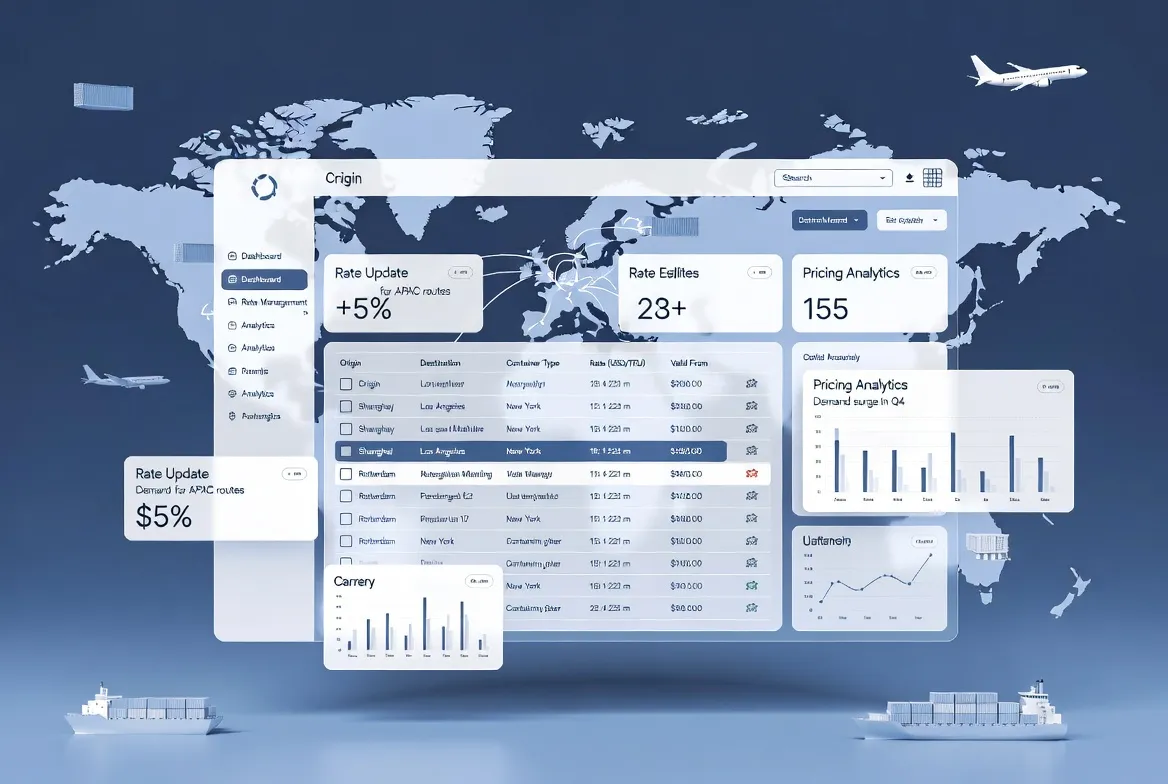 Best Practices for Managing Freight Rate Databases in Logistics Systems
Freight rate management is a critical function in freight forwarding and logistics operations. Rates determine how logistics companies price their services, respond to customer inquiries, and maintain profitability in highly competitive global markets. However, managing freight rates can be complex due to frequent market fluctuations, multiple carriers, and varying service conditions.
Best Practices for Managing Freight Rate Databases in Logistics Systems
Freight rate management is a critical function in freight forwarding and logistics operations. Rates determine how logistics companies price their services, respond to customer inquiries, and maintain profitability in highly competitive global markets. However, managing freight rates can be complex due to frequent market fluctuations, multiple carriers, and varying service conditions.
.webp "What Is a Freight Forwarding Collaboration System?") What Is a Freight Forwarding Collaboration System?
A freight forwarding collaboration system is a digital platform that enables logistics companies, partners, and customers to coordinate shipment operations within a shared environment. It centralizes shipment data, operational updates, and document exchange, helping multiple stakeholders collaborate more efficiently across international logistics networks.
What Is a Freight Forwarding Collaboration System?
A freight forwarding collaboration system is a digital platform that enables logistics companies, partners, and customers to coordinate shipment operations within a shared environment. It centralizes shipment data, operational updates, and document exchange, helping multiple stakeholders collaborate more efficiently across international logistics networks.
.webp "What Is a Logistics Operations Management Platform?") What Is a Logistics Operations Management Platform?
A logistics operations management platform is a digital system used to manage daily logistics activities such as order processing, transportation coordination, shipment tracking, and financial settlement. It centralizes operational data and workflows, helping logistics companies manage complex transportation processes more efficiently.
What Is a Logistics Operations Management Platform?
A logistics operations management platform is a digital system used to manage daily logistics activities such as order processing, transportation coordination, shipment tracking, and financial settlement. It centralizes operational data and workflows, helping logistics companies manage complex transportation processes more efficiently.
.webp "What Is a Global Freight Coordination System?") What Is a Global Freight Coordination System?
A global freight coordination system is a digital platform designed to manage and synchronize logistics activities across international transportation networks. It helps logistics companies coordinate shipments, partners, and operational milestones across multiple countries and transportation modes.
What Is a Global Freight Coordination System?
A global freight coordination system is a digital platform designed to manage and synchronize logistics activities across international transportation networks. It helps logistics companies coordinate shipments, partners, and operational milestones across multiple countries and transportation modes.
.webp "How Logistics Software Helps Standardize Freight Operations") How Logistics Software Helps Standardize Freight Operations
Logistics software helps standardize freight operations by organizing shipment processes, data structures, and operational workflows within a unified digital platform. By replacing manual coordination and fragmented tools, these systems enable logistics companies to manage freight operations in a more consistent and efficient way.
How Logistics Software Helps Standardize Freight Operations
Logistics software helps standardize freight operations by organizing shipment processes, data structures, and operational workflows within a unified digital platform. By replacing manual coordination and fragmented tools, these systems enable logistics companies to manage freight operations in a more consistent and efficient way.
.webp "How Freight Forwarding Platforms Improve Shipment Data Consistency") How Freight Forwarding Platforms Improve Shipment Data Consistency
Freight forwarding platforms improve shipment data consistency by centralizing shipment records, operational updates, and documentation within a single digital system. By replacing fragmented communication tools and manual data entry, these platforms help logistics teams maintain accurate and standardized shipment information.
How Freight Forwarding Platforms Improve Shipment Data Consistency
Freight forwarding platforms improve shipment data consistency by centralizing shipment records, operational updates, and documentation within a single digital system. By replacing fragmented communication tools and manual data entry, these platforms help logistics teams maintain accurate and standardized shipment information.
.webp "Key Capabilities of Modern Logistics Operations Control Platforms") Key Capabilities of Modern Logistics Operations Control Platforms
Modern logistics operations control platforms provide centralized tools for managing shipment workflows, transportation coordination, and operational monitoring. By integrating multiple logistics processes into a unified system, these platforms help companies maintain visibility and control across complex supply chain operations.
Key Capabilities of Modern Logistics Operations Control Platforms
Modern logistics operations control platforms provide centralized tools for managing shipment workflows, transportation coordination, and operational monitoring. By integrating multiple logistics processes into a unified system, these platforms help companies maintain visibility and control across complex supply chain operations.
.webp "Why Data Standardization Matters in Freight Forwarding Systems") Why Data Standardization Matters in Freight Forwarding Systems
Data standardization is essential in freight forwarding systems because logistics operations rely on accurate and consistent shipment information. By standardizing how data is recorded and managed, logistics platforms help reduce operational errors, improve coordination between teams, and ensure reliable shipment tracking.
Why Data Standardization Matters in Freight Forwarding Systems
Data standardization is essential in freight forwarding systems because logistics operations rely on accurate and consistent shipment information. By standardizing how data is recorded and managed, logistics platforms help reduce operational errors, improve coordination between teams, and ensure reliable shipment tracking.
.webp "How Logistics Platforms Centralize Shipment Data Across Multiple Systems") How Logistics Platforms Centralize Shipment Data Across Multiple Systems
Logistics platforms help centralize shipment data by integrating information from different operational systems into a single digital environment. This allows logistics companies to manage shipment records, tracking events, and operational updates through one platform instead of multiple disconnected tools.
How Logistics Platforms Centralize Shipment Data Across Multiple Systems
Logistics platforms help centralize shipment data by integrating information from different operational systems into a single digital environment. This allows logistics companies to manage shipment records, tracking events, and operational updates through one platform instead of multiple disconnected tools.
.webp "How does Freight Forwarding Systems Manage Global Agent Collaboration") How does Freight Forwarding Systems Manage Global Agent Collaboration
Freight forwarding systems play an important role in enabling collaboration between global agents involved in international logistics operations. By centralizing shipment data, operational updates, and communication workflows, these systems help freight forwarders coordinate activities with overseas partners more efficiently.
How does Freight Forwarding Systems Manage Global Agent Collaboration
Freight forwarding systems play an important role in enabling collaboration between global agents involved in international logistics operations. By centralizing shipment data, operational updates, and communication workflows, these systems help freight forwarders coordinate activities with overseas partners more efficiently.