

.webp "What Is a Warehouse Management System")
Mar 17,2026
What Is a Warehouse Management System
Introduction
In modern logistics operations, companies rely on multiple systems to manage different aspects of the business—order processing, warehousing, transportation, finance, and customer management. However, when these systems operate independently, data becomes fragmented, leading to inefficiencies and operational challenges.
Cross-system data exchange systems address this issue by enabling seamless data transfer between different platforms. These systems ensure that information flows continuously across the organization and its partners, forming the foundation of connected and efficient logistics operations.
What Is a Cross-System Data Exchange System
A cross-system data exchange system is a solution that enables different software systems to communicate and share data automatically.
In logistics, this includes data exchange between:
ERP systems
Warehouse management systems (WMS)
Transportation and carrier platforms
Financial and billing systems
Customs and compliance systems
External partners and service providers
These systems use technologies such as APIs, EDI, and middleware to ensure that data is transmitted accurately and efficiently between platforms.
Why Companies Use Cross-System Data Exchange Systems
1. Eliminating Data Silos
When systems are not connected, data is stored in isolated environments. Data exchange systems unify these systems, enabling a consistent data flow.
2. Reducing Manual Data Entry
Without automation, teams must input the same data into multiple systems. Data exchange systems eliminate this redundancy.
3. Improving Data Accuracy
Automated data transfer reduces the risk of human error and ensures consistency across systems.
4. Enabling Real-Time Operations
Modern logistics requires real-time updates. Data exchange systems ensure that changes are reflected instantly across all platforms.
5. Supporting Business Scalability
As operations grow, managing multiple systems manually becomes impractical. Data exchange systems enable scalable and efficient operations.
How Cross-System Data Exchange Systems Work
1. Integration Layer
The system acts as a bridge between different platforms, connecting them through APIs, EDI, or other integration technologies.
2. Data Mapping and Transformation
Data from different systems is standardized and transformed to ensure compatibility.
3. Automated Data Transfer
Information is transferred automatically between systems without manual intervention.
4. Event-Driven Synchronization
System events—such as order creation or shipment updates—trigger data exchanges across connected platforms.
5. Monitoring and Error Handling
The system tracks data flows and identifies issues to ensure reliable data exchange.
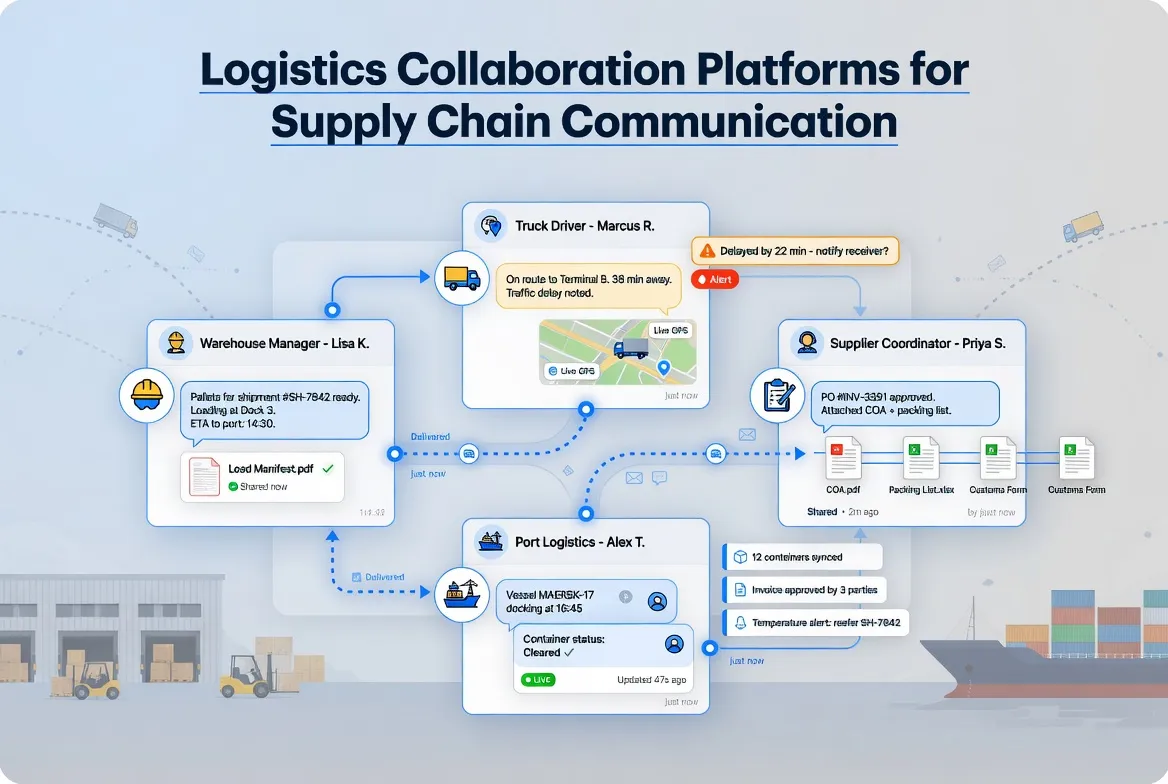
For example, modern logistics platforms can integrate with external systems such as ERP, WMS, and third-party service providers, enabling seamless data exchange and synchronized operations across the supply chain.
Key Features of Cross-System Data Exchange Systems
1. Multi-System Connectivity
Supports integration with various internal and external systems.
2. Real-Time Data Exchange
Ensures that data is updated instantly across all connected platforms.
3. API and EDI Support
Provides flexible integration methods to accommodate different system requirements.
4. Data Transformation Capabilities
Converts data formats to ensure compatibility between systems.
5. Security and Compliance
Protects sensitive data through encryption and access control mechanisms.
6. Scalability
Handles increasing data volumes and system complexity as the business grows.
7. Monitoring and Alerts
Tracks data exchange processes and alerts users to potential issues.
Benefits of Using Cross-System Data Exchange Systems
1. Increased Efficiency
Automation reduces manual tasks and accelerates workflows.
2. Improved Data Consistency
All systems operate on the same data, reducing discrepancies.
3. Enhanced Visibility
Real-time data exchange provides a comprehensive view of operations.
4. Better Collaboration
Teams and partners can access shared data, improving coordination.
5. Faster Decision-Making
Accurate and timely data enables quick responses to operational changes.
6. Reduced Operational Costs
Automation and improved accuracy lower administrative expenses.
Conclusion
Cross-system data exchange systems are essential for modern logistics operations. By enabling seamless communication between systems, they eliminate data silos, improve accuracy, and enhance operational efficiency.
As logistics networks continue to grow in complexity, companies that implement robust data exchange solutions will be better positioned to optimize their operations, scale their business, and remain competitive in the global market.

.webp "How Digital Logistics Systems Support Scalable Operations for Growing Freight Forwarders")