Apr 23,2026
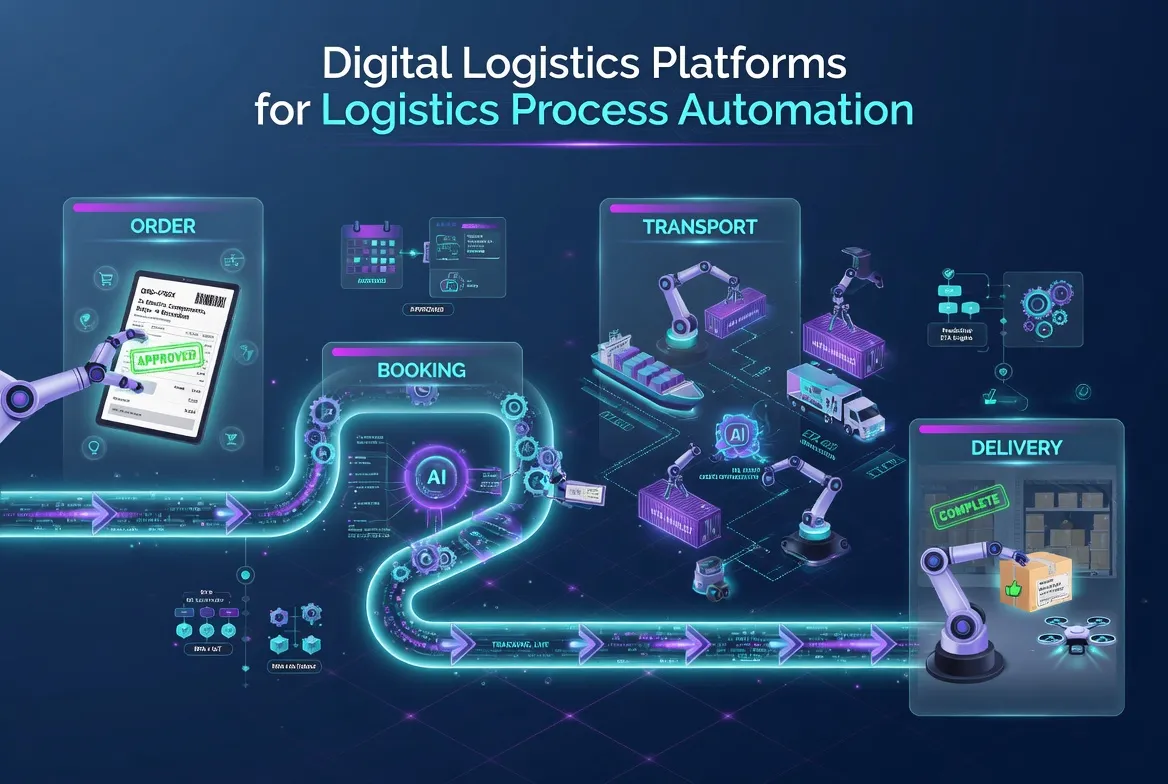
Digital Logistics Platforms for Logistics Process Automation
Introduction
Shipment milestones are managed across logistics networks by defining standardized events, collecting data from multiple systems, and synchronizing updates into a unified, real-time shipment timeline. This process enables logistics companies to coordinate activities across carriers, warehouses, customs, and partners while maintaining consistent visibility and control. In global logistics environments, where shipments move through multiple nodes and stakeholders, effective milestone management is essential for ensuring accuracy, efficiency, and collaboration.
What is Shipment Milestone Management
Shipment milestone management refers to the process of defining, tracking, and controlling key events throughout the lifecycle of a shipment across a distributed logistics network.
These milestones represent critical operational stages, such as:
Booking confirmation
Cargo pickup
Warehouse inbound and outbound
Customs declaration and clearance
Departure and arrival events
Final delivery
Unlike isolated tracking updates, milestone management ensures that all events are structured, standardized, and connected within a single shipment timeline.
Across logistics networks, this process involves multiple independent systems and participants. Effective milestone management ensures that all parties contribute to and access the same set of structured shipment data.
Why Shipment Milestone Management Matters
1. Aligns multi-party operations
Logistics networks typically involve:
Freight forwarders
Carriers (ocean, air, trucking)
Warehouses
Customs brokers
Overseas agents
Each party is responsible for specific shipment stages. Without a unified milestone framework, coordination becomes fragmented.
Milestone management aligns all participants around shared operational checkpoints.
2. Reduces data inconsistency
When data is managed across different systems, inconsistencies often arise:
Duplicate updates
Missing events
Conflicting status information
By standardizing milestone definitions and data structures, logistics platforms ensure consistent and reliable information across the network.
3. Enables real-time visibility
Managing milestones centrally allows logistics teams to track shipment progress in real time across all nodes.
This visibility is critical for:
Monitoring shipment status
Identifying delays
Communicating updates to customers
4. Improves operational efficiency
Without structured milestone management, teams rely heavily on manual updates and communication.
A centralized system reduces repetitive tasks and enables automation, improving overall efficiency.
5. Supports scalable logistics operations
As shipment volumes grow, managing milestones manually becomes impractical.
Structured milestone management enables logistics companies to scale operations without losing control or accuracy.
How Shipment Milestones Are Managed Across Logistics Networks
1. Defining standardized milestone frameworks
The first step is to establish a consistent set of milestones for different shipment types.
For example:
Export shipments: booking → pickup → export customs → departure
Import shipments: arrival → import customs → delivery
These frameworks ensure that all stakeholders follow the same structure.
2. Integrating multi-source data inputs
Milestone data is collected from multiple sources across the logistics network:
Carrier systems (via API or EDI)
Warehouse management systems
Customs platforms
Manual updates from operators
Modern logistics platforms aggregate these inputs into a centralized system.
3. Synchronizing events into a unified timeline
All milestone updates are mapped into a single shipment timeline.
This unified timeline provides:
End-to-end visibility
Seamless tracking across transportation modes
A single source of truth for all stakeholders
4. Enabling real-time updates and alerts
As events occur, the system updates milestone statuses in real time.
Automation plays a key role:
Workflow automation triggers milestone updates
Alerts are generated for delays or missing events
Notifications are sent to relevant users
5. Supporting multi-role collaboration
Different stakeholders interact with the same shipment data through role-based access.
For example:
Operations teams update shipment progress
Partners contribute milestone data
Customers view tracking information
This ensures synchronized communication across the network.
6. Linking milestones to downstream processes
Milestones are often connected to other operational and financial workflows:
Billing triggers based on shipment stages
Document generation and validation
Cost and revenue recognition
This integration improves consistency between operations and finance.
Key Features of Shipment Milestone Management Systems
Centralized data platform
Aggregates data from multiple systems
Maintains a single, unified shipment record
End-to-end visibility
Tracks shipments across all nodes and transport modes
Provides a complete timeline from origin to destination
Multi-role collaboration capabilities
Enables coordination between internal teams and external partners
Supports upstream and downstream connectivity
Automation and AI integration
AI data recognition extracts milestone data from documents
Automated workflows reduce manual input
System-triggered updates ensure accuracy
Exception management
Detects delays or missing milestones
Generates alerts and assigns tasks for resolution
Flexible configuration
Customizable milestone definitions based on business needs
Adaptable workflows for different shipment scenarios
Benefits for Logistics Companies
Improved operational control
Structured milestone management allows teams to monitor and manage shipments more effectively.
Enhanced collaboration
Shared visibility reduces communication gaps between stakeholders.
Reduced manual workload
Automation minimizes repetitive tracking and data entry tasks.
Faster issue resolution
Real-time alerts enable teams to respond quickly to disruptions.
Better financial alignment
Linking milestones to financial processes improves billing accuracy and reconciliation.
Best Practices and Use Cases
Standardize milestone definitions across the network
Ensure all stakeholders use the same milestone framework to maintain consistency.
Integrate key systems and partners
Connect carrier, warehouse, and customs systems to automate data collection.
Use role-based access control
Provide appropriate visibility to different users while maintaining data security.
Implement automation for updates and alerts
Reduce manual intervention by automating milestone updates and exception handling.
Provide customer-facing visibility
Offer customers access to milestone tracking through portals or APIs for improved transparency.
Conclusion
Managing shipment milestones across logistics networks is essential for achieving visibility, coordination, and efficiency in modern supply chains. By standardizing events, integrating multi-source data, and enabling real-time updates, logistics companies can transform fragmented operations into a unified, data-driven process.
As logistics networks continue to expand globally, effective milestone management becomes a key enabler of scalable and reliable operations.
Frequently Asked Questions
What is shipment milestone management in logistics?
Shipment milestone management is the process of defining and tracking key shipment events across the logistics lifecycle to ensure structured visibility and control.
How are shipment milestones tracked across networks?
They are tracked by integrating data from multiple systems and synchronizing updates into a unified timeline within a logistics platform.
Why is milestone management important in global logistics?
It improves coordination, reduces data inconsistencies, enables real-time visibility, and supports scalable operations.
What systems are involved in milestone management?
Carrier systems, warehouse systems, customs platforms, and logistics management systems all contribute to milestone data.
How does automation support milestone management?
Automation reduces manual input, ensures timely updates, and enables real-time alerts for delays or exceptions.
About WallTech
WallTech provides digital logistics platforms designed to help freight forwarders and logistics providers manage complex, multi-node operations more effectively. By enabling end-to-end collaboration across internal teams and external partners, WallTech supports seamless coordination throughout the shipment lifecycle. Its systems offer real-time shipment visibility through milestone-based tracking and unified timelines, helping companies maintain control across global logistics networks. In addition, workflow automation and financial automation capabilities, including billing and reconciliation, help reduce manual processes and improve operational accuracy and scalability.
If you're exploring ways to improve your logistics operations, feel free to connect with us to learn more about our solutions and system capabilities.