May 19,2026
How Do Logistics Systems Turn Shipment Data into Insights?
Introduction
Freight systems track cargo across multiple countries by capturing shipment data at each logistics milestone, integrating updates from various transportation partners, and presenting this information through a unified, real-time tracking interface. These systems consolidate data from carriers, customs, warehouses, and local agents to provide end-to-end visibility across international shipments.
In global logistics, cargo often moves through multiple countries, transport modes, and service providers. Without a centralized tracking system, visibility becomes fragmented and unreliable. Freight systems address this challenge by standardizing tracking data, synchronizing updates, and enabling stakeholders to monitor shipments through a single, consistent timeline.
What is Cargo Tracking in Multi-Country Logistics?
Cargo tracking in multi-country logistics refers to the process of monitoring the location, status, and progress of shipments as they move across international borders. It involves:
Tracking shipment events across multiple transportation legs
Monitoring customs clearance status in different countries
Capturing updates from carriers, warehouses, and local delivery providers
Providing real-time visibility to stakeholders
For freight forwarders and 3PL providers, multi-country cargo tracking is essential for ensuring operational control and delivering accurate information to customers.
Why Tracking Cargo Across Multiple Countries Matters
Tracking cargo across different countries is critical due to the complexity and unpredictability of global logistics operations.
Key challenges include:
Fragmented tracking sources: Different carriers and systems provide inconsistent data formats
Limited visibility: Gaps in tracking updates reduce transparency
Cross-border delays: Customs clearance and regulatory checks can impact timelines
Manual tracking processes: Relying on emails or manual updates is inefficient
Customer expectations: Clients demand real-time, accurate shipment information
Without effective tracking, companies struggle to manage exceptions, communicate with customers, and maintain service quality.
How Freight Systems Track Cargo Across Multiple Countries
Freight systems enable multi-country cargo tracking through structured and integrated processes:
1. Data Integration from Multiple Sources
The system collects tracking data from carriers, customs systems, warehouses, and third-party platforms, consolidating it into a single interface.
2. Milestone-Based Tracking
Shipments are tracked based on predefined milestones such as pickup, departure, arrival, customs clearance, and delivery. These milestones create a unified tracking timeline.
3. Real-Time Data Synchronization
Tracking updates are synchronized in real time, ensuring that all stakeholders have access to the latest shipment information.
4. Multi-Role Visibility
Different stakeholders—including internal teams, customers, and partners—can view shipment status based on their roles and permissions.
5. Exception Detection and Alerts
The system identifies delays, missing updates, or abnormal events and triggers alerts for proactive management.
6. Unified Tracking Interface
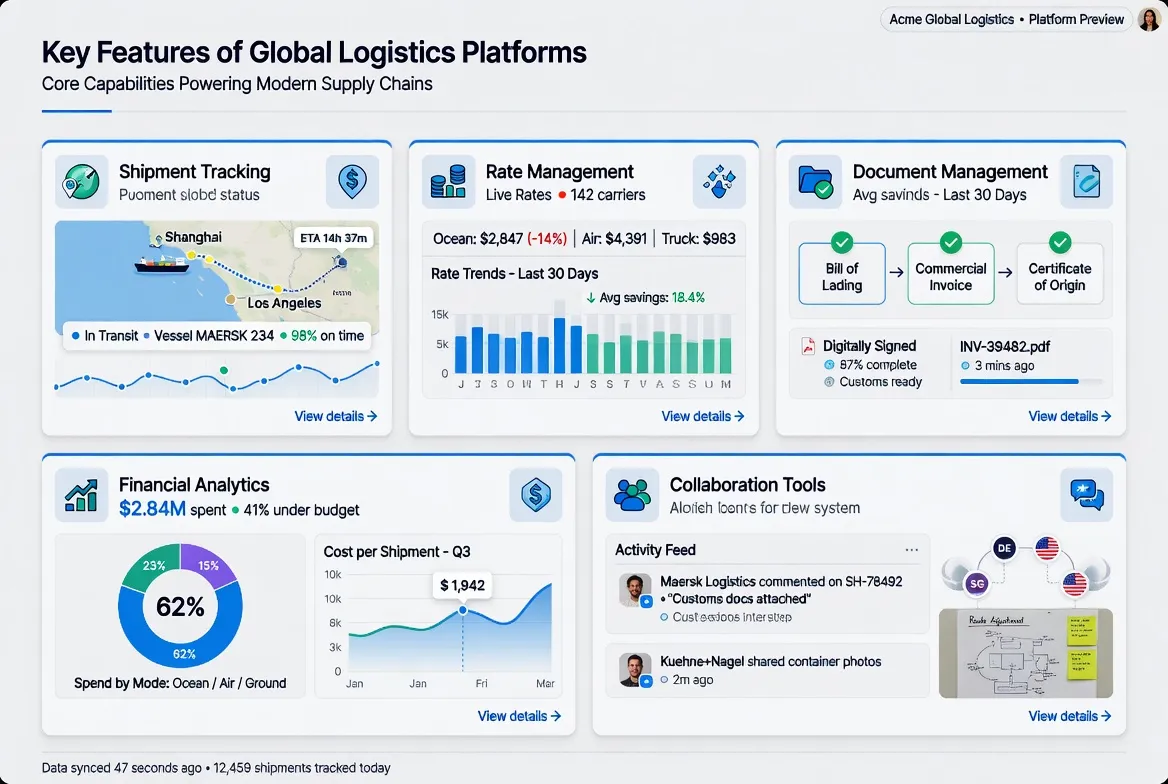
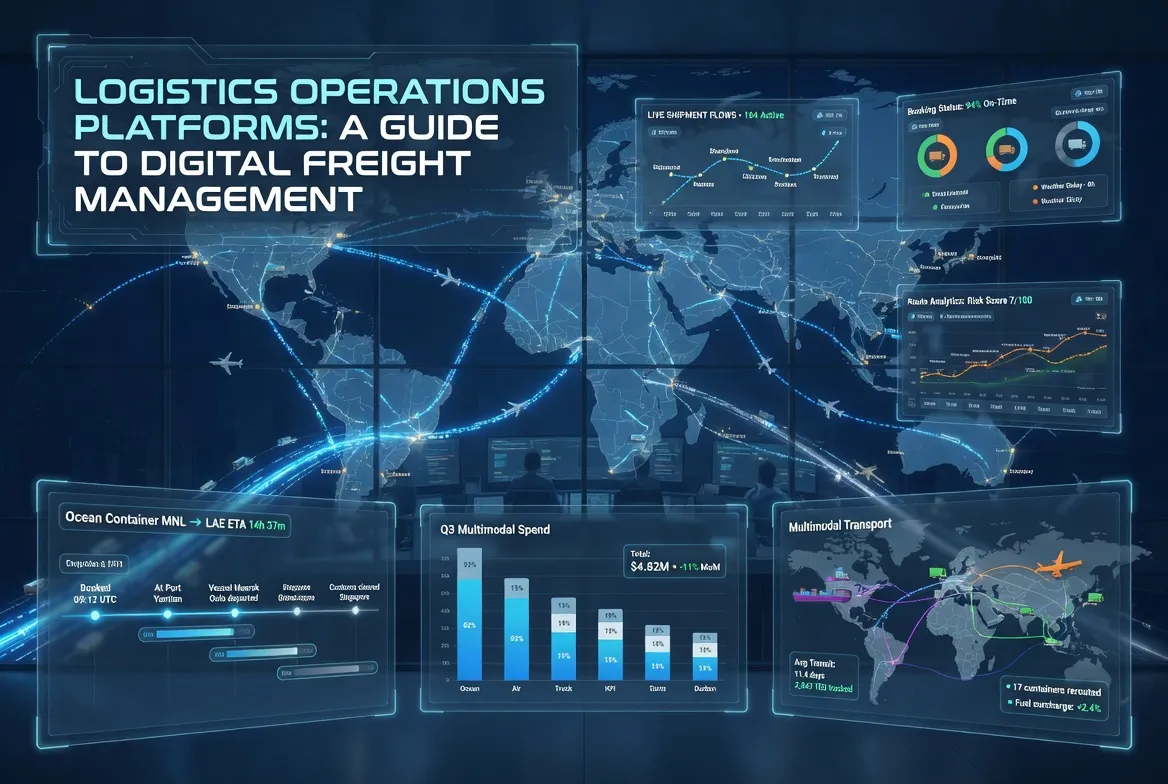
All tracking data is presented in a centralized dashboard, eliminating the need to check multiple systems.
Key Features / Key Capabilities
Freight systems provide several capabilities to support multi-country cargo tracking:
1. End-to-End Visibility
Real-time tracking across all shipment stages
Unified timeline of shipment events
Milestone-based monitoring
2. Multi-Source Data Integration
Integration with carrier systems and tracking platforms
Consolidation of tracking data from multiple countries
Standardized data formats
3. Multi-Role Collaboration
Shared visibility for internal teams, customers, and partners
Upstream and downstream data access
Improved communication across stakeholders
4. Workflow Automation
Automated status updates based on tracking events
AI-driven data recognition for documents and tracking inputs
Reduced manual tracking efforts
5. Exception Management
Real-time alerts for delays or disruptions
Proactive issue resolution
Improved operational control
6. Financial Integration
Linking tracking data with billing and cost management
Improved accuracy in financial processes
Benefits for Logistics Companies
By implementing freight systems for multi-country cargo tracking, companies can achieve:
Enhanced visibility: Real-time insight into shipment status across countries
Improved efficiency: Reduced manual tracking and communication efforts
Better customer service: Accurate and timely updates for clients
Proactive management: Early detection of delays and issues
Scalable operations: Ability to track large volumes of shipments globally
These benefits are particularly important for freight forwarders and cross-border eCommerce logistics providers managing complex international shipments.
Best Practices / Use Cases
To effectively track cargo across multiple countries, companies should follow these best practices:
1. Integrate Multiple Tracking Sources
Ensure that the system connects with carriers, customs platforms, and third-party tracking providers.
2. Use Milestone-Based Tracking
Track shipments using key events to provide structured and meaningful visibility.
3. Enable Real-Time Data Sharing
Allow stakeholders to access tracking information through a unified platform.
4. Automate Tracking Updates
Reduce manual tracking efforts by automating data collection and status updates.
5. Implement Exception Alerts
Set up alerts for delays, missing updates, or abnormal events.
6. Link Tracking with Operational Workflows
Ensure that tracking data triggers operational actions when necessary.
Conclusion
Tracking cargo across multiple countries is a critical capability in global logistics operations. Freight systems provide the tools needed to integrate tracking data, automate updates, and deliver real-time visibility across complex international shipments.
As global trade continues to expand, companies that adopt advanced tracking systems will be better equipped to manage complexity, improve customer service, and maintain operational control.
Frequently Asked Questions
What is cargo tracking in international logistics?
Cargo tracking refers to monitoring the location and status of shipments as they move through different stages of the logistics process.
How do freight systems track shipments across multiple countries?
They integrate data from carriers, customs systems, and partners, and present it through a unified tracking interface.
Why is multi-country tracking important?
It provides visibility, improves decision-making, and helps manage delays and disruptions effectively.
What are the key features of cargo tracking systems?
Key features include real-time tracking, milestone-based monitoring, data integration, and exception alerts.
What are the benefits of using freight systems for tracking?
Benefits include improved visibility, better customer service, reduced manual work, and scalable operations.
About WallTech
WallTech provides digital logistics solutions that support multi-country cargo tracking through integrated, cloud-based platforms. Its systems enable end-to-end collaboration by connecting internal teams with external partners across the logistics network. With real-time shipment visibility and milestone-based tracking, companies can monitor cargo movement across all stages and regions. In addition, workflow automation and financial automation—such as automated billing and reconciliation—help reduce manual workload and improve operational accuracy. These capabilities help logistics providers enhance tracking efficiency and scale their global operations effectively.
If you're exploring ways to improve your logistics operations, feel free to connect with us to learn more about our solutions and system capabilities.