Mar 31,2026
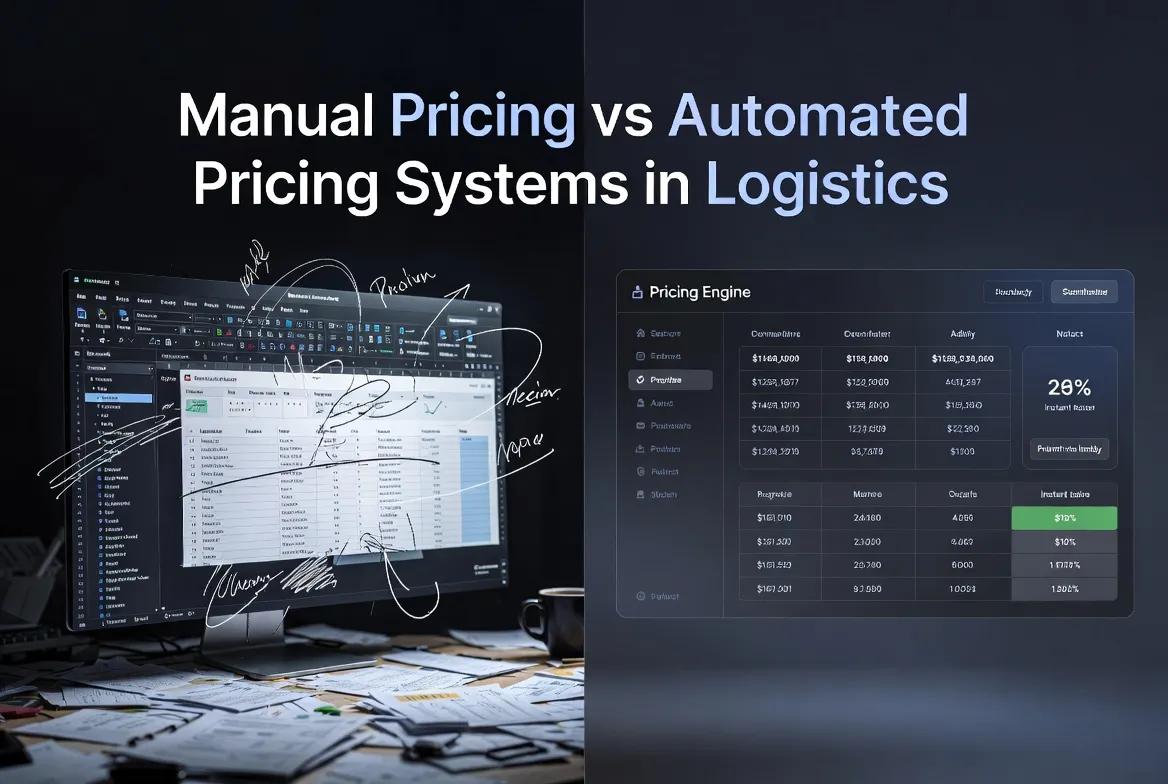
Manual Pricing vs Automated Pricing Systems in Logistics
Introduction
Logistics platforms handle rate cards and pricing rules by structuring freight pricing data into centralized systems and applying automated logic to match rates with shipment conditions. This approach ensures accurate pricing, faster quotations, and consistent cost application across operations. In modern logistics environments, where pricing complexity is high, managing rate cards and rules digitally is essential for efficiency and profitability.
What is Rate Cards and Pricing Rules in Logistics
Rate cards and pricing rules are the foundation of pricing in logistics operations.
Rate cards are structured tables that define base pricing for transportation services. They typically include:
Origin and destination pairs
Transport modes (ocean, air, trucking)
Pricing units (per container, per kg, per CBM)
Validity periods
Carrier-specific rates
Pricing rules define how these base rates are applied and adjusted. They include:
Surcharges (fuel, peak season, security fees)
Minimum and maximum charges
Customer-specific discounts or markups
Conditional pricing (e.g., route, weight, service level)
Together, rate cards and pricing rules determine the final cost and selling price of a shipment.
Why Rate Cards and Pricing Rules Matter
Managing rate cards and pricing rules effectively is critical for logistics companies.
1. Ensures Pricing Accuracy
Incorrect or outdated rate cards can lead to financial losses or customer disputes.
2. Supports Complex Pricing Scenarios
Modern logistics involves multi-leg, multimodal shipments with varying pricing conditions.
3. Improves Quotation Speed
Automated systems can instantly apply relevant rates, reducing response time.
4. Enhances Profit Control
Clear pricing rules allow companies to monitor margins and adjust strategies.
5. Enables Global Consistency
Standardized rate management ensures alignment across regions and teams.
How Logistics Platforms Handle Rate Cards and Pricing Rules
Modern logistics platforms manage rate cards and pricing rules through structured workflows:
1. Centralized Rate Card Management
All carrier rates, contracts, and pricing agreements are stored in a unified database.
Organized by route, carrier, and service
Version-controlled with validity dates
Accessible across departments
2. Rule-Based Pricing Engine
The system applies predefined pricing logic automatically.
Combines base rates with surcharges
Applies conditional rules based on shipment attributes
Supports customer-specific pricing scenarios
3. Automated Rate Matching
When a quotation or shipment is created, the system:
Identifies relevant rate cards
Applies pricing rules
Calculates total cost and selling price
4. Real-Time Updates and Synchronization
Any changes to rate cards or rules are updated centrally and reflected across all operations.
5. Integration with Operational Workflows
Rate data is directly connected to:
Quotation systems
Order management
Billing and invoicing
This ensures consistency from pricing to execution.
Key Features / Key Capabilities
Logistics platforms offer advanced capabilities for managing rate cards and pricing rules:
Centralized Rate Database
Store and manage all pricing data in one systemFlexible Pricing Logic
Support complex rule configurations for different scenariosAutomated Rate Application
Instantly apply correct pricing during quotation and order creationMulti-Condition Matching
Handle pricing based on weight, volume, route, and service typeVersion Control
Track historical changes and manage rate validity periodsMulti-Currency Support
Enable global pricing with automatic currency conversionCollaboration Across Teams
Allow pricing, sales, and operations to work on unified data
Benefits for Logistics Companies
Digital management of rate cards and pricing rules provides clear advantages:
Increased Efficiency
Reduce time spent searching and calculating ratesImproved Accuracy
Minimize errors caused by manual processesFaster Response to Customers
Provide quick and reliable quotationsBetter Profit Management
Monitor margins with clear cost structuresEnhanced Visibility
Gain insight into pricing across routes and servicesScalable Operations
Handle growing volumes and complexity without disruption
Best Practices / Use Cases
To optimize rate card and pricing rule management:
1. Standardize Rate Formats
Ensure all rate data follows consistent structures.
2. Regularly Update Rate Cards
Keep pricing data aligned with market changes and carrier updates.
3. Define Clear Pricing Rules
Establish transparent logic for surcharges and adjustments.
4. Integrate Pricing with Operations
Ensure rates are directly linked to shipment workflows and billing.
5. Enable Cross-Department Access
Allow teams to access and apply the same pricing data.
Use Case Example:
A freight forwarder managing multiple carriers and routes can use a logistics platform to automatically apply the correct rate card and pricing rules based on shipment details. This eliminates manual lookup and ensures consistent pricing across all offices.
Conclusion
Handling rate cards and pricing rules effectively is essential for modern logistics operations. By centralizing pricing data and automating rule application, logistics platforms improve accuracy, efficiency, and financial control. As pricing complexity increases, digital solutions become critical for maintaining competitiveness and operational consistency.
Frequently Asked Questions
What are rate cards in logistics?
Rate cards are structured pricing tables that define transportation costs based on routes, carriers, and service types.
What are pricing rules in logistics?
Pricing rules determine how base rates are adjusted using surcharges, discounts, and conditions.
How do logistics platforms manage rate cards?
They store rate data in centralized systems and apply automated rules to match rates with shipments.
Why are pricing rules important?
They ensure consistent pricing, improve accuracy, and support complex logistics scenarios.
What are the benefits of automated rate management?
Automation improves efficiency, reduces errors, and enables faster and more accurate quotations.
About WallTech
WallTech provides digital logistics platforms designed to support end-to-end operations for freight forwarders and supply chain companies. Its systems enable multi-role collaboration across internal teams and external partners, ensuring smooth coordination throughout the shipment lifecycle. With real-time visibility, milestone-based tracking, and unified timelines, logistics companies can maintain control over complex operations. WallTech also supports automation in key areas such as rate management, pricing rules, billing, and financial reconciliation, helping businesses improve accuracy, reduce manual work, and scale efficiently in global logistics environments.
If you're exploring ways to improve your logistics operations, feel free to connect with us to learn more about our solutions and system capabilities.