.webp "What Is a Real-Time Freight Monitoring System?")
Mar 04,2026
What Is a Real-Time Freight Monitoring System?
Introduction
End-to-end logistics visibility refers to the ability to track and monitor shipments across the entire supply chain—from origin to final delivery—in a unified and real-time manner. It works by aggregating data from multiple systems, carriers, and logistics partners into a single platform, enabling stakeholders to view shipment status, milestones, and exceptions in one place. In modern logistics operations, this capability is essential for reducing uncertainty, improving coordination, and enabling proactive decision-making.
What is End-to-End Logistics Visibility
End-to-end logistics visibility is a digital capability that provides a comprehensive, real-time view of shipment movement across all stages of transportation, including:
Pickup and origin handling
International transport (air, ocean, land)
Customs clearance
Warehousing and transshipment
Last-mile delivery
Unlike traditional tracking methods that rely on fragmented updates from different sources, end-to-end visibility consolidates all tracking data into a unified timeline. This allows logistics companies, freight forwarders, and customers to monitor shipments continuously without switching between systems.
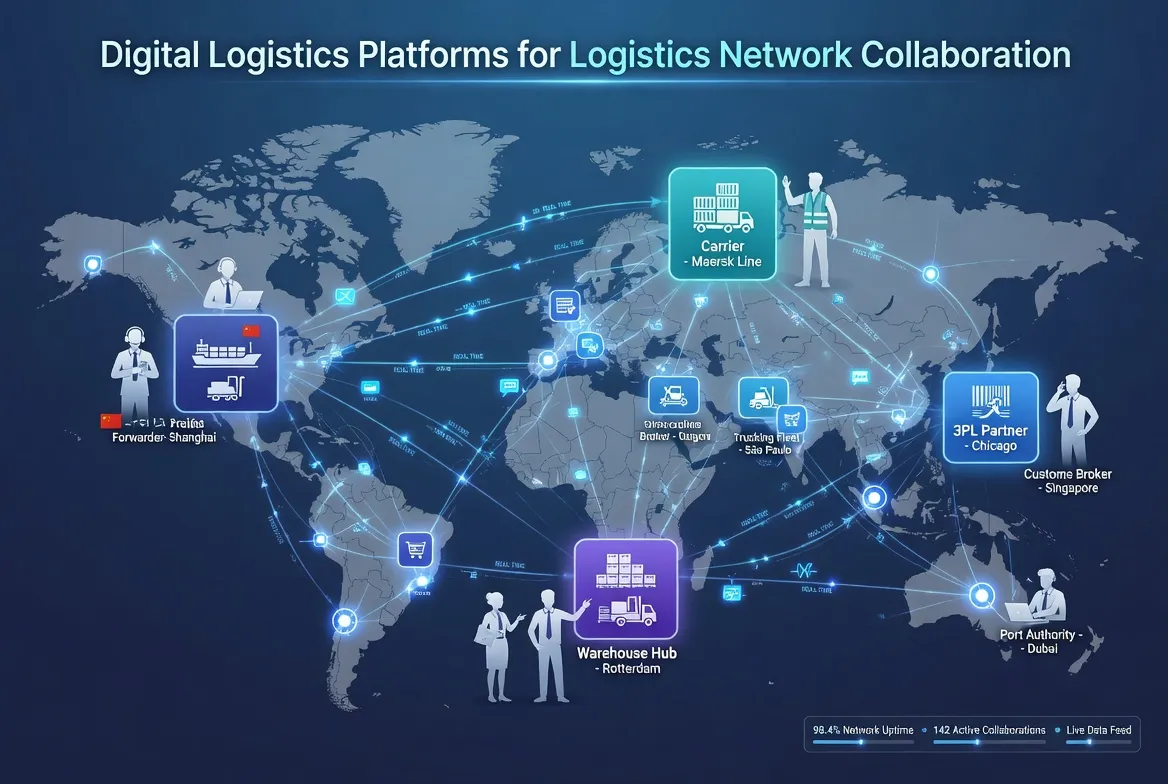
At its core, end-to-end visibility connects upstream and downstream stakeholders—shippers, carriers, warehouses, customs brokers, and customers—into a single data ecosystem.
Why End-to-End Logistics Visibility Matters
In global logistics, lack of visibility is one of the most common operational challenges. Many companies still rely on emails, spreadsheets, and manual updates, which leads to:
Delayed shipment status updates
Frequent customer inquiries (“Where is my cargo?”)
Difficulty identifying exceptions in time
Poor coordination between departments and partners
End-to-end visibility addresses these issues by providing:
Transparency: All stakeholders access the same real-time information
Operational control: Teams can identify delays and risks early
Customer experience improvement: Customers can track shipments independently
Reduced communication overhead: Fewer manual status updates
For freight forwarders and 3PL providers, visibility is no longer optional—it is a key competitive differentiator.
How End-to-End Logistics Visibility Works
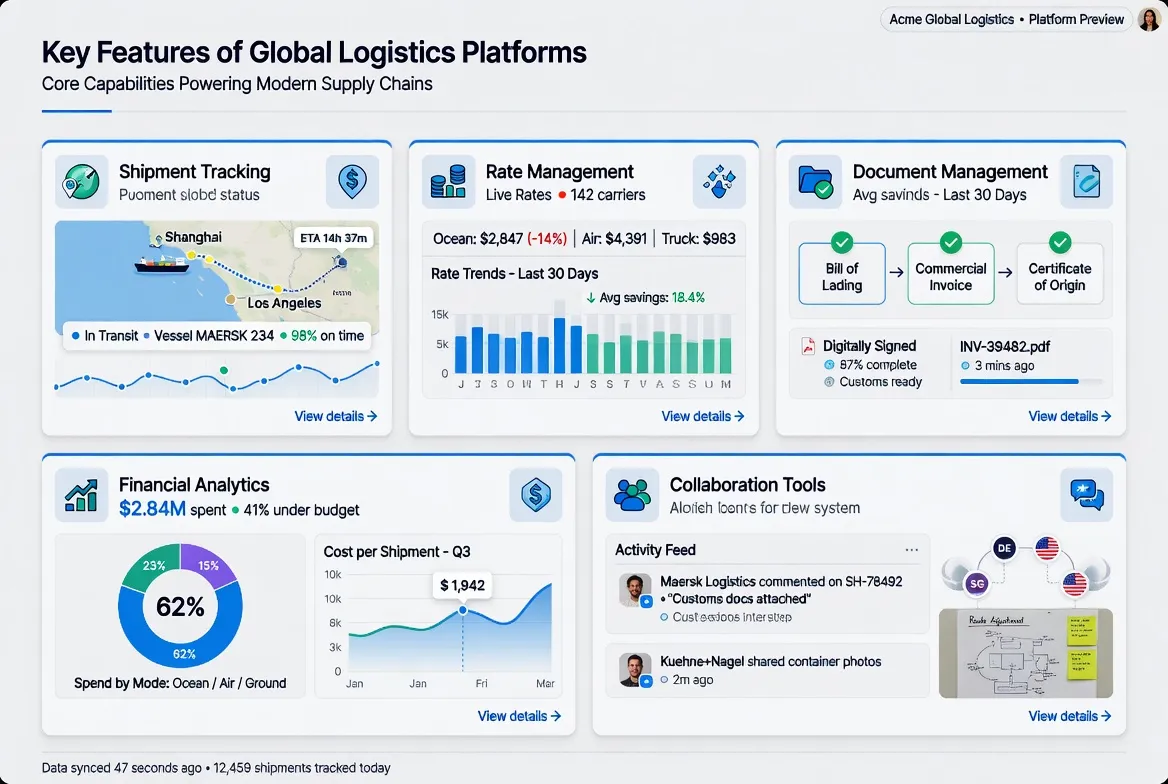
End-to-end visibility systems operate by integrating and synchronizing data from multiple sources across the logistics network. The process typically includes:
1. Data Integration
The system connects with various data sources, such as:
Carrier systems (airlines, shipping lines, trucking providers)
Port and terminal systems
Warehouse management systems (WMS)
Customs and regulatory platforms
IoT devices or tracking hardware
This multi-source integration ensures that shipment data is continuously updated.
2. Milestone-Based Tracking
Shipments are tracked through predefined milestones, such as:
Cargo received
Departure from origin
Arrival at port
Customs clearance completed
Out for delivery
Delivered
Each milestone is automatically updated or manually supplemented when needed, forming a structured shipment timeline.
3. Unified Timeline Visualization
All tracking events are aggregated into a single interface, allowing users to:
View the full shipment journey
Identify current status instantly
Analyze historical movement
This unified timeline eliminates the need to check multiple platforms.
4. Exception Monitoring and Alerts
The system detects anomalies such as:
Delays
Route deviations
Missing milestones
Automated alerts notify relevant stakeholders, enabling proactive action instead of reactive problem-solving.
5. Multi-Role Collaboration
Different roles—sales, operations, customer service, and partners—can access the same shipment data with role-based permissions. This ensures synchronized communication and reduces operational silos.
Key Features / Key Capabilities
Modern end-to-end visibility platforms typically include:
Multi-source tracking aggregation
Integrates data from carriers, warehouses, and external systemsMilestone-based tracking system
Structures shipment progress into clear, standardized stagesUnified shipment timeline
Displays all events in one centralized viewReal-time status updates
Combines automated tracking with manual input when necessaryException alerts and notifications
Automatically flags delays or abnormal conditionsMulti-role collaboration tools
Enables coordination across internal teams and external partnersData standardization and synchronization
Ensures consistent data across systems and stakeholders
Benefits for Logistics Companies
Implementing end-to-end visibility brings measurable operational benefits:
1. Improved Operational Efficiency
Teams no longer need to manually collect and reconcile tracking information. Automated updates reduce repetitive tasks.
2. Faster Decision-Making
Real-time data enables quick responses to disruptions, such as rerouting shipments or notifying customers.
3. Enhanced Customer Experience
Customers gain access to self-service tracking, reducing dependency on customer service teams.
4. Reduced Errors and Miscommunication
A single source of truth ensures that all stakeholders work with consistent information.
5. Scalable Operations
As shipment volumes grow, visibility systems support increased complexity without proportional increases in manual workload.
Best Practices / Use Cases
To maximize the value of end-to-end visibility, logistics companies should consider the following best practices:
1. Standardize Milestones Across Operations
Define consistent tracking milestones across all transport modes and partners to ensure uniform visibility.
2. Integrate Core Systems
Connect visibility platforms with ERP, WMS, and financial systems to enable seamless data flow.
3. Enable Customer Access
Provide customers with direct tracking access through portals to reduce inquiry volume.
4. Combine Automation with Manual Input
While automated tracking is essential, allowing manual updates ensures completeness in complex scenarios.
5. Use Visibility Data for Performance Analysis
Leverage tracking data to analyze delays, optimize routes, and improve service reliability.
Practical Use Cases
Freight forwarders managing multi-leg international shipments
3PL providers coordinating warehouse and transportation operations
Cross-border eCommerce logistics tracking parcel flows globally
Supply chain teams monitoring inbound and outbound shipments
Conclusion
End-to-end logistics visibility transforms how logistics operations are managed by providing a unified, real-time view of shipment movement across the entire supply chain. By integrating data, standardizing milestones, and enabling collaboration, it reduces uncertainty and improves operational efficiency. As global logistics becomes more complex, visibility systems play a critical role in enabling scalable, data-driven operations.
Frequently Asked Questions
What is end-to-end logistics visibility?
It is the ability to track shipments across the entire logistics process—from origin to delivery—using a unified system that aggregates data from multiple sources.
How does end-to-end visibility work?
It works by integrating data from carriers, warehouses, and systems, organizing it into milestone-based tracking, and displaying it in a centralized timeline.
Why is logistics visibility important?
It improves transparency, reduces delays, enhances customer experience, and enables faster decision-making in complex supply chains.
What are the benefits of end-to-end tracking systems?
They reduce manual work, improve accuracy, enable proactive issue handling, and support scalable logistics operations.
About WallTech
WallTech is a provider of digital logistics solutions designed to support freight forwarders, 3PL providers, and cross-border logistics companies. Its platforms enable end-to-end logistics collaboration by connecting multiple roles and partners within a unified workflow. With real-time shipment visibility, milestone-based tracking, and integrated data across systems, logistics teams can manage operations more efficiently. The system also supports workflow automation, financial processes such as billing and reconciliation, and scalable operational management to handle growing shipment volumes.
If you're exploring ways to improve your logistics operations, feel free to connect with us to learn more about our solutions and system capabilities.