Jun 15,2022
Software that Cross-Border Logistics Management: Get Started Today
Introduction
Logistics companies manage global shipment operations by integrating multiple processes—planning, execution, tracking, and financial settlement—into a unified digital system that enables coordination across regions, partners, and transport modes. These operations rely on centralized platforms that provide real-time visibility, standardized workflows, and automated data processing to handle the complexity of international logistics.
In today’s global supply chain environment, managing shipments across borders involves multiple stakeholders, fragmented systems, and varying regulatory requirements. Without digital coordination, companies face delays, errors, and inefficiencies. As a result, modern logistics companies increasingly depend on digital platforms to streamline operations and ensure consistent service delivery.
What is Global Shipment Operations Management?
Global shipment operations management refers to the end-to-end coordination of international freight movements, from order creation to final delivery and financial reconciliation.
It typically includes:
Shipment planning and booking
Documentation and compliance management
Multi-party coordination (shippers, carriers, agents)
Transportation execution across air, sea, and land
Shipment tracking and exception handling
Billing and financial settlement
In essence, it is the operational backbone that ensures goods move efficiently across borders while maintaining compliance and visibility.
Why Global Shipment Operations Matter
Managing global shipments effectively is critical for logistics companies due to the inherent complexity of international supply chains.
Key challenges include:
Fragmented systems: Different regions and partners use separate tools
Manual processes: Heavy reliance on emails, spreadsheets, and documents
Limited visibility: Difficulty tracking shipments across multiple legs
Coordination gaps: Misalignment between upstream and downstream partners
Without structured operations management, these challenges can lead to:
Delayed shipments
Increased operational costs
Customer dissatisfaction
Compliance risks
Efficient global shipment management enables logistics companies to maintain service reliability while scaling operations across regions.
How Global Shipment Operations Work
Global shipment operations typically follow a structured lifecycle, supported by digital systems.
1. Order Creation and Planning
Shipment orders are created by sales or customer service teams
Key details include origin, destination, cargo type, and service requirements
System-based workflows standardize data input and reduce manual errors
2. Booking and Resource Coordination
Freight forwarders coordinate with carriers (airlines, shipping lines, trucking providers)
Capacity is secured, and schedules are confirmed
Upstream and downstream partners are aligned through shared data
3. Documentation and Compliance
Required documents (e.g., invoices, packing lists, customs declarations) are generated
AI-driven data recognition can extract and validate document information
Compliance checks ensure adherence to international regulations
4. Transportation Execution
Shipments move across multiple legs (first mile, line haul, last mile)
Each milestone is recorded and updated in the system
Multi-modal coordination ensures smooth transitions between transport modes
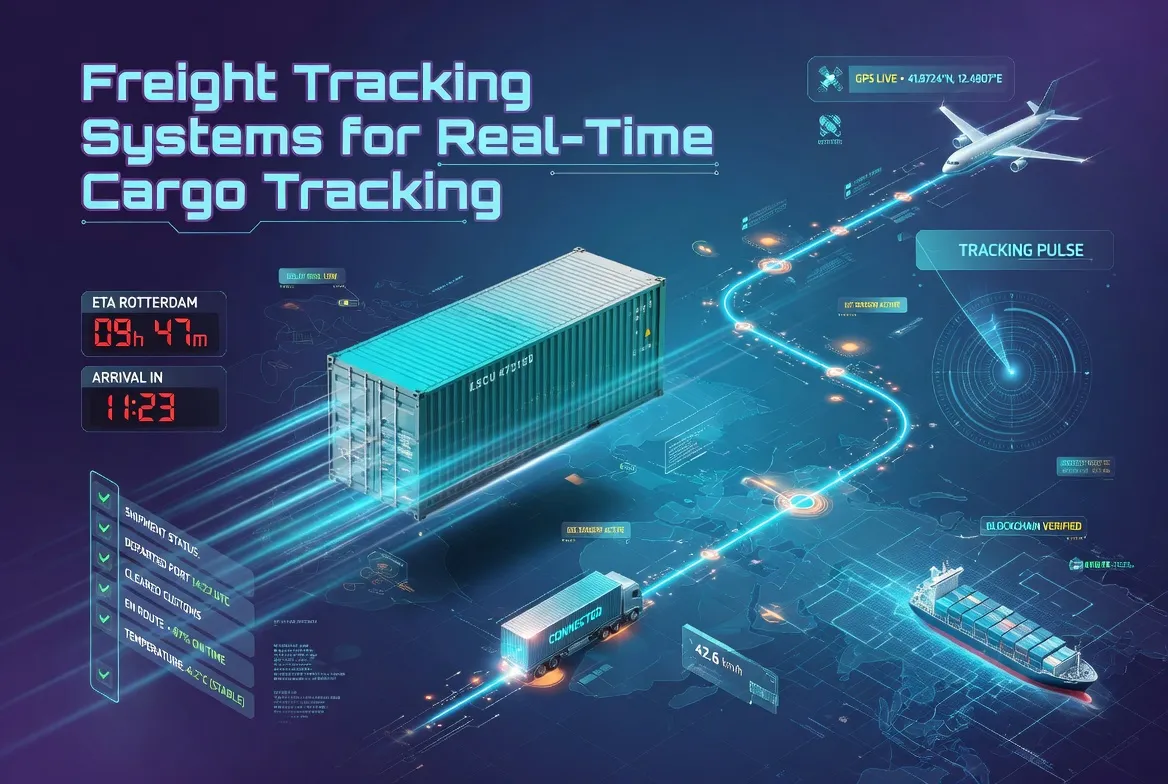
5. Tracking and Visibility
Real-time tracking provides updates on shipment status
Milestone-based tracking creates a unified timeline across all legs
Exceptions (delays, customs issues) are identified and managed proactively
6. Financial Settlement
Charges are calculated based on predefined pricing rules
Automated billing and reconciliation reduce manual workload
Financial data is linked directly to operational data for accuracy
Key Features / Key Capabilities
Modern logistics platforms enable global shipment operations through several core capabilities:
1. End-to-End Visibility
Real-time tracking across all shipment stages
Unified timeline for all stakeholders
Centralized data access
2. Multi-Role Collaboration
Coordination between sales, operations, finance, and partners
Upstream and downstream connectivity (shippers, carriers, agents)
Shared operational data reduces communication gaps
3. Workflow Automation
Standardized processes for order creation, booking, and execution
Automated task assignments and status updates
Reduced dependency on manual coordination
4. AI-Driven Data Processing
Automatic recognition of shipping documents
Data validation and error reduction
Faster document handling and compliance checks
5. Financial Automation
Automated billing based on shipment data
Cost allocation and profit analysis
Streamlined reconciliation processes
Benefits for Logistics Companies
Implementing structured global shipment operations management delivers measurable benefits:
Improved efficiency: Reduced manual workload and faster processing
Enhanced visibility: Real-time insights into shipment status
Better coordination: Seamless collaboration across teams and partners
Higher accuracy: Fewer errors in documentation and billing
Scalability: Ability to handle increasing shipment volumes without proportional cost increases
These benefits directly impact service quality and profitability.
Best Practices / Use Cases
1. Centralize Operational Data
Use a unified platform to manage all shipment data instead of relying on disconnected tools.
2. Standardize Workflows
Define clear processes for each stage of shipment operations to ensure consistency across regions.
3. Enable Real-Time Collaboration
Allow all stakeholders to access the same data and updates to reduce communication delays.
4. Leverage Automation
Automate repetitive tasks such as document processing, billing, and status updates.
5. Implement Milestone-Based Tracking
Track shipments based on key milestones rather than isolated events to gain a complete operational view.
Use Case Example:
A freight forwarder managing cross-border eCommerce shipments can use a digital platform to:
Automatically receive orders from eCommerce systems
Coordinate with multiple carriers across regions
Track shipments in real time
Automate billing based on shipment milestones
This reduces operational complexity while improving delivery performance.
Conclusion
Global shipment operations management is essential for logistics companies operating in complex international environments. By integrating planning, execution, tracking, and financial processes into a unified system, companies can overcome fragmentation and inefficiencies.
Digital platforms play a critical role by enabling visibility, collaboration, and automation. As global trade continues to grow, logistics companies that adopt structured, technology-driven operations will be better positioned to scale efficiently and deliver consistent service quality.
Frequently Asked Questions
What is global shipment operations management in logistics?
It is the process of managing the entire lifecycle of international shipments, including planning, execution, tracking, and financial settlement.
How do logistics companies manage global shipments?
They use digital platforms to coordinate workflows, track shipments in real time, and automate processes such as documentation and billing.
Why is shipment visibility important?
Visibility allows companies to monitor shipment progress, identify delays early, and improve customer communication.
What are the benefits of digital logistics platforms?
They improve efficiency, reduce errors, enhance collaboration, and enable scalable operations.
How does automation improve logistics operations?
Automation reduces manual work, speeds up processes, and ensures consistency across operations.
About WallTech
WallTech is a digital logistics solution provider focused on helping freight forwarders and cross-border logistics companies streamline global operations. Through cloud-based platforms, WallTech enables end-to-end collaboration across multiple roles and partners, enhances real-time shipment visibility with milestone-based tracking, and supports workflow and financial automation. By integrating operational and financial processes into a unified system, WallTech helps logistics companies improve efficiency, reduce manual complexity, and scale their business in a structured and sustainable way.
If you're exploring ways to improve your logistics operations, feel free to connect with us to learn more about our solutions and system capabilities.

.webp "How Logistics Platforms Centralize Shipment Data Across Multiple Systems")