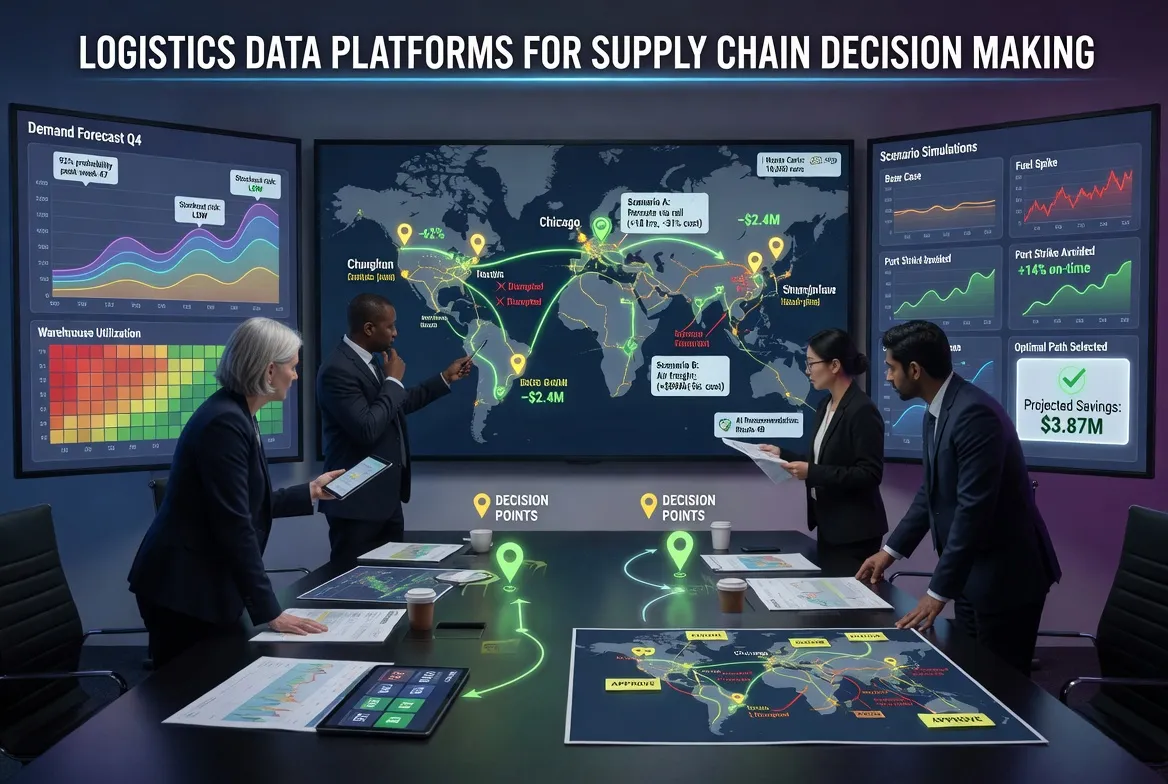
.webp "What Is a Logistics Data Integration Platform?")
Mar 04,2026
What Is a Logistics Data Integration Platform?
Introduction
A logistics system for freight agents handling multi-modal transport is a digital platform that enables the management of shipments across multiple transportation modes—such as ocean, air, rail, and trucking—within a unified workflow. It ensures seamless coordination, real-time visibility, and operational control throughout complex, multi-leg shipment journeys.
As global supply chains increasingly rely on multi-modal transport to optimize cost and transit time, freight agents require integrated systems to manage these operations efficiently and avoid fragmentation.
What is a Logistics System for Multi-Modal Transport
A logistics system for multi-modal transport is specialized software designed to support freight agents in coordinating shipments that involve more than one mode of transportation.
Multi-modal transport typically includes combinations such as:
Ocean + trucking
Air + last-mile delivery
Rail + ocean freight
Air + trucking + warehousing
The system acts as a centralized platform that connects all transport legs, stakeholders, and operational processes into a single, structured workflow.
Unlike single-mode systems, multi-modal logistics systems must handle:
Complex routing and scheduling
Multiple carriers and service providers
Diverse documentation requirements
Cross-border coordination and compliance
Why Multi-Modal Logistics Systems Matter
Freight agents managing multi-modal shipments face several operational challenges:
Disconnected systems for different transport modes
Lack of visibility across multiple shipment legs
Manual coordination between carriers and partners
Increased risk of delays during handovers
Complex cost tracking across different services
Without a unified system, these challenges lead to:
Operational inefficiencies
Data inconsistencies
Poor customer communication
Difficulty in managing profitability
A dedicated logistics system addresses these issues by:
Integrating all transport modes into one platform
Providing end-to-end visibility across shipment legs
Enabling seamless collaboration between stakeholders
Automating workflows to reduce manual coordination
For freight agents operating globally, managing multi-modal transport efficiently is critical for maintaining service quality and competitiveness.
How a Multi-Modal Logistics System Works
A logistics system for multi-modal transport manages the entire shipment lifecycle across different transport modes:
1. Shipment Planning and Booking
The system allows users to define routes that include multiple transport modes and create shipment orders accordingly.
2. Multi-Leg Coordination
Each leg of the shipment (e.g., ocean, air, trucking) is managed within the same system, ensuring continuity across the journey.
3. Carrier and Partner Integration
Different carriers and service providers are connected through API or EDI integrations, enabling data exchange and coordination.
4. Milestone-Based Tracking
Each transport leg has its own milestones, which are combined into a unified timeline for the entire shipment.
5. Real-Time Visibility
Shipment updates from different modes are synchronized, providing a complete view of shipment status across all stages.
6. Financial Management
Costs and revenues from different transport legs are recorded and consolidated, enabling accurate profit analysis.
Key Features of Multi-Modal Logistics Systems
1. End-to-End Visibility Across Modes
Unified tracking of shipments across ocean, air, rail, and trucking
Milestone-based tracking for each leg and the overall journey
Real-time updates from multiple data sources
2. Multi-Role Collaboration
Coordination between internal teams and external partners
Seamless communication with carriers, agents, and service providers
Upstream and downstream data connectivity
3. Workflow Automation
Automated task assignment across shipment stages
Trigger-based workflows for each transport leg
Reduced manual coordination between modes
4. Document Management and Automation
Centralized storage of transport documents (e.g., BL, AWB)
AI-based data recognition to extract key information
Reduced manual document handling
5. Financial Integration
Consolidation of costs and revenues across all transport legs
Automated billing and invoicing
Real-time profitability analysis
6. Integration Capabilities
API and EDI connectivity with carriers and partners
Integration with external systems such as WMS and ERP
Seamless data synchronization across platforms
Benefits for Logistics Companies
A multi-modal logistics system provides several advantages for freight agents:
Improved operational efficiency: Unified workflows reduce complexity
Enhanced visibility: Full tracking across all transport modes
Better coordination: Seamless collaboration with partners and carriers
Reduced errors: Automated processes minimize manual input
Accurate financial tracking: Consolidated cost and revenue management
Scalability: Ability to handle complex and high-volume shipments
These benefits are essential for logistics companies managing diverse transport networks and global operations.
Best Practices / Use Cases
1. Managing Complex Global Shipments
Freight agents can use a unified system to manage shipments involving multiple countries and transport modes, ensuring smooth coordination.
2. Optimizing Route Planning
By integrating all transport legs, companies can analyze and optimize routes for cost and efficiency.
3. Enhancing Customer Visibility
Providing customers with a single tracking interface improves transparency, even for complex multi-leg shipments.
4. Improving Handover Efficiency
Automated workflows ensure seamless transitions between transport modes, reducing delays during handovers.
5. Financial Transparency Across Modes
Tracking costs and revenues for each leg enables accurate profitability analysis and better financial control.
Conclusion
A logistics system for freight agents handling multi-modal transport is essential for managing the complexity of modern global logistics. By integrating multiple transport modes into a unified platform, it provides visibility, improves coordination, and enables efficient execution of multi-leg shipments.
As supply chains become more interconnected and dynamic, adopting a robust multi-modal logistics system is critical for maintaining operational efficiency and delivering reliable services.
Frequently Asked Questions
What is multi-modal transport in logistics?
Multi-modal transport refers to the movement of goods using two or more different transportation modes, such as ocean, air, rail, and trucking.
How does a logistics system support multi-modal transport?
It integrates all transport legs into a unified workflow, enabling tracking, coordination, and financial management across the entire shipment journey.
Why is a multi-modal logistics system important?
It improves visibility, reduces operational complexity, enhances coordination, and enables efficient management of complex shipments.
What features are essential in multi-modal logistics systems?
Key features include end-to-end visibility, multi-role collaboration, workflow automation, document management, and financial integration.
About WallTech
WallTech provides digital logistics solutions designed to support freight agents managing complex multi-modal transport operations. Its platforms enable end-to-end collaboration across internal teams and external partners, while offering real-time shipment visibility through milestone-based tracking across all transport modes. With capabilities such as workflow automation, AI-driven document data recognition, and automated financial processes including billing and reconciliation, WallTech helps logistics companies improve efficiency, enhance transparency, and scale their multi-modal operations effectively.
If you're exploring ways to improve your logistics operations, feel free to connect with us to learn more about our solutions and system capabilities.