.webp "What Is a Logistics Workflow Automation System?")
Mar 04,2026
What Is a Logistics Workflow Automation System?
Introduction
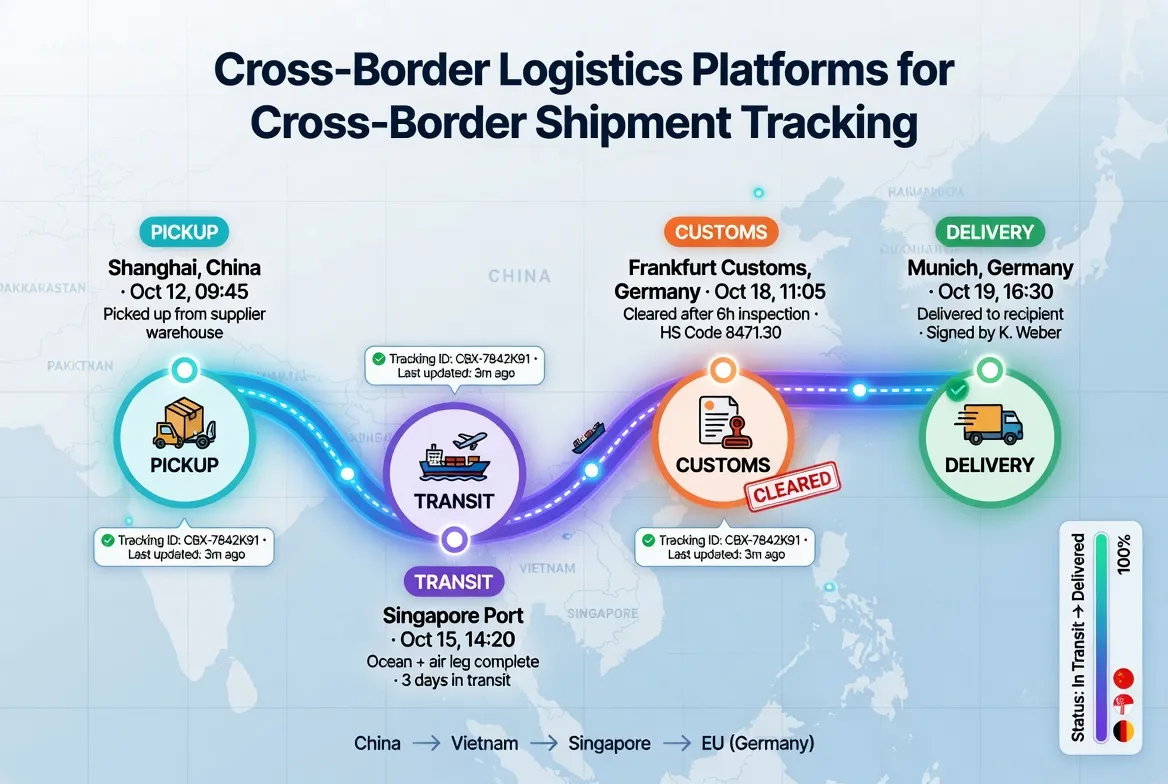
Logistics platforms track shipment milestones by capturing key events throughout the shipment lifecycle and mapping them to predefined stages within a centralized system. These platforms integrate data from carriers, partners, and internal operations, then organize it into milestone-based tracking that provides a clear, structured view of shipment progress in real time.
In global logistics, milestone tracking is essential for transforming fragmented shipment data into actionable insights, enabling better coordination, visibility, and control across complex supply chains.
What is Shipment Milestone Tracking?
Shipment milestone tracking is the process of monitoring a shipment’s progress based on predefined stages or events that occur throughout its journey.
Typical logistics milestones include:
Booking confirmation
Cargo pickup
Warehouse inbound and outbound
Departure from origin port or airport
Arrival at destination port
Customs clearance
Final delivery
Each milestone represents a critical checkpoint, allowing logistics teams to understand exactly where a shipment is within its lifecycle.
Why Shipment Milestone Tracking Matters
Without milestone tracking, shipment monitoring becomes unstructured and difficult to interpret. Raw tracking data from different carriers often lacks consistency and clarity.
Key challenges without milestone tracking include:
Unstructured data: Tracking updates come in different formats and are hard to interpret
Lack of progress visibility: Teams cannot easily assess how far a shipment has progressed
Delayed issue detection: Missing or delayed milestones go unnoticed
Inefficient communication: Stakeholders rely on manual updates and fragmented information
Poor operational control: Difficulty in managing timelines and service performance
Milestone tracking solves these issues by providing a standardized and structured approach to monitoring shipments.
How Logistics Platforms Track Shipment Milestones
Logistics platforms use a combination of integration, event processing, and automation to track shipment milestones effectively.
1. Milestone Definition and Standardization
Platforms define a set of standardized milestones that apply across shipments, such as:
Origin handling milestones
Line-haul transport milestones
Destination handling milestones
This ensures consistency regardless of carrier or transport mode.
2. Event Data Collection
Shipment milestones are triggered by real-time events captured from:
Carrier systems (ocean, air, trucking)
Warehouse operations
Port and terminal systems
Customs and clearance platforms
Each event corresponds to a specific milestone in the shipment lifecycle.
3. Data Mapping and Normalization
Different data sources use different formats and terminology. Logistics platforms apply:
AI-driven data recognition
Data mapping and standardization
Automated validation rules
This ensures that incoming data is accurately matched to the correct milestone.
4. Milestone Timeline Generation
Once events are processed, the system generates a unified timeline that shows:
Completed milestones
Current shipment status
Upcoming expected milestones
This timeline provides a clear, visual representation of shipment progress.
5. Automated Alerts and Workflow Triggers
Platforms enhance milestone tracking by:
Sending alerts when milestones are delayed or missed
Triggering workflows (e.g., document preparation, invoicing)
Notifying customers and partners of status updates
This transforms milestone tracking into an active management tool.
Key Features of Milestone Tracking Systems
Modern logistics platforms include several capabilities to support effective milestone tracking:
Milestone-based visibility: Structured tracking across defined shipment stages
Unified timeline view: Consolidated display of all milestone events
Real-time updates: Continuous synchronization with external systems
Multi-role collaboration: Shared access for operations, customer service, and partners
Exception alerts: Notifications for delays or missing milestones
Workflow automation: Automated actions triggered by milestone completion
Integration capabilities: Seamless connection with carriers and logistics systems
These features enable logistics companies to move from reactive tracking to proactive management.
Benefits for Logistics Companies
Milestone tracking provides significant operational and strategic benefits.
Improved Operational Control
Monitor shipment progress in a structured way
Quickly identify delays or disruptions
Ensure adherence to planned timelines
Enhanced Visibility
Gain a clear, end-to-end view of shipment status
Understand where shipments are within the process
Improve forecasting and planning
Better Collaboration
Align internal teams (operations, sales, finance)
Enable coordination with upstream and downstream partners
Provide consistent data across all stakeholders
Increased Efficiency
Reduce manual tracking and follow-ups
Automate routine processes
Improve workflow consistency
Best Practices / Use Cases
To maximize the value of milestone tracking, logistics companies should adopt the following practices:
1. Define Standard Milestones Across Operations
Establish consistent milestone definitions across all shipment types and regions.
2. Integrate All Relevant Data Sources
Ensure the platform connects with:
Carriers
Warehouses
Customs systems
Internal operational systems
3. Use Automation for Exception Management
Set up automated alerts for:
Delayed milestones
Missing events
Unexpected status changes
4. Enable Multi-Party Visibility
Provide access to milestone data for:
Customers
Overseas agents
Internal teams
This improves transparency and reduces communication gaps.
5. Link Milestones to Financial Processes
Connect milestone completion with:
Automated billing
Cost calculation
Financial reconciliation
Example Use Case
A freight forwarder managing ocean shipments can use milestone tracking to:
Monitor container departure and arrival events
Track customs clearance status at destination ports
Notify customers of key progress updates
Automatically trigger invoicing upon delivery completion
Conclusion
Shipment milestone tracking is a fundamental capability for modern logistics platforms. By structuring shipment data into clearly defined stages and integrating real-time event updates, companies can gain better visibility, improve coordination, and enhance operational efficiency.
As global supply chains become increasingly complex, milestone-based tracking provides the clarity and control needed to manage shipments effectively.
Frequently Asked Questions
What is shipment milestone tracking?
Shipment milestone tracking is the process of monitoring shipment progress based on predefined stages or events throughout the logistics lifecycle.
How do logistics platforms track milestones?
They capture event data from multiple sources, map it to standardized milestones, and present it in a unified timeline with real-time updates.
Why is milestone tracking important?
It provides structured visibility, enables proactive issue management, and improves coordination across supply chain stakeholders.
What are the benefits of milestone tracking?
Benefits include improved operational control, enhanced visibility, better collaboration, and increased efficiency.
About WallTech
WallTech provides digital logistics solutions that support milestone-based shipment tracking and end-to-end visibility across global supply chains. Its platforms enable logistics companies to standardize tracking processes, connect upstream and downstream partners, and achieve seamless multi-role collaboration. By integrating real-time data, AI-driven data processing, and workflow automation—including automated billing and reconciliation—WallTech helps organizations improve operational efficiency, reduce manual workload, and scale their logistics operations in complex international environments.
If you're exploring ways to improve your logistics operations, feel free to connect with us to learn more about our solutions and system capabilities.