Apr 02,2026
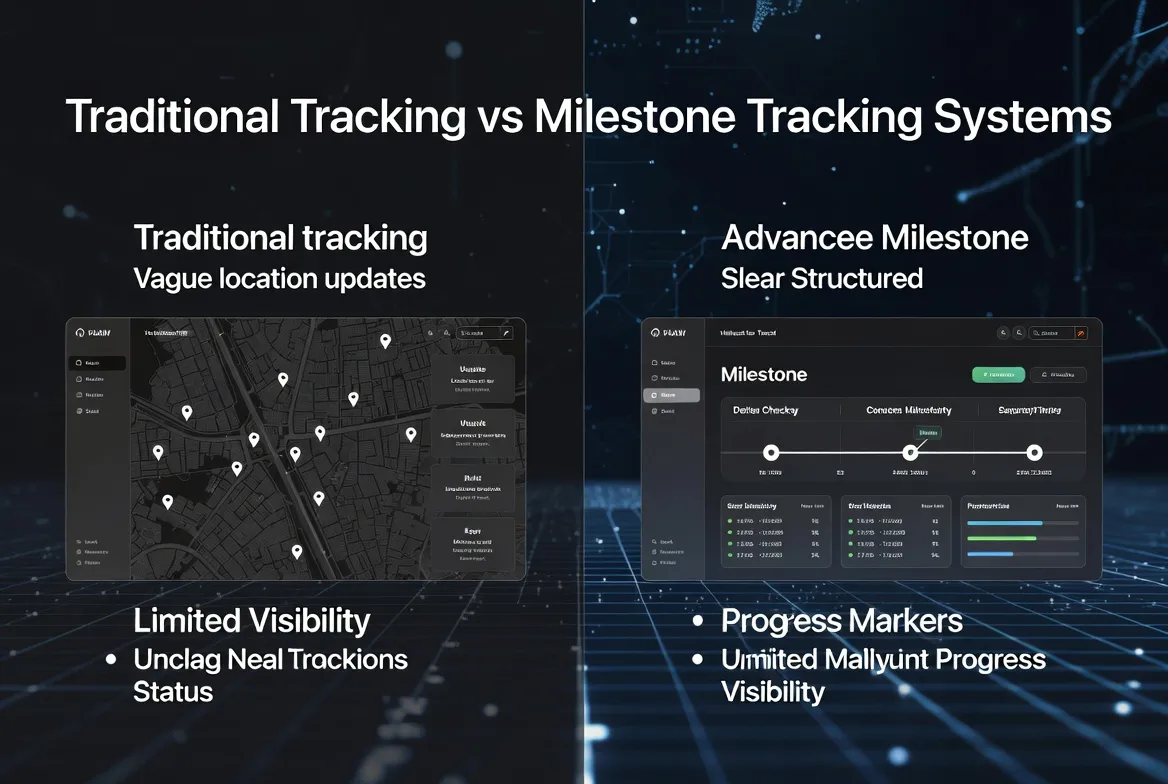
Traditional Tracking vs Milestone Tracking Systems
Introduction
Digital logistics platforms for shipment monitoring and visibility are systems that provide real-time tracking and status updates across the entire shipment lifecycle, from origin to final delivery. These platforms enable logistics companies to monitor shipments through unified timelines, milestone tracking, and integrated data sources, ensuring full visibility into operations.
In modern logistics, where shipments span multiple transport modes, countries, and partners, visibility is critical for maintaining control, improving customer experience, and responding to disruptions effectively.
What is a Digital Logistics Platform for Shipment Monitoring and Visibility
A digital logistics platform for shipment monitoring and visibility is a centralized system that captures, consolidates, and displays shipment data across all stages of the logistics process.
It provides:
End-to-end tracking from pickup to delivery
Real-time updates from multiple data sources
A unified shipment timeline for all stakeholders
Visibility into operational status, delays, and exceptions
Unlike traditional tracking methods—where data is scattered across carrier websites, emails, and spreadsheets—these platforms offer a single source of truth for shipment information.
Why Shipment Monitoring and Visibility Matter
Lack of visibility is one of the most common challenges in logistics operations.
Typical issues include:
Data fragmentation: Shipment information exists in multiple systems with no centralized view
Delayed updates: Status information is not updated in real time
Limited exception awareness: Delays or disruptions are discovered too late
Poor customer communication: Customers lack transparency on shipment progress
These challenges can lead to:
Operational inefficiencies
Increased customer complaints
Difficulty in managing delays and risks
Reduced trust in logistics service providers
Digital logistics platforms solve these issues by enabling continuous monitoring and transparent visibility across the entire shipment lifecycle.
How Digital Logistics Platforms Enable Shipment Monitoring and Visibility
Digital logistics platforms provide visibility through integrated data, structured tracking, and automated updates.
1. Multi-Source Data Collection
Shipment data is collected from:
Carrier systems (ocean, air, express)
Warehouse and handling systems
Customs clearance updates
Manual inputs where necessary
This ensures that all relevant shipment events are captured.
2. Milestone-Based Tracking
Each shipment is tracked through predefined milestones:
Pickup
Departure
Transit updates
Customs clearance
Arrival
Final delivery
These milestones create a structured view of shipment progress.
3. Unified Timeline View
All shipment events are displayed in a single timeline:
Eliminates the need to check multiple systems
Provides a clear, chronological view of shipment status
Enables quick identification of delays or issues
4. Real-Time Updates
The system continuously updates shipment status:
Automatic event subscription from integrated systems
Manual updates where required
Immediate reflection of changes across all users
5. Exception and Alert Management
The platform detects and notifies users of issues:
Delayed milestones
Missing updates
Abnormal events
Notifications can be configured for different roles and stakeholders.
Key Features / Key Capabilities
Digital logistics platforms for visibility typically include:
1. End-to-End Shipment Tracking
Full lifecycle visibility from origin to destination
Integration across multiple transport modes
2. Milestone-Based Monitoring
Structured tracking of key shipment events
Clear progress indicators
3. Multi-Source Data Integration
Consolidation of tracking data from carriers, warehouses, and systems
Elimination of data silos
4. Real-Time Visibility Dashboard
Centralized interface for monitoring all shipments
Filtering by customer, route, status, or timeframe
5. Automated Alerts and Notifications
Customizable alerts for delays and exceptions
Notification via email, system messages, or other channels
6. Customer-Facing Tracking Portals
Self-service tracking for customers
Improved transparency and user experience
These capabilities allow logistics companies to maintain control over shipments while improving communication and responsiveness.
Benefits for Logistics Companies
Improved Operational Control
Real-time insight into shipment status
Faster identification and resolution of issues
Enhanced Customer Experience
Transparent tracking information
Reduced need for manual status inquiries
Reduced Operational Workload
Automated tracking updates
Less manual follow-up with carriers and partners
Better Risk Management
Early detection of delays and disruptions
Ability to take proactive corrective actions
Data-Driven Decision Making
Access to historical tracking data
Improved performance analysis and optimization
Best Practices / Use Cases
1. Freight Forwarders
Monitor multi-leg international shipments
Provide customers with real-time updates
Manage exceptions proactively
2. Cross-Border eCommerce Logistics
Track high volumes of small parcels
Integrate last-mile delivery tracking
Improve delivery transparency for end customers
3. 3PL Providers
Offer visibility across warehousing and transportation
Monitor SLA performance
Enhance service quality
4. Global Logistics Networks
Coordinate visibility across multiple countries and partners
Ensure consistent tracking standards
Improve collaboration across regions
Conclusion
Digital logistics platforms for shipment monitoring and visibility are essential for managing modern logistics operations. By providing real-time, end-to-end tracking and unified shipment timelines, these platforms eliminate data fragmentation and improve operational transparency.
As supply chains become more complex, the ability to monitor shipments accurately and respond to issues quickly is critical for maintaining efficiency, reliability, and customer satisfaction.
Frequently Asked Questions
What is shipment visibility in logistics?
Shipment visibility refers to the ability to track and monitor the status, location, and progress of shipments throughout the entire logistics lifecycle in real time.
How do digital logistics platforms provide visibility?
They integrate data from multiple sources, track shipments through milestones, and present updates in a unified timeline accessible to all stakeholders.
Why is shipment visibility important?
It enables better operational control, improves customer communication, reduces delays, and helps logistics companies respond to disruptions effectively.
What are the benefits of shipment monitoring platforms?
Benefits include real-time tracking, improved efficiency, reduced manual workload, better risk management, and enhanced customer experience.
Who needs shipment visibility solutions?
Freight forwarders, 3PL providers, and cross-border eCommerce logistics companies all benefit from improved shipment monitoring and visibility.
About WallTech
WallTech provides digital logistics solutions that enhance shipment monitoring and visibility across global supply chains. Its platforms enable end-to-end tracking with milestone-based visibility and unified timelines, allowing logistics companies to maintain full control over shipment progress. By supporting multi-role collaboration and integrating data from multiple sources, WallTech helps eliminate information gaps. In addition, workflow automation, AI-driven data processing, and financial integration improve efficiency and reduce manual effort, enabling scalable and transparent logistics operations.
If you're exploring ways to improve your logistics operations, feel free to connect with us to learn more about our solutions and system capabilities.
.webp "How Logistics Workflow Automation Reduces Operational Errors")