
Apr 17,2026
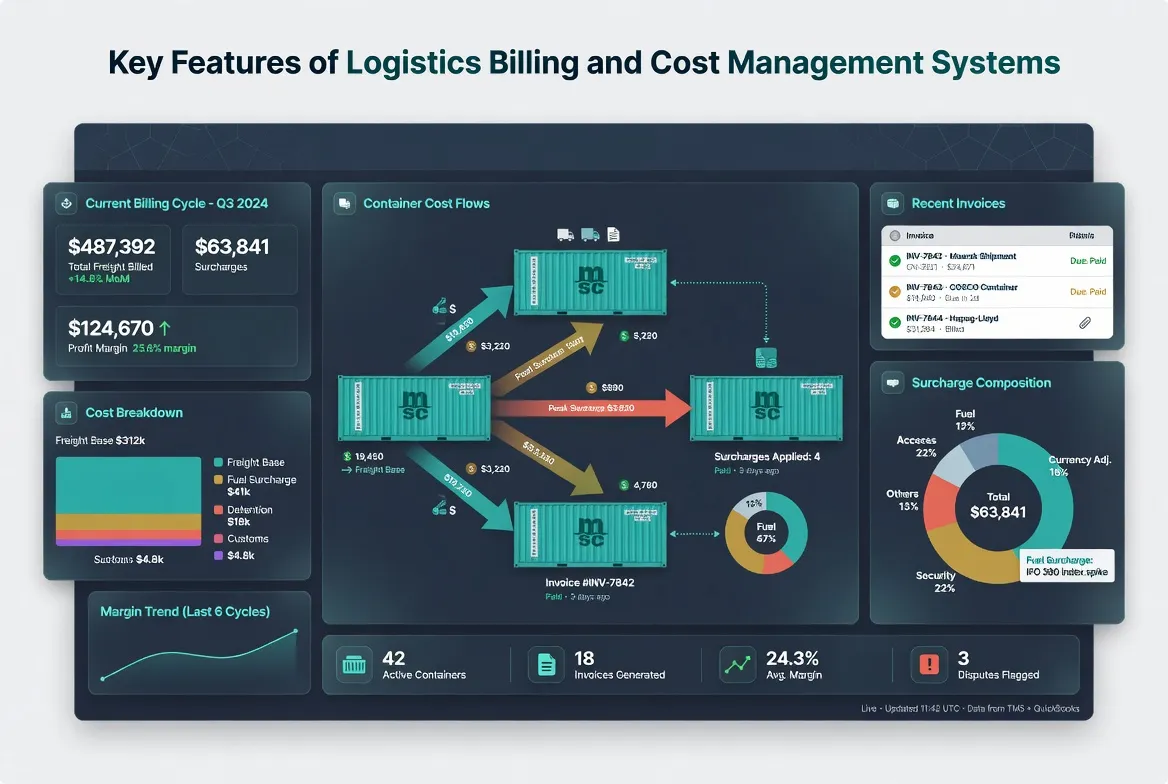
Key Features of Logistics Billing and Cost Management Systems
Introduction (direct answer + context)
Freight financial platforms for shipment profit analysis are systems that enable logistics companies to calculate, monitor, and optimize profitability at the shipment level by integrating operational and financial data. These platforms provide real-time visibility into revenue, costs, and margins for each shipment, allowing freight forwarders, 3PLs, and cross-border logistics providers to make informed decisions and improve financial performance. In an industry where margins are often thin and cost structures are complex, shipment-level profit analysis is critical for sustainable growth.
What is Shipment Profit Analysis
Shipment profit analysis is the process of evaluating the financial performance of individual logistics transactions by comparing the total revenue generated against all associated costs.
In logistics, a single shipment may involve:
Multiple transport segments (sea, air, land, last-mile)
Various cost components (freight charges, handling fees, customs duties, warehousing)
Multiple stakeholders (carriers, agents, partners)
A freight financial platform consolidates all these elements to calculate:
Gross profit per shipment
Cost breakdown by service component
Margin contribution by customer, route, or service
Unlike traditional financial reporting, which focuses on aggregated data, shipment profit analysis provides granular insights at the operational level.
Why Shipment Profit Analysis Matters
Many logistics companies struggle to accurately understand profitability due to:
Fragmented systems separating operations and finance
Manual cost allocation processes
Delayed or incomplete financial data
Lack of visibility into real-time shipment performance
These challenges often result in:
Hidden losses on specific shipments or routes
Inaccurate pricing strategies
Inefficient cost management
Reduced overall profitability
Shipment profit analysis addresses these issues by providing:
Real-time financial insights
Transparent cost structures
Data-driven decision-making capabilities
This allows companies to identify profitable and unprofitable business segments quickly.
How Shipment Profit Analysis Works
Freight financial platforms enable shipment profit analysis through a structured approach:
1. Data Consolidation
The system collects data from multiple sources, including:
Shipment operations (booking, transport, delivery)
Pricing and rate management systems
Supplier and carrier invoices
All data is unified into a single platform.
2. Revenue Capture
Revenue is recorded based on:
Customer contracts and rate cards
Billing rules applied to each shipment
Additional service charges
This ensures accurate revenue recognition.
3. Cost Allocation
Costs are allocated to each shipment using predefined rules:
Direct costs (freight, handling, customs)
Indirect costs (shared container or route costs)
Partner and agent fees
Automated allocation ensures consistency and accuracy.
4. Profit Calculation
The system calculates:
Revenue – Total Costs = Profit
Margin percentage per shipment
Profit contribution by segment
These calculations are performed in real time.
5. Visualization and Reporting
Profit data is presented through dashboards and reports, allowing users to:
Analyze profitability by shipment, customer, or route
Identify trends and anomalies
Export financial insights for further analysis
Key Features / Key Capabilities
Freight financial platforms for shipment profit analysis typically include:
Real-Time Profit Visibility
Shipment-level profit and loss tracking
Multi-dimensional analysis (customer, route, service)
Unified financial dashboards
Automated Cost and Revenue Management
Rule-based cost allocation
Automated revenue capture from billing systems
Integration with pricing and rate management
End-to-End Tracking
Linking financial data with shipment milestones
Unified timeline for operational and financial events
Visibility into cost accumulation throughout the shipment lifecycle
Multi-Role Collaboration
Coordination between operations, finance, and sales teams
Shared access to profit data across departments
Integration with upstream and downstream partners
AI and Automation
AI-driven data recognition for invoices and documents
Automated reconciliation and validation processes
Workflow automation for financial approvals
These capabilities ensure accurate and efficient profit analysis.
Benefits for Logistics Companies
Improved Profitability Control
Companies can identify which shipments, customers, or routes are most profitable and adjust strategies accordingly.
Data-Driven Pricing Decisions
Accurate profit insights enable better pricing strategies and contract negotiations.
Reduced Financial Risk
Early detection of loss-making shipments helps prevent long-term financial issues.
Operational Efficiency
Automation reduces manual effort in cost allocation and profit calculation.
Enhanced Strategic Planning
Comprehensive financial insights support long-term business planning and growth strategies.
Best Practices / Use Cases
1. Route Profitability Analysis
Companies can evaluate profitability across different trade lanes and optimize route selection.
2. Customer Profitability Management
Shipment-level data helps identify high-value customers and optimize service offerings.
3. Multimodal Shipment Analysis
Platforms enable profit tracking across complex shipments involving multiple transport modes.
4. Cross-Border eCommerce Logistics
High-volume operations benefit from automated profit tracking for each parcel or order.
5. Exception and Loss Detection
Automated alerts highlight shipments with abnormal costs or low margins.
Conclusion
Shipment profit analysis is a critical capability for logistics companies seeking to improve financial performance and operational efficiency. Freight financial platforms provide the tools needed to accurately calculate and monitor profitability at the shipment level, enabling better decision-making and cost control. As logistics operations become more complex, real-time profit visibility becomes essential for maintaining competitiveness and achieving sustainable growth.
Frequently Asked Questions
What is shipment profit analysis in logistics?
Shipment profit analysis is the process of calculating and evaluating the profitability of individual shipments by comparing revenue and associated costs.
How does shipment profit analysis work?
It consolidates operational and financial data, allocates costs, captures revenue, and calculates profit in real time for each shipment.
Why is shipment profit analysis important?
It helps logistics companies identify profitable and unprofitable operations, optimize pricing, and improve overall financial performance.
What are the benefits of shipment profit analysis?
Benefits include improved profitability control, better pricing decisions, reduced financial risk, and enhanced operational efficiency.
Who needs shipment profit analysis systems?
Freight forwarders, 3PL providers, and cross-border logistics companies handling complex or high-volume operations benefit the most.
About WallTech
WallTech provides digital logistics solutions that integrate operational workflows with financial management, enabling real-time visibility into shipment performance and profitability. By connecting multiple roles across logistics operations and finance, the platform supports end-to-end collaboration and unified data management. With capabilities such as milestone-based tracking, automated cost allocation, billing automation, and intelligent workflow processes, WallTech helps logistics companies improve efficiency, enhance financial transparency, and scale their global operations effectively.
If you're exploring ways to improve your logistics operations, feel free to connect with us to learn more about our solutions and system capabilities.
.webp "What Is Shipment Milestone Tracking in Logistics Systems")