Mar 23,2026
Key Capabilities of Logistics SOP Automation Solutions
Introduction
Digital logistics platforms for logistics process automation are systems designed to streamline and automate repetitive, manual, and time-consuming logistics tasks across the entire supply chain. These platforms use workflow automation, AI-driven data processing, and rule-based triggers to reduce human intervention while improving speed, accuracy, and operational consistency.
In modern logistics environments—where freight forwarders, 3PLs, and cross-border eCommerce providers handle high shipment volumes—automation is essential to maintain efficiency, reduce errors, and scale operations effectively.
What is a Digital Logistics Platform for Logistics Process Automation
A digital logistics platform for process automation is a centralized system that automates key logistics workflows, including order management, document handling, tracking updates, and financial processes.
It replaces manual operations such as:
Re-entering shipment data across systems
Manually generating invoices
Tracking shipments through multiple platforms
Communicating updates via email or messaging
Instead, the platform uses predefined rules and intelligent automation to execute these tasks automatically within a unified system.
These platforms typically combine:
Workflow engines
AI-based data recognition (e.g., OCR)
Integration with external systems
Event-driven automation triggers
Why Logistics Process Automation Matters
Logistics operations are traditionally labor-intensive and prone to inefficiencies.
Common challenges include:
Manual data entry across multiple systems
Repetitive operational tasks such as document preparation and tracking updates
High error rates due to human input
Slow billing cycles caused by disconnected financial processes
Limited scalability as workload increases
These inefficiencies result in:
Increased operational costs
Delays in shipment processing
Inconsistent service quality
Reduced profitability
Digital logistics platforms address these challenges by automating workflows and ensuring consistent execution of processes.
How Digital Logistics Platforms Enable Process Automation
Digital logistics platforms automate logistics processes through structured workflows and intelligent triggers.
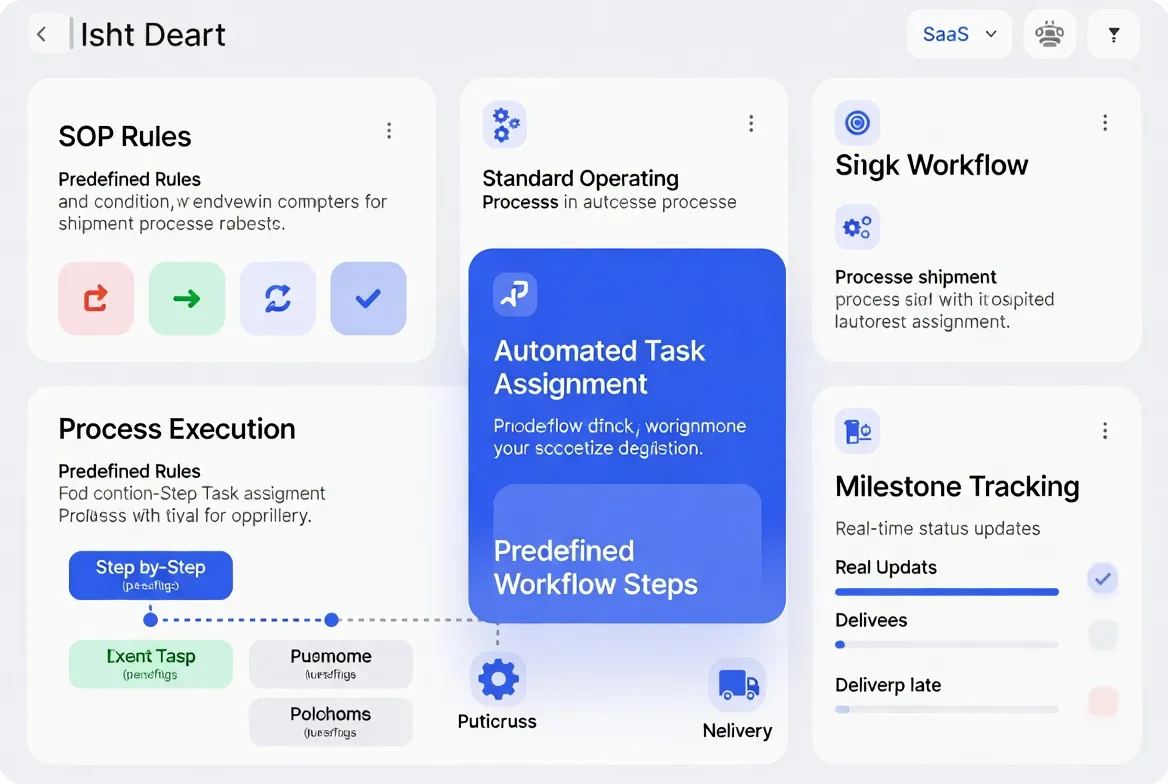
1. Workflow Automation Engine
Processes are defined as structured workflows:
Order creation → approval → execution → delivery → billing
Each step is automatically triggered based on predefined rules
For example:
When an order is created, the system automatically assigns tasks to relevant roles
Once a shipment reaches a milestone, the next step is triggered
2. AI-Based Data Recognition
Automation is enhanced through AI technologies such as OCR:
Extract shipment data from documents (e.g., invoices, packing lists)
Automatically populate system fields
Reduce manual data entry
This significantly improves data processing speed and accuracy.
3. Event-Driven Automation
System actions are triggered by shipment events:
Milestone updates trigger notifications or task creation
Delays trigger alerts or escalation workflows
Delivery confirmation triggers invoicing
4. Financial Process Automation
Financial workflows are automated based on operational data:
Automatic invoice generation based on shipment milestones
Automated reconciliation between receivables and payables
Real-time profit calculation
5. Integration-Driven Automation
Automation extends across systems through integration:
API connections with ERP, WMS, and carrier systems
Automatic data synchronization across platforms
Elimination of duplicate data entry
Key Features / Key Capabilities
Digital logistics platforms for automation typically include:
1. Workflow Automation
Rule-based task execution
Automated process flows across departments
2. AI Data Processing
OCR for document recognition
Automated data extraction and input
3. Event-Based Triggers
Automated actions based on shipment milestones
Real-time response to operational events
4. Automated Billing and Reconciliation
Invoice generation triggered by shipment status
Automated matching of receivables and payables
5. Task Assignment and Role Management
Automatic task allocation based on workflow rules
Multi-role coordination within the same system
6. System Integration
API-based data exchange with external systems
Seamless automation across the logistics ecosystem
These capabilities enable logistics companies to transition from manual operations to automated, data-driven workflows.
Benefits for Logistics Companies
Increased Operational Efficiency
Reduced manual workload
Faster processing of shipments and documents
Improved Accuracy
Minimized human errors
Consistent data across systems
Faster Billing Cycles
Automated invoicing and reconciliation
Improved cash flow management
Enhanced Scalability
Ability to handle higher shipment volumes without increasing headcount
Better Resource Utilization
Staff can focus on higher-value tasks instead of repetitive operations
Best Practices / Use Cases
1. Freight Forwarders
Automate shipment booking and documentation
Trigger billing based on shipment completion
Reduce manual coordination across teams
2. Cross-Border eCommerce Logistics
Automate high-volume order processing
Use AI for document and label generation
Trigger last-mile routing automatically
3. 3PL Providers
Automate warehouse and transportation workflows
Integrate financial processes with operations
Improve service consistency across clients
4. Multi-Branch Logistics Enterprises
Standardize workflows across regions
Automate cross-office coordination
Ensure consistent process execution globally
Conclusion
Digital logistics platforms for logistics process automation play a critical role in modernizing logistics operations. By automating workflows, integrating systems, and leveraging AI-driven data processing, these platforms reduce manual effort and improve operational efficiency.
As logistics companies face increasing pressure to scale and optimize performance, automation is no longer optional—it is a key driver of competitiveness and long-term growth.
Frequently Asked Questions
What is logistics process automation?
Logistics process automation refers to the use of technology to automate repetitive tasks and workflows in logistics operations, reducing manual intervention and improving efficiency.
How do digital logistics platforms enable automation?
They use workflow engines, AI data recognition, and event-driven triggers to automate processes such as order management, tracking, and billing.
Why is automation important in logistics?
Automation reduces errors, speeds up operations, lowers costs, and enables logistics companies to scale efficiently.
What are examples of logistics automation?
Examples include automated invoice generation, OCR-based document processing, milestone-triggered workflows, and API-based data synchronization.
Who benefits from logistics process automation?
Freight forwarders, 3PL providers, and cross-border eCommerce logistics companies benefit significantly from automation.
About WallTech
WallTech provides digital logistics platforms designed to automate and optimize logistics processes across global operations. By enabling end-to-end workflow automation, the platform supports seamless coordination between multiple roles and partners. With capabilities such as AI-driven data recognition, automated billing, and milestone-based process triggers, logistics companies can reduce manual work and improve efficiency. Combined with real-time visibility and integrated financial management, WallTech helps businesses build scalable, automated logistics operations that support long-term growth.
If you're exploring ways to improve your logistics operations, feel free to connect with us to learn more about our solutions and system capabilities.