.webp "How Logistics Billing Systems Simplify Financial Settlement")
Mar 06,2026
How Logistics Billing Systems Simplify Financial Settlement
Intro
Logistics in China refers to the structured processes and systems used to manage the movement of goods from manufacturing origins to global destinations. As the world’s largest exporting country, logistics in China involves complex coordination across suppliers, freight forwarders, customs authorities, and international carriers, making digital freight management increasingly essential.
What is Logistics in China
Logistics in China encompasses the full lifecycle of export operations, including order management, warehousing, transportation, customs clearance, and international shipping. It supports a wide range of industries, from manufacturing and wholesale trade to cross-border eCommerce.
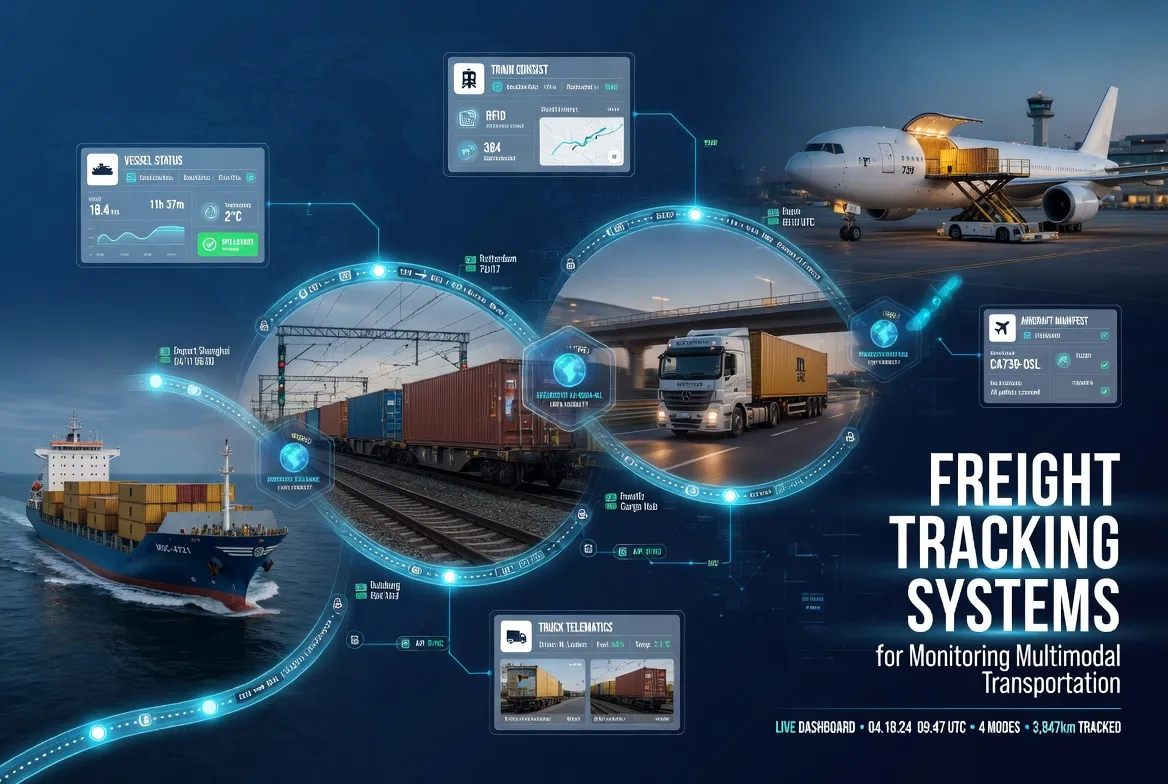
Export logistics in China is characterized by high shipment volumes, multi-modal transport (sea, air, rail, and trucking), and strong integration with global supply chains. The process often requires coordination between domestic factories, export agents, freight forwarders, and overseas partners.
Key Challenges or Industry Context
Despite its scale and efficiency, logistics in China presents several operational challenges:
1. Multi-party coordination complexity
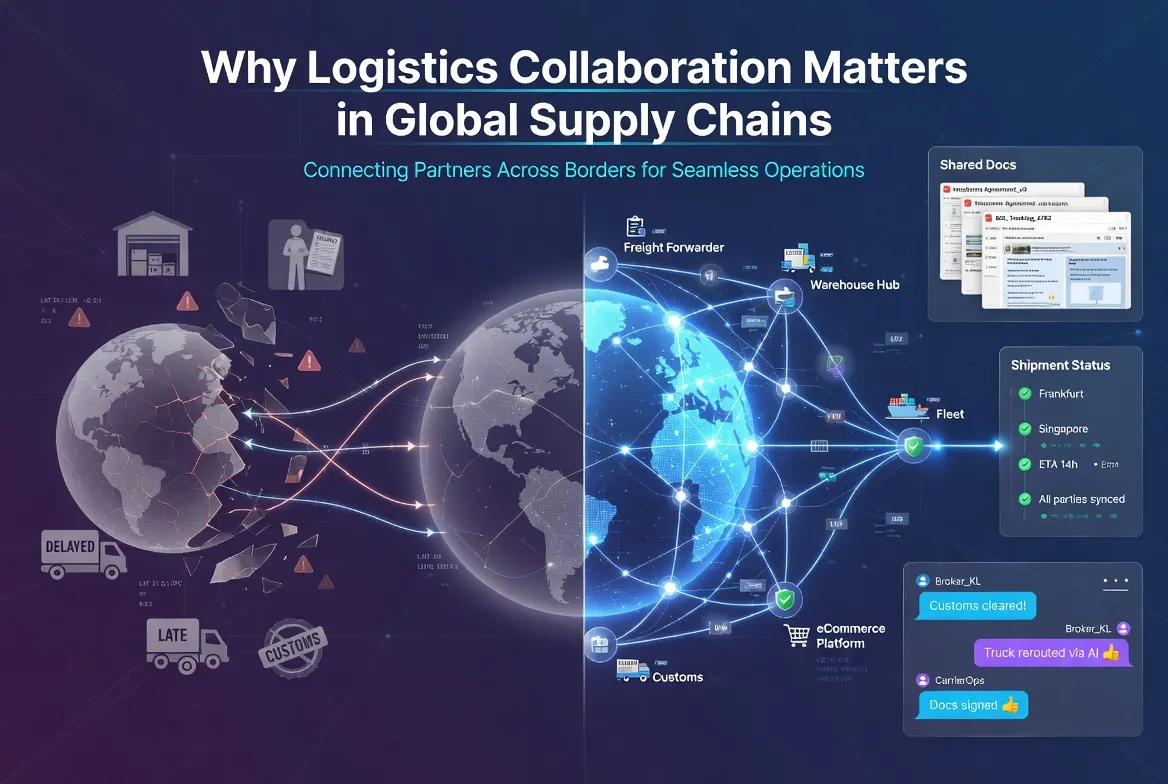
Export shipments typically involve multiple roles—factories, suppliers, freight forwarders, customs brokers, and overseas agents—leading to fragmented communication.
2. High documentation workload
Export processes require a large number of documents, including commercial invoices, packing lists, customs declarations, and shipping instructions. Manual handling increases the risk of errors.
3. Limited shipment visibility across stages
Tracking visibility can be inconsistent across domestic transport, port operations, international transit, and last-mile delivery.
4. Rapid growth of cross-border eCommerce
The surge in eCommerce exports has increased shipment frequency and reduced tolerance for delays, requiring faster and more automated operations.
5. Data silos across systems
Many logistics providers still rely on disconnected systems or spreadsheets, making it difficult to synchronize data across departments and partners.
How It Works / Industry Process
A typical export workflow in logistics in China includes the following steps:
1. Order creation and confirmation
Export orders are created based on customer demand or sales agreements, including shipment details, cargo specifications, and delivery requirements.
2. Cargo pickup and domestic transportation
Goods are collected from factories or warehouses and transported to consolidation centers, ports, or airports.
3. Documentation preparation
Key documents such as commercial invoices, packing lists, and export declarations are prepared and verified.
4. Export customs clearance
Shipments are declared to Chinese customs, where compliance checks are conducted before approval for export.
5. International transportation
Cargo is shipped via ocean, air, or rail depending on cost, urgency, and destination.
6. Tracking and milestone updates
Shipment status is updated throughout the journey, including departure, transit, arrival, and delivery milestones.
7. Overseas handover and final delivery
Goods are transferred to overseas agents or last-mile carriers for final distribution.
Why It Matters (Business Impact)
Efficient logistics in China plays a critical role in global supply chain performance:
Export competitiveness: Faster and more reliable logistics improve delivery commitments
Cost efficiency: Optimized routing and consolidation reduce transportation costs
Operational accuracy: Standardized processes minimize errors in documentation and handling
Customer satisfaction: Transparent tracking and timely updates enhance trust
For exporters and logistics providers, the ability to manage complex operations at scale is essential for maintaining global competitiveness.
How Modern Logistics Platforms Solve This
Modern logistics platforms are transforming logistics in China by enabling digital freight management and integrated operations.
Multi-role collaboration
Digital systems allow different stakeholders—sales teams, operations, documentation staff, finance teams, and external partners—to work within a unified platform. Each role can access relevant data and perform tasks within a shared workflow, reducing communication gaps.
For example, systems can support multiple roles creating and managing orders through centralized workflows, ensuring consistency across departments and partners.
Document automation
Logistics platforms automate the generation, validation, and management of export documents. Templates and rule-based systems ensure that required fields are completed accurately, reducing manual effort and compliance risks.
Automation also supports standardized document formats, enabling faster customs processing and fewer discrepancies between documents.
End-to-end shipment visibility
Modern platforms provide a unified tracking view across all transport stages—domestic pickup, port operations, international transit, and final delivery.
Tracking data can be aggregated from multiple sources, including carriers and third-party systems, allowing users to monitor shipments in real time and respond to exceptions proactively.
Workflow automation and SOP management
Digital systems enable configurable workflows that define each step of the export process. Tasks such as booking, documentation, and customs submission can be triggered automatically based on predefined rules.
Data integration and system connectivity
Through API integration, logistics platforms can connect with ERP systems, eCommerce platforms, and carrier networks, ensuring seamless data exchange and reducing duplication.
Key Benefits
Adopting digital systems for logistics in China delivers measurable advantages:
Improved coordination across multiple roles and organizations
Reduced documentation errors through automation and standardization
Enhanced visibility across the entire shipment lifecycle
Higher operational efficiency with streamlined workflows
Faster processing times for export and customs clearance
Scalability to support growing export volumes and eCommerce demand
Conclusion
Logistics in China is a critical component of global trade, supporting high-volume exports and complex supply chain networks. However, traditional manual processes and fragmented systems can limit efficiency and visibility.
Modern logistics platforms address these challenges by enabling multi-role collaboration, automating documentation, and providing end-to-end shipment visibility. As global trade continues to evolve, digital freight management will play a key role in improving efficiency, accuracy, and scalability in China’s export operations.
FAQ
1. What makes logistics in China complex?
The complexity comes from multi-party coordination, high documentation requirements, and the need to manage large shipment volumes across multiple transport modes.
2. How are export documents managed in China logistics?
Documents such as invoices, packing lists, and customs declarations are prepared and submitted as part of the export process, increasingly supported by digital automation systems.
3. Why is shipment visibility important in China exports?
Visibility allows logistics teams and customers to track shipments in real time, identify delays early, and improve overall supply chain reliability.