Apr 27,2026
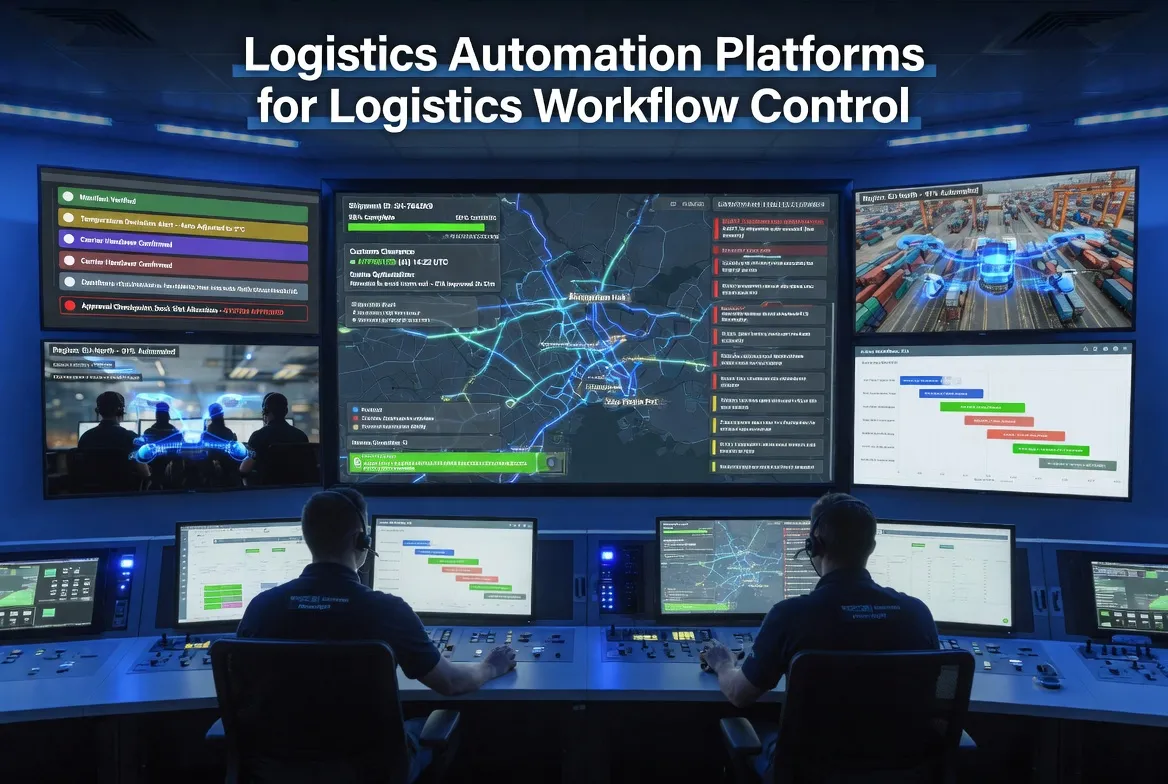
Logistics Automation Platforms for Logistics Workflow Control
Introduction
Logistics workflow automation refers to the use of digital systems and technologies to automatically execute, manage, and optimize logistics processes without relying on manual intervention. It enables freight forwarders, 3PLs, and cross-border logistics providers to streamline operations such as order processing, shipment tracking, billing, and exception handling through predefined rules and system-driven workflows.
In modern logistics environments where operations are complex and multi-participant, workflow automation plays a critical role in improving efficiency, reducing errors, and enabling scalable growth.
What is Logistics Workflow Automation
Logistics workflow automation is the process of digitizing and automating operational steps across the logistics lifecycle—from order creation to final delivery and financial settlement.
Instead of relying on manual coordination via emails, spreadsheets, or disconnected systems, automated workflows define:
Task sequences (what happens next)
Role responsibilities (who does what)
Trigger conditions (when actions occur)
System responses (what the system executes automatically)
For example, when a shipment order is created:
The system can automatically assign tasks to operations teams
Generate required documents
Trigger milestone tracking
Notify relevant stakeholders
This creates a structured, repeatable, and scalable operational process.
Why Logistics Workflow Automation Matters
Logistics operations are inherently complex due to:
Multiple stakeholders (customers, carriers, agents, customs, warehouses)
Multi-stage processes (booking, documentation, transportation, delivery)
High data volume and frequent updates
Without automation, companies often face:
Manual data entry errors
Delays in communication and task execution
Lack of visibility across shipment stages
Inefficient coordination between departments
Workflow automation addresses these challenges by:
Standardizing operations across teams
Reducing dependency on manual coordination
Enabling real-time process visibility
Improving operational consistency
In freight forwarding and cross-border logistics, where speed and accuracy are critical, automation becomes a key competitive advantage.
How Logistics Workflow Automation Works
Logistics workflow automation operates through a combination of rule engines, system integrations, and event-driven triggers.
1. Workflow Configuration
Operations are defined in the system as structured workflows:
Milestones (e.g., booking confirmed, cargo loaded, customs cleared)
Task assignments (sales, operations, documentation, finance)
Dependencies between steps
2. Trigger-Based Execution
Workflows are activated based on specific triggers:
Order creation
Status updates (e.g., shipment departure)
External system events (e.g., carrier tracking updates)
3. Automated Task Assignment
Tasks are automatically assigned to relevant roles:
Sales teams receive quotation or customer updates
Operations teams manage shipment execution
Finance teams handle billing and reconciliation
4. Data Synchronization
Through API integrations and system connectivity:
Data flows between ERP, WMS, carrier systems, and customer platforms
Shipment updates are automatically reflected across systems
5. Exception Handling
If delays or issues occur:
The system detects deviations from expected timelines
Alerts are triggered
Tasks are reassigned for resolution
This ensures proactive management rather than reactive firefighting.
Key Features / Key Capabilities
Modern logistics workflow automation systems typically include:
Milestone-based tracking
Structured tracking of shipment lifecycle with predefined checkpointsMulti-role collaboration
Seamless coordination between sales, operations, documentation, and finance teamsAutomated document processing
AI-powered OCR to extract data from shipping documents and reduce manual inputWorkflow rule engine
Configurable logic to automate task assignments and process flowsSystem integration (API connectivity)
Integration with carriers, ERP systems, eCommerce platforms, and customs systemsAutomated billing and financial workflows
Trigger-based invoicing, cost allocation, and reconciliationReal-time notifications and alerts
Automatic updates for delays, status changes, or required actions
These capabilities enable logistics companies to manage operations within a unified, automated environment.
Benefits for Logistics Companies
Implementing logistics workflow automation provides several tangible benefits:
Operational Efficiency
Reduces manual workload
Speeds up order processing and execution
Improved Accuracy
Minimizes human errors in data entry and document handling
End-to-End Visibility
Provides a unified timeline of shipment progress
Enables real-time tracking across all transport stages
Better Collaboration
Connects internal teams and external partners within one system
Eliminates communication gaps
Scalability
Supports business growth without proportional increase in manpower
Financial Control
Automates billing, cost tracking, and reconciliation processes
Overall, automation allows logistics companies to shift from reactive operations to proactive, data-driven management.
Best Practices / Use Cases
Standardizing Freight Forwarding Operations
Freight forwarders can define standardized workflows for:
Export shipments
Import handling
Multimodal transportation
This ensures consistent execution across different teams and regions.
Cross-Border eCommerce Logistics
Automation helps manage:
High-volume order processing
Last-mile carrier selection
Real-time tracking updates
Multi-Branch Collaboration
Global logistics companies can:
Synchronize workflows across headquarters and overseas branches
Enable shared visibility and unified operations
Financial Automation
Automated workflows can:
Generate invoices based on shipment milestones
Perform automated reconciliation between receivables and payables
Exception Management
Systems can:
Detect delays or missing milestones
Trigger alerts and corrective actions automatically
These use cases demonstrate how automation transforms operational efficiency in real-world logistics scenarios.
Conclusion
Logistics workflow automation is a foundational capability for modern logistics companies seeking to improve efficiency, visibility, and scalability. By replacing manual processes with structured, system-driven workflows, businesses can streamline operations, reduce errors, and enhance collaboration across the entire supply chain.
As logistics networks become more complex and globalized, automation is no longer optional—it is essential for maintaining competitiveness and delivering consistent service quality.
Frequently Asked Questions
What is logistics workflow automation?
Logistics workflow automation is the use of software systems to automate logistics processes such as order management, tracking, documentation, and billing through predefined workflows and rules.
How does logistics workflow automation work?
It works by defining workflows, setting triggers, and automating task assignments and data flows across systems, enabling seamless execution of logistics operations.
Why is workflow automation important in logistics?
It reduces manual work, improves accuracy, enhances visibility, and enables better coordination across teams and partners.
What are the benefits of logistics workflow automation?
Key benefits include increased efficiency, reduced errors, real-time visibility, improved collaboration, and scalable operations.
Can workflow automation integrate with other systems?
Yes, modern logistics platforms support API integration with ERP, WMS, carrier systems, and eCommerce platforms for seamless data synchronization.
About WallTech
WallTech provides digital logistics solutions designed to support freight forwarders, 3PLs, and cross-border logistics providers in managing complex global operations. Its platforms enable end-to-end logistics collaboration, connecting multiple roles and partners within a unified workflow. With real-time shipment visibility, milestone-based tracking, and automation capabilities such as AI data recognition, automated billing, and reconciliation, WallTech helps logistics companies improve operational efficiency and scalability while reducing manual workload.
If you're exploring ways to improve your logistics operations, feel free to connect with us to learn more about our solutions and system capabilities.
.webp "Warehouse Management Systems Explained")