

Apr 10,2026
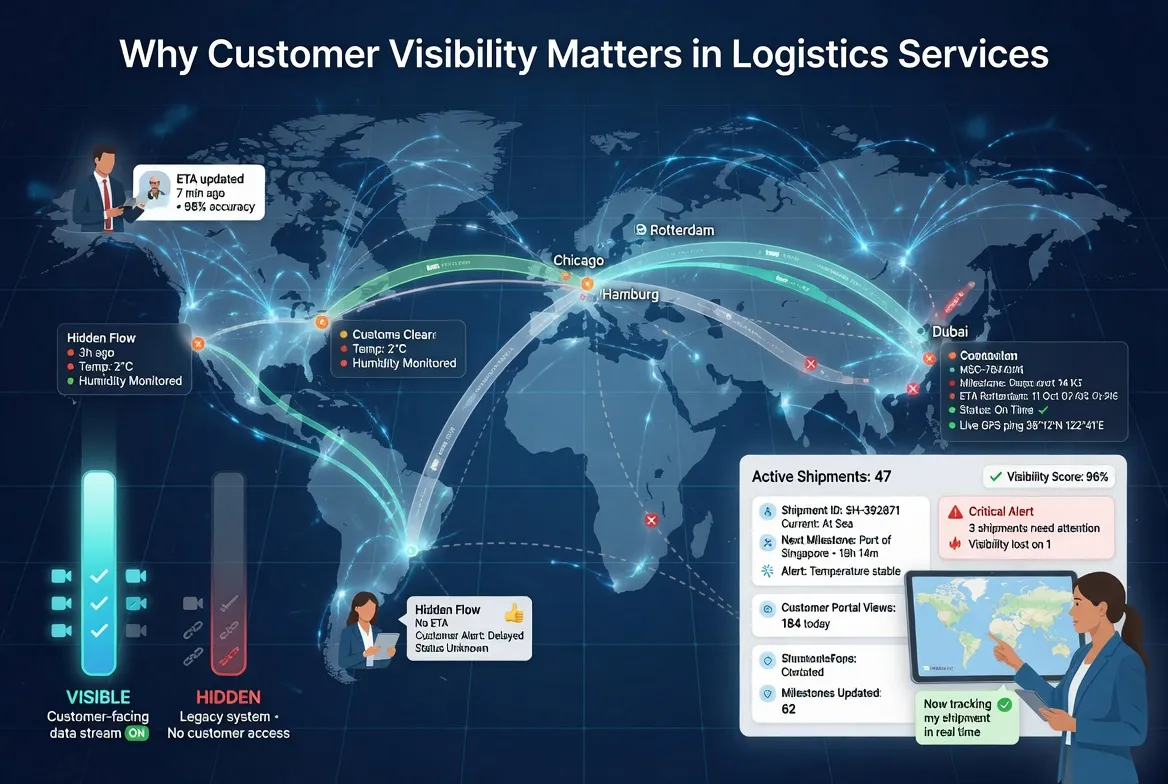
Why Customer Visibility Matters in Logistics Services
Introduction
Shipment profit tracking is the process of measuring the revenue, costs, and profitability associated with individual logistics shipments. Modern logistics platforms enable shipment-level financial analysis by linking operational data with billing and cost records, helping logistics companies understand the true profitability of their transportation services.
What Is Shipment Profit Tracking?
Shipment profit tracking refers to analyzing the financial performance of each shipment handled by a logistics company. For every shipment, companies must calculate the revenue received from customers and compare it with the operational costs required to complete the delivery.
These costs may include transportation charges, carrier payments, warehouse handling fees, customs costs, and other operational expenses.
In traditional logistics environments, profit analysis is often done manually through spreadsheets after shipments are completed. This approach is time-consuming and may not provide real-time financial visibility.
Digital logistics systems allow companies to track shipment profitability automatically by connecting operational data with financial transactions.
Why Shipment Profit Tracking Is Important
Understanding shipment-level profitability is essential for logistics companies because it reveals which services, routes, and customers generate the most value.
Without proper profit tracking, companies may face several challenges:
Difficulty identifying profitable or loss-making shipments
Limited visibility into operational costs
Inaccurate pricing strategies
Poor financial decision-making
Shipment profit tracking provides the financial transparency needed to improve operational efficiency and business planning.
Best Practices for Managing Shipment Profit Tracking
To effectively manage shipment profitability, logistics companies should implement structured financial tracking practices supported by digital systems.
Track Costs at the Shipment Level
Every operational expense associated with a shipment should be recorded in the system. This includes carrier costs, handling charges, customs fees, and internal operational expenses.
Tracking costs at the shipment level allows companies to calculate accurate profit margins.
Integrate Operational and Financial Data
Profit tracking works best when logistics operations and financial systems are connected. When shipment milestones automatically trigger billing and cost records, financial analysis becomes more accurate and efficient.
Integrated systems eliminate the need for manual data consolidation.
Use Standardized Pricing and Cost Rules
Standardizing rate cards and cost calculation rules ensures consistent financial data across shipments. Clear pricing structures help prevent billing discrepancies and improve profit analysis accuracy.
Monitor Profitability Across Multiple Dimensions
Shipment profit tracking should not be limited to individual shipments. Logistics companies should also analyze profitability by customer, trade lane, service type, and transportation mode.
Multi-dimensional analysis helps identify high-performing business segments.
Implement Real-Time Financial Dashboards
Modern logistics platforms often provide dashboards that display operational revenue, costs, and profit metrics. These dashboards allow managers to monitor financial performance continuously rather than relying on periodic reports.
Real-time visibility supports faster operational decisions.
Benefits of Digital Shipment Profit Tracking
When logistics companies implement digital profit tracking systems, they gain several operational advantages.
Greater financial transparency
Managers can clearly see the relationship between operational activities and financial results.
Improved pricing strategies
Companies can adjust pricing based on actual cost structures and profitability data.
Better cost control
Tracking operational expenses helps identify inefficiencies and reduce unnecessary costs.
Stronger business planning
Profitability insights allow companies to allocate resources toward more profitable routes and services.
Conclusion
Shipment profit tracking is a critical capability for modern logistics companies. By measuring revenue and costs at the shipment level, businesses can better understand the financial performance of their logistics operations.
Digital logistics platforms make profit tracking more efficient by integrating operational data with financial systems. With accurate visibility into shipment profitability, logistics companies can optimize pricing strategies, control operational costs, and improve overall business performance.
.webp "Key Capabilities of Operational Freight Visibility Solutions")
.webp "How Freight Forwarders Track Profit by Shipment and Container")