Apr 12,2023
The Future of Logistics: Global Trends, Market Growth, and Cost Optimization Strategies
Introduction
Logistics systems support customs declaration processes by digitizing data collection, automating document preparation, validating compliance requirements, and enabling real-time coordination between stakeholders involved in cross-border shipments. These systems ensure that declarations are accurate, complete, and submitted efficiently, reducing delays and compliance risks.
In modern global logistics, where shipments move across multiple jurisdictions, relying on manual processes is no longer sustainable. Logistics platforms play a central role in connecting operational data with regulatory requirements, making customs declaration a structured and manageable workflow.
What is Customs Declaration in Logistics
Customs declaration is the process of submitting detailed information about goods being imported or exported to customs authorities. This information is used to:
Assess duties and taxes
Ensure regulatory compliance
Verify shipment legitimacy
A typical customs declaration includes:
Product descriptions and HS codes
Shipment value and currency
Origin and destination details
Shipper and consignee information
Supporting documents
Traditionally, this process has been manual, involving spreadsheets, emails, and fragmented systems. Logistics systems transform this into a centralized, automated workflow.
Why Logistics Systems Matter for Customs Declaration
Customs declaration is highly sensitive to data accuracy and timing. Even minor errors can result in delays or penalties.
Key challenges without logistics systems include:
Data inconsistency across documents and systems
Manual entry errors in shipment details
Delayed communication between teams and brokers
Lack of visibility into declaration status
Difficulty handling multi-country regulations
Logistics systems address these issues by integrating operational data with compliance workflows, ensuring that all declaration-related information is synchronized and validated.
For freight forwarders and 3PLs managing high volumes of shipments, this capability is critical to maintaining efficiency and reliability.
How Logistics Systems Support Customs Declaration Processes
1. Centralized Data Management
Logistics systems act as a single source of truth for shipment data.
Order and shipment details are captured once
Data is reused across documents and processes
Redundant data entry is eliminated
This ensures consistency across all declaration-related information.
2. Automated Data Extraction and Input
Modern systems use AI-powered tools such as OCR to extract data from documents like invoices and packing lists.
Reduced manual input
Faster data processing
Improved accuracy
This is especially valuable for high-volume operations such as cross-border eCommerce logistics.
3. Document Generation and Management
Logistics platforms automatically generate required customs documents based on shipment data.
Commercial invoices
Packing lists
Declaration forms
All documents are stored in a centralized system, enabling easy access and sharing among stakeholders.
4. Compliance Validation
Before submission, the system performs automated checks:
Mandatory fields completion
HS code validation
Country-specific requirements
This reduces the risk of rejection or delays during customs clearance.
5. Multi-Role Collaboration
Customs declaration involves multiple parties:
Freight forwarders
Customs brokers
Warehouse operators
Clients
Logistics systems enable seamless collaboration by providing:
Shared access to shipment data
Role-based permissions
Real-time updates
This eliminates communication gaps and improves coordination across upstream and downstream partners.
6. Submission and Integration
Systems can integrate with customs platforms or broker systems via APIs or EDI.
Electronic submission of declarations
Faster processing
Reduced manual intervention
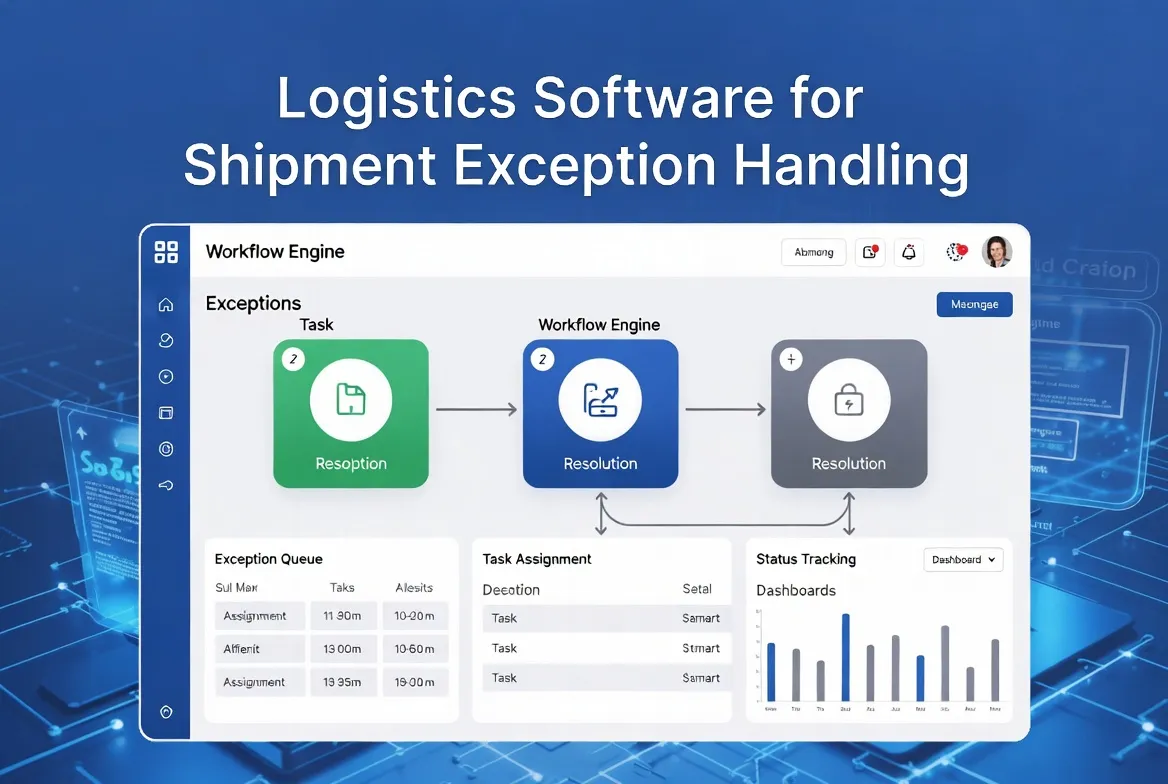
7. Real-Time Tracking and Exception Management
Once submitted, the system tracks the declaration status as part of the overall shipment timeline.
Pending
Under review
Cleared
Exception
Milestone-based tracking provides visibility into each stage, while automated alerts notify teams of issues requiring attention.
Key Features / Key Capabilities
End-to-End Visibility
Unified shipment and declaration timeline
Real-time status updates
Centralized monitoring dashboards
Workflow Automation
Automated document generation
Rule-based compliance validation
Task assignment and tracking
AI Data Recognition
OCR for document data extraction
Reduced manual entry
Higher data accuracy
Multi-System Integration
API/EDI connectivity with customs and carriers
Seamless data flow across systems
Elimination of data silos
Financial Integration
Duty and tax calculation
Automated billing and reconciliation
Alignment between operations and finance
Multi-Role Coordination
Shared platform for all stakeholders
Clear task ownership
Improved collaboration efficiency
Benefits for Logistics Companies
Increased Efficiency
Automation reduces manual workload and speeds up the declaration process.
Improved Accuracy
Centralized data and validation checks minimize errors and inconsistencies.
Faster Clearance
Accurate and timely submissions lead to quicker customs processing.
Enhanced Visibility
Real-time tracking allows proactive management of potential issues.
Better Collaboration
Unified platforms improve communication between teams and partners.
Scalability
Systems enable handling of higher shipment volumes without proportional increases in manpower.
Best Practices / Use Cases
1. High-Volume Cross-Border eCommerce
Automate data extraction and declaration processes to handle large numbers of small shipments efficiently.
2. Freight Forwarders Managing Multi-Modal Shipments
Use integrated systems to manage declarations across sea, air, and land shipments within a unified workflow.
3. 3PLs Coordinating Global Operations
Leverage centralized platforms to standardize declaration processes across multiple regions and partners.
4. Companies Transitioning from Manual Processes
Replace spreadsheets and email-based workflows with structured systems to improve accuracy and efficiency.
Conclusion
Logistics systems play a vital role in supporting customs declaration processes by transforming manual, fragmented workflows into structured, automated operations.
By integrating data, enabling real-time visibility, and facilitating collaboration across stakeholders, these systems help logistics companies reduce compliance risks, improve efficiency, and enhance service reliability.
As global trade continues to grow in complexity, adopting digital logistics platforms is essential for managing customs declarations effectively at scale.
Frequently Asked Questions
What is customs declaration in logistics?
It is the process of submitting shipment details to customs authorities for regulatory approval, including information about goods, value, and documentation.
How do logistics systems support customs declaration?
They centralize data, automate document generation, validate compliance, enable collaboration, and provide real-time tracking of declaration status.
Why is automation important in customs declaration?
Automation reduces manual errors, speeds up processing, and ensures consistency across documents and submissions.
What are the benefits of using logistics systems for customs declaration?
Benefits include improved accuracy, faster clearance, better visibility, and enhanced collaboration among stakeholders.
Who uses these systems?
Freight forwarders, 3PL providers, customs brokers, and cross-border logistics operators commonly use them.
About WallTech
WallTech provides digital logistics solutions that support end-to-end operations across global supply chains. Its platforms enable logistics companies to centralize shipment data, coordinate multi-role processes, and gain real-time visibility through milestone-based tracking. With capabilities such as AI-driven data recognition, workflow automation, and integrated financial processes, WallTech helps organizations streamline customs declaration workflows, reduce compliance risks, and improve operational efficiency across complex international logistics environments.
If you're exploring ways to improve your logistics operations, feel free to connect with us to learn more about our solutions and system capabilities.
.webp "Key Capabilities of Operational Freight Visibility Solutions")