
Mar 30,2023
Freight Forwarding and Logistics
For freight forwarding companies, understanding profitability is just as important as managing shipment volumes. Each shipment involves multiple costs and charges, including freight rates, local handling fees, documentation charges, and service-related expenses. Without a structured financial management system, it can be difficult to determine whether individual shipments are profitable.
Modern logistics platforms help freight forwarders track profit more accurately by linking operational data with financial records and providing detailed cost analysis at both the shipment and container level.
Connecting Operational Data with Financial Records
Profit analysis begins with accurate operational data. Every shipment includes detailed information such as transportation routes, cargo specifications, service providers, and operational milestones.
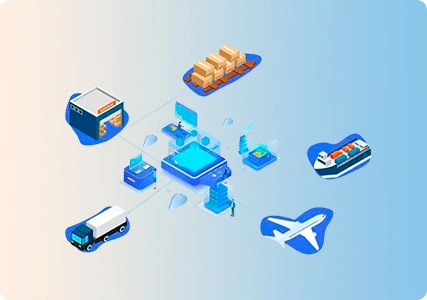
When logistics platforms integrate operational workflows with financial management modules, the system can automatically associate these operational details with corresponding revenue and cost items. Charges such as freight fees, surcharges, and service costs are recorded directly within the shipment record.
This connection between operations and finance ensures that all relevant cost and revenue data is captured consistently.
Managing Receivables and Payables in One System
Freight forwarding operations typically involve both receivables and payables. The company collects payments from customers while also paying carriers, agents, and service providers.
A logistics financial management system allows companies to manage these transactions within the same platform. Receivable invoices and payable expenses can be generated based on shipment information and predefined billing rules.
By consolidating financial transactions within the shipment workflow, companies can easily track the balance between revenue and costs.
Allocating Costs to Individual Shipments
In many logistics operations, certain expenses apply to multiple shipments. For example, container transportation costs may need to be distributed among several shipments within the same container.
A profit management system allows these shared costs to be allocated automatically according to predefined rules. Costs can be distributed based on factors such as cargo weight, volume, or shipment proportion.
This allocation ensures that each shipment reflects its fair share of operational expenses, resulting in more accurate profitability calculations.
Analyzing Profit at Different Operational Levels
Freight forwarding companies often need to analyze profitability from multiple perspectives. In addition to shipment-level analysis, companies may want to evaluate profits by container, customer, route, or sales team.
Logistics platforms provide reporting tools that allow users to analyze financial performance across different operational dimensions. Managers can quickly identify which shipments generate the highest margins and which routes or services may require cost optimization.
This multi-dimensional analysis helps companies make better strategic decisions.
Supporting Financial Transparency
When financial data is scattered across spreadsheets or disconnected systems, it becomes difficult to maintain transparency and accuracy.
By centralizing financial records within the logistics platform, companies create a single source of truth for operational and financial information. All cost items, invoices, and settlement records are linked directly to the relevant shipments.
This structured financial environment improves internal transparency and simplifies auditing processes.
Improving Decision-Making with Real-Time Data
Traditional financial reporting often occurs after shipments have already been completed. By the time profitability is analyzed, it may be too late to correct operational inefficiencies.
Modern logistics systems allow companies to monitor financial performance in real time. As shipments progress through operational stages, the system continuously updates cost and revenue information.
This real-time insight allows managers to detect profitability issues early and adjust operational strategies when necessary.
Profit Visibility as a Competitive Advantage
In a highly competitive logistics market, understanding profitability at a detailed operational level is critical. Companies that rely only on high-level financial summaries may overlook hidden costs or underperforming services.
By tracking profit at the shipment and container level, freight forwarders gain deeper insight into their operational performance. This visibility allows companies to refine pricing strategies, optimize resource allocation, and improve overall financial management.
For modern freight forwarding businesses, integrated profit tracking has become an essential component of effective logistics management.