May 13,2026
How Do Logistics Technology Platforms Support Digital Supply Chains?
Introduction
A logistics customer portal is a digital platform that allows customers to access shipment information, track orders, manage documents, and interact with logistics providers in real time. It works by connecting customers directly to the logistics system, providing self-service access to data and reducing the need for manual communication.
In modern logistics operations, customer portals are essential for improving transparency, reducing workload, and enhancing customer experience—especially for freight forwarders, 3PLs, and cross-border logistics providers managing high volumes of shipments.
What Is a Logistics Customer Portal
A logistics customer portal is a web-based interface that gives customers direct access to logistics data and services.
Through the portal, customers can:
Track shipment status in real time
View order and booking details
Download shipping documents
Check billing and invoices
Submit booking or quotation requests
Instead of relying on emails or phone calls, customers can independently access the information they need.
The portal acts as a bridge between logistics companies and their customers, enabling transparency and self-service capabilities.
Why Logistics Customer Portals Matter
1. Reduces Manual Communication
Without a portal, customers frequently contact logistics teams for updates. A portal reduces these repetitive inquiries.
2. Improves Transparency
Customers gain real-time visibility into shipment progress and status.
3. Enhances Customer Experience
Self-service access to information improves convenience and satisfaction.
4. Increases Operational Efficiency
Teams spend less time responding to inquiries and more time managing operations.
5. Strengthens Customer Relationships
Providing transparency and control builds trust with customers.
How Logistics Customer Portals Work
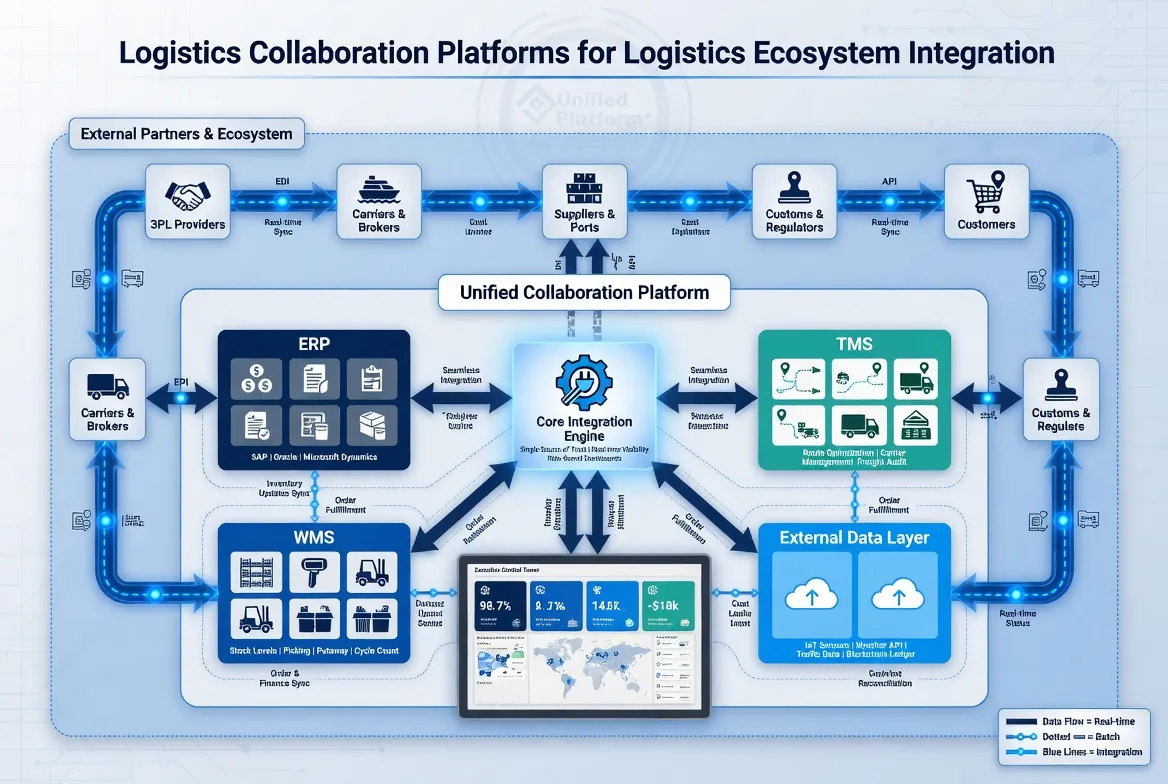
1. Integration with Logistics Systems
The portal connects directly to the logistics platform, pulling data such as:
Shipment milestones
Order details
Tracking updates
Financial information
This ensures that customers see accurate, real-time data.
2. User Authentication and Access Control
Customers log in securely and access only their own data, ensuring privacy and security.
3. Real-Time Data Synchronization
As shipment events occur—such as departure, arrival, or delivery—the system automatically updates the portal.
4. Document Management
Shipping documents are uploaded or generated within the system and made available through the portal.
5. Workflow Integration
Customer actions, such as booking requests or inquiries, can trigger internal workflows within the logistics system.
6. Automation and AI Support
Modern portals include:
AI-driven data updates
Automated notifications and alerts
Integration with automated billing and reconciliation systems
These features enhance both functionality and efficiency.
Key Features of Logistics Customer Portals
Real-time shipment tracking
End-to-end visibility with milestone-based updatesSelf-service access
Customers can retrieve information without contacting supportMulti-role collaboration
Interaction between customers and internal teams within the same systemDocument center
Access to invoices, bills of lading, and other shipping documentsOrder and booking management
Ability to submit and manage shipment requestsNotification and alert system
Updates on shipment status and exceptionsSecure access control
Role-based permissions and data protection
Benefits for Logistics Companies
1. Reduced Workload
Customer portals reduce the number of inquiries handled by operations teams.
2. Faster Response Times
Customers can access information instantly without waiting for responses.
3. Improved Accuracy
Data is pulled directly from the system, reducing the risk of misinformation.
4. Enhanced Customer Satisfaction
Transparency and convenience improve overall customer experience.
5. Scalable Customer Management
Portals allow logistics companies to manage more customers without increasing staff.
Best Practices / Use Cases
1. Implementing Self-Service Tracking
Enable customers to track shipments across all transport modes through a unified interface.
2. Providing Document Access
Allow customers to download shipping documents directly from the portal.
3. Automating Notifications
Send automatic updates for key shipment milestones and exceptions.
4. Supporting Customer Booking
Allow customers to submit booking requests directly through the portal.
5. Integrating Financial Data
Provide visibility into invoices, billing status, and payment history.
Conclusion
A logistics customer portal is a critical tool for modern logistics operations. By providing real-time access to shipment data and enabling self-service capabilities, it improves transparency, reduces manual workload, and enhances customer experience.
As logistics companies continue to scale and digitalize, customer portals will play a key role in building efficient, customer-centric operations.
Frequently Asked Questions
What is a logistics customer portal?
It is a digital platform that allows customers to track shipments, access documents, and manage logistics interactions in real time.
How does a logistics customer portal work?
It connects to the logistics system and provides customers with real-time access to shipment and operational data.
Why are customer portals important in logistics?
They improve transparency, reduce manual communication, and enhance customer experience.
What features do logistics customer portals offer?
Real-time tracking, document access, booking management, notifications, and secure user access.
What are the benefits of using a customer portal?
Reduced workload, improved efficiency, better customer satisfaction, and scalable operations.
About WallTech
WallTech provides digital logistics solutions that include customer portal capabilities designed to enhance transparency and collaboration. Its platforms enable end-to-end logistics visibility through milestone-based tracking, allowing customers to monitor shipments in real time. By connecting customers, internal teams, and partners within a unified system, WallTech supports seamless multi-role collaboration. The platform also incorporates automation features such as AI-driven data recognition, workflow automation, and automated billing and reconciliation, helping logistics companies improve efficiency while delivering a better customer experience.
If you're exploring ways to improve your logistics operations, feel free to connect with us to learn more about our solutions and system capabilities.