
.webp "What Is a Shipment Visibility Platform?")
Mar 02,2026
What Is a Shipment Visibility Platform?
Introduction
Logistics collaboration platforms for digital freight coordination are systems that enable freight operations to be managed digitally through real-time data sharing, automated workflows, and synchronized collaboration between all stakeholders. These platforms replace manual coordination methods with structured, data-driven processes, allowing freight forwarders and logistics providers to execute shipments more efficiently and transparently.
In an industry where coordination has traditionally relied on emails, spreadsheets, and phone calls, digital freight coordination platforms are becoming essential for improving operational speed, accuracy, and scalability.
What is a Logistics Collaboration Platform for Digital Freight Coordination
A logistics collaboration platform for digital freight coordination is a centralized system that digitizes and connects all activities involved in freight operations, including:
Shipment planning and execution
Carrier and partner coordination
Tracking and status updates
Documentation and compliance
Financial processes such as billing and reconciliation
The platform enables stakeholders—such as freight forwarders, carriers, agents, and customers—to collaborate within a shared digital environment.
Unlike traditional operations, digital freight coordination ensures that all processes are data-driven, automated, and visible in real time.
Why Digital Freight Coordination Matters
Freight operations are often hindered by inefficiencies caused by manual processes and fragmented systems. Common challenges include:
Manual data entry and repetitive tasks
Disconnected systems across departments and partners
Limited real-time visibility into shipment status
Delayed communication and coordination
High risk of human error
These issues lead to:
Slower shipment execution
Increased operational costs
Inconsistent service quality
Difficulty scaling operations
Digital freight coordination platforms address these challenges by transforming operations into streamlined, automated workflows.
How Logistics Collaboration Platforms Work
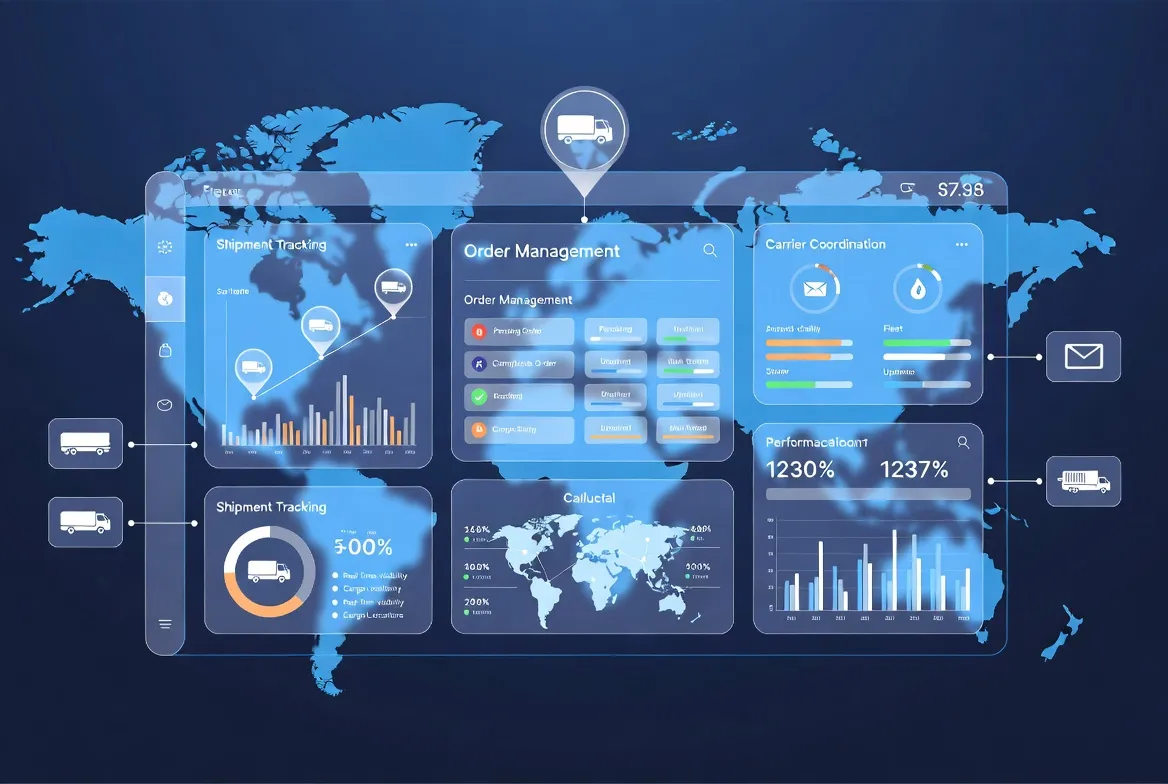
1. Digital Shipment Lifecycle Management
All shipment activities are managed digitally within the platform, including:
Order creation and processing
Routing and carrier selection
Execution and tracking
This ensures that all data is centralized and accessible.
2. Real-Time Data Integration
The platform integrates with multiple data sources:
Carrier tracking systems
ERP and order management systems
Warehouse and customs systems
This enables continuous data updates without manual intervention.
3. Multi-Role Collaboration
Different stakeholders collaborate within the same system:
Operations teams manage execution
Carriers update transport status
Partners handle specific tasks
Customers track shipments
This ensures synchronized coordination across all parties.
4. Milestone-Based Tracking
Shipments are monitored through key milestones, such as:
Booking confirmation
Departure and transit
Arrival and delivery
All updates are reflected in a unified timeline for full visibility.
5. Workflow Automation
Automation is applied to repetitive and time-consuming tasks:
Task assignment
Status updates
Exception alerts
Document processing using AI data recognition
6. Financial Process Integration
Operational data is linked to financial workflows, enabling:
Automated billing generation
Cost allocation and tracking
Accounts receivable and payable management
Reconciliation
Key Features / Key Capabilities
Digital Workflow Management
Fully digitized shipment processes
Automated task execution
Reduced manual intervention
End-to-End Visibility
Real-time tracking across shipment stages
Unified timeline view
Multi-source data integration
Multi-Party Collaboration
Coordination between internal teams and external partners
Role-based access
Upstream and downstream connectivity
Automation Capabilities
AI-driven document recognition
Automated notifications and alerts
Workflow automation
System Integration
API connectivity with logistics systems
Integration with carriers, ERP, WMS, and customs platforms
Financial Automation
Automated billing and invoicing
Cost tracking and allocation
Reconciliation processes
Benefits for Logistics Companies
Increased Operational Efficiency
Reduced manual work
Faster shipment processing
Streamlined workflows
Improved Visibility and Control
Real-time insight into operations
Better monitoring of shipment progress
Faster identification of issues
Reduced Errors
Automated processes minimize human error
Consistent data across systems
Improved compliance with operational standards
Faster Decision-Making
Real-time data enables quick responses
Better coordination during disruptions
Improved operational agility
Scalability
Ability to handle higher shipment volumes
Easy integration with new partners and systems
Support for business growth
Best Practices / Use Cases
Use Case 1: Digital Freight Forwarding
Freight forwarders digitize their operations, replacing manual coordination with automated workflows and real-time tracking.
Use Case 2: Cross-Border Logistics Coordination
Platforms enable seamless coordination across multiple countries, partners, and transport modes.
Use Case 3: High-Volume Shipment Management
Companies handling large shipment volumes use digital platforms to maintain efficiency and accuracy.
Best Practices
Standardize digital workflows across operations
Integrate all relevant systems for real-time data
Automate repetitive processes
Use milestone tracking for visibility
Continuously monitor performance metrics
Conclusion
Logistics collaboration platforms for digital freight coordination are transforming how freight operations are managed. By digitizing processes, enabling real-time collaboration, and automating workflows, these platforms help logistics companies overcome traditional inefficiencies and improve performance.
As the logistics industry continues to evolve, digital freight coordination will become a key driver of competitiveness and operational excellence.
Frequently Asked Questions
What is digital freight coordination?
It is the use of digital systems to manage and coordinate freight operations, replacing manual processes with automated and data-driven workflows.
How do collaboration platforms enable digital freight coordination?
They centralize data, integrate systems, provide real-time visibility, and automate workflows, ensuring efficient coordination across all stakeholders.
Why is digital freight coordination important?
It improves efficiency, reduces errors, enhances visibility, and enables logistics companies to scale operations effectively.
What are the benefits of digital freight coordination platforms?
They increase operational efficiency, improve visibility, reduce manual work, and support faster decision-making.
Who uses these platforms?
Freight forwarders, 3PL providers, logistics integrators, and cross-border logistics companies.
About WallTech
WallTech provides digital logistics solutions that support digital freight coordination through integrated collaboration, real-time visibility, and workflow automation. Its systems enable logistics companies to manage shipments within a unified platform, connecting internal teams and external partners through milestone-based tracking and synchronized workflows. By linking operational data with financial processes such as automated billing and reconciliation, WallTech helps organizations improve efficiency, reduce manual effort, and scale their logistics operations in a digital environment.
If you're exploring ways to improve your logistics operations, feel free to connect with us to learn more about our solutions and system capabilities.