.webp "The Role of Shipment Collaboration in Modern Logistics")
Mar 16,2026
The Role of Shipment Collaboration in Modern Logistics
Introduction
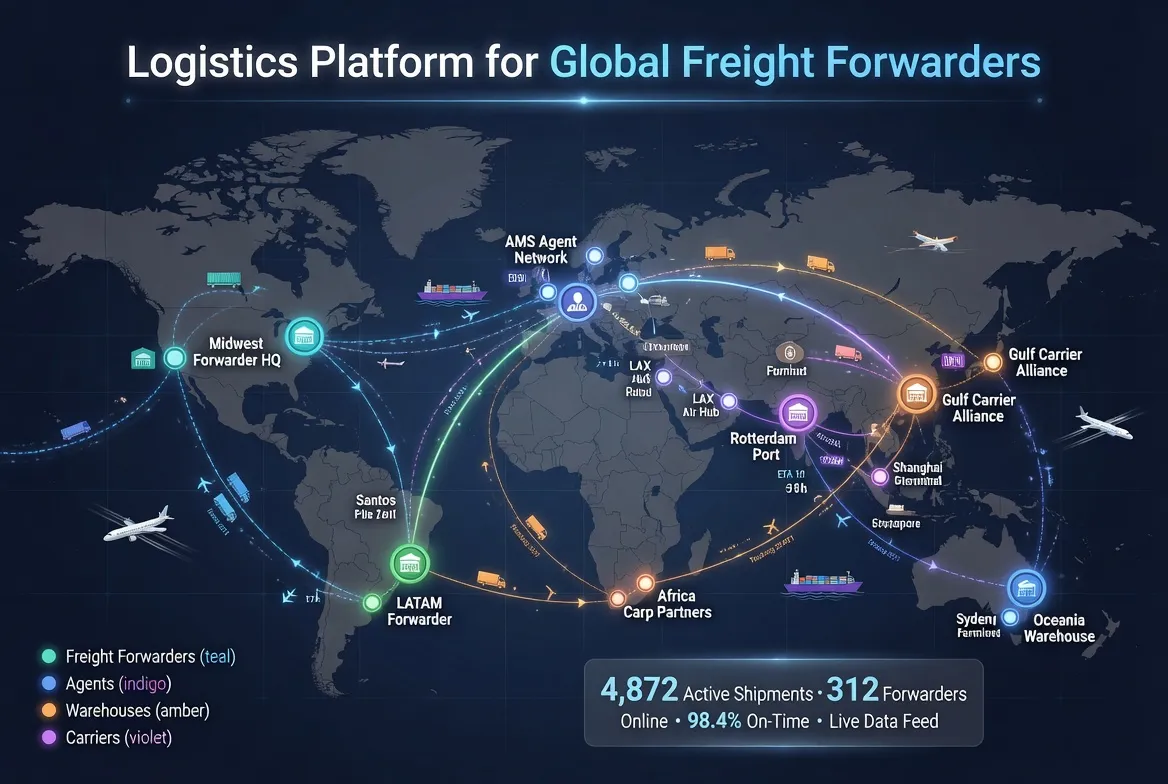
Cross-border logistics platforms for international logistics collaboration are digital systems that enable seamless coordination and cooperation between multiple stakeholders involved in global logistics operations. These platforms connect freight forwarders, 3PLs, carriers, warehouses, customs brokers, and overseas agents within a unified environment, allowing them to share data, execute workflows, and collaborate in real time.
In international logistics, collaboration is often hindered by fragmented systems, manual communication, and lack of transparency. Cross-border logistics platforms solve this by creating a shared digital workspace where all parties can interact efficiently, improving operational alignment and reducing delays.
What is Cross-Border Logistics Platforms for International Logistics Collaboration
A cross-border logistics platform for international logistics collaboration is a centralized system that enables multiple participants across the logistics chain to work together on the same shipment, process, or workflow.
It facilitates:
Multi-role coordination across departments
Real-time communication between global partners
Shared access to shipment and operational data
Integration of upstream and downstream logistics processes
Collaborative workflow execution
Unlike traditional systems that operate in silos, these platforms are designed to support interconnected, multi-party collaboration across borders.
Why Cross-Border Logistics Platforms Matter
International logistics collaboration faces several key challenges:
Disconnected stakeholders: Partners operate in different systems and environments
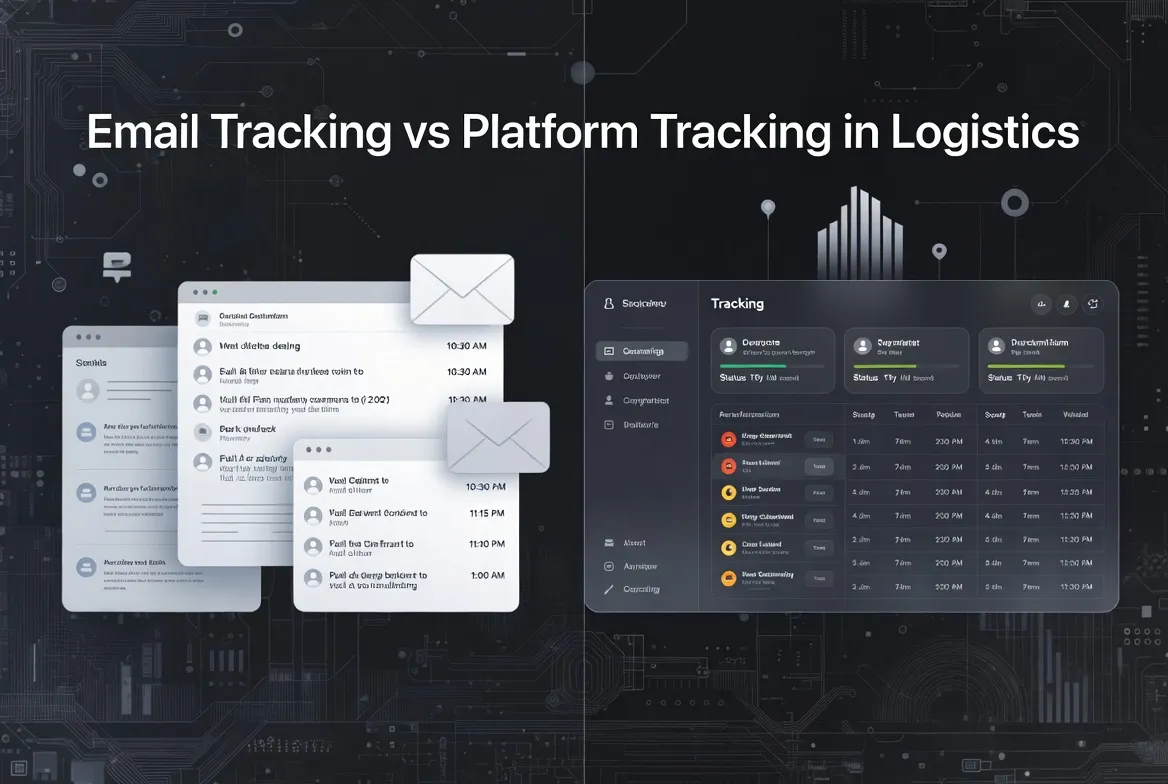
Manual communication: Emails and messaging tools lead to delays and miscommunication
Data silos: Lack of shared data reduces transparency
Inefficient workflows: Tasks are not synchronized across teams
Limited accountability: Difficult to track responsibilities and progress
These issues result in operational inefficiencies, delays, and increased costs.
Cross-border logistics platforms are important because they:
Enable real-time collaboration across all stakeholders
Provide a single source of truth for shipment data
Improve workflow synchronization
Enhance transparency and accountability
Support scalable global partnerships
How Cross-Border Logistics Platforms Work
These platforms enable collaboration by integrating workflows, data, and communication channels.
1. Unified Collaboration Environment
All stakeholders operate within a shared system where they can:
Access shipment data
Update status and documents
Communicate within workflows
This eliminates the need for external communication tools.
2. Multi-Role Workflow Coordination
Different roles participate in the same workflow:
Sales teams manage customer interactions
Operations teams execute logistics tasks
Documentation teams handle paperwork
Finance teams manage billing and reconciliation
Each role works within a structured process.
3. Real-Time Data Sharing
Data is updated in real time and shared across all participants, ensuring:
Consistent information
Reduced duplication
Immediate visibility into changes
4. Task Assignment and Workflow Automation
Tasks are automatically assigned based on predefined workflows:
SOP-driven task allocation
Automated notifications for task completion
Workflow triggers based on shipment milestones
5. Integration with External Partners
The platform connects with:
Carriers and transport providers
Customs systems
Warehouses and distribution centers
This ensures seamless collaboration across the entire logistics chain.
6. Document and Communication Management
The platform centralizes:
Document sharing and storage
Online document confirmation
Communication logs within workflows
For example, collaborative systems can support online document confirmation and shared workflow execution between partners, reducing communication delays .
Key Features / Key Capabilities
1. Multi-Role Collaboration
Coordination between internal departments
Integration of external partners
Role-based access and permissions
2. Real-Time Data Synchronization
Shared access to shipment data
Instant updates across all stakeholders
Single source of truth
3. Workflow Automation
SOP-based process management
Automated task assignment
AI-based data recognition (OCR)
Automated billing and reconciliation
4. Document Collaboration
Centralized document management
Online document sharing and confirmation
Version control and audit trails
5. Communication Integration
In-system messaging and notifications
Workflow-based communication
Reduced reliance on external tools
6. End-to-End Visibility
Unified shipment timeline
Visibility across all logistics stages
Tracking of task progress and responsibilities
Benefits for Logistics Companies
1. Improved Collaboration Efficiency
Stakeholders work within the same system, reducing communication delays.
2. Enhanced Transparency
All participants have access to the same data and workflow status.
3. Reduced Operational Errors
Centralized data reduces duplication and inconsistencies.
4. Faster Workflow Execution
Automation ensures tasks are completed on time.
5. Better Partner Coordination
Seamless integration with external partners improves service quality.
6. Increased Scalability
Companies can expand their partner networks without increasing complexity.
Best Practices / Use Cases
1. Freight Forwarders Coordinating Global Partners
Use platforms to manage collaboration with overseas agents and carriers.
2. 3PL Providers Managing Multi-Party Operations
Enable seamless coordination between warehouses, transport providers, and customers.
3. Cross-Border eCommerce Logistics
Support collaboration across fulfillment centers, carriers, and last-mile providers.
4. Document Collaboration and Compliance
Use centralized systems for document sharing and approval workflows.
5. Managing Complex Logistics Projects
Coordinate multiple stakeholders in large-scale or project-based logistics operations.
Conclusion
Cross-border logistics platforms for international logistics collaboration are essential for managing the complexity of global logistics operations. By providing a unified environment for data sharing, workflow execution, and stakeholder coordination, these platforms enable logistics companies to improve efficiency, reduce errors, and enhance service quality.
As logistics networks become more interconnected, effective collaboration across borders is a critical factor for success.
Frequently Asked Questions
1. What is international logistics collaboration?
It refers to the coordination and cooperation between multiple stakeholders involved in global logistics operations, including freight forwarders, carriers, and partners.
2. How do logistics platforms improve collaboration?
They provide a shared system for data, workflows, and communication, enabling real-time coordination and reducing manual processes.
3. Why is collaboration important in cross-border logistics?
Because international shipments involve multiple parties, effective collaboration ensures smooth execution and reduces delays.
4. What are the key features of collaboration platforms?
Key features include multi-role coordination, real-time data sharing, workflow automation, and document management.
5. Who benefits from these platforms?
Freight forwarders, 3PL providers, and cross-border eCommerce logistics companies benefit from improved coordination and efficiency.
About WallTech
WallTech provides digital logistics solutions designed to enhance international logistics collaboration through unified platforms that connect multiple stakeholders across the supply chain. By enabling real-time data sharing, multi-role coordination, and workflow automation, WallTech helps logistics companies streamline collaboration between internal teams and external partners. Its solutions also integrate financial processes and provide end-to-end visibility, allowing businesses to improve operational efficiency and scale their global logistics networks effectively.
If you're exploring ways to improve your logistics operations, feel free to connect with us to learn more about our solutions and system capabilities.