




Nov 05,2024
Black Friday 2024: Brace for Surges in Cross-border E-commerce Logistics Demands
Introduction
Logistics systems measure supply chain performance by collecting data across all supply chain activities, defining key performance indicators (KPIs), and continuously monitoring these metrics through analytics and dashboards. This structured approach allows logistics companies to evaluate efficiency, reliability, cost control, and service quality across the entire supply chain.
In today’s global logistics landscape—where operations span multiple partners, regions, and systems—manual performance tracking is no longer sufficient. Logistics systems provide a centralized, data-driven framework to measure and improve supply chain performance with accuracy and consistency.
What Is Supply Chain Performance Measurement?
Supply chain performance measurement refers to the process of evaluating how effectively a supply chain operates in terms of speed, cost, reliability, and service quality.
It typically includes metrics such as:
On-time delivery rate
Order fulfillment cycle time
Inventory turnover
Cost per shipment or per order
Exception and delay rates
Customer satisfaction indicators
These metrics provide a comprehensive view of how well the supply chain is functioning.
Why Measuring Supply Chain Performance Matters
1. Ensuring Operational Efficiency
Performance measurement helps identify inefficiencies and optimize processes.
2. Improving Service Levels
Tracking delivery performance ensures that customer expectations and SLAs are met.
3. Enhancing Cost Control
Monitoring cost-related metrics helps companies manage expenses and improve profitability.
4. Supporting Strategic Decision Making
Performance data provides insights for long-term planning and optimization.
5. Enabling Continuous Improvement
Regular measurement allows companies to track progress and refine operations over time.
How Logistics Systems Measure Supply Chain Performance
1. Data Collection Across the Supply Chain
Logistics systems collect data from:
Order and booking systems
Transportation and tracking platforms
Warehouse and inventory systems
Financial and billing modules
External partners and carriers
This creates a comprehensive dataset covering all supply chain activities.
2. Data Standardization and Structuring
To ensure consistency, data is structured into:
Milestone-based shipment timelines
Standardized order and shipment records
Unified cost and revenue fields
Categorized exceptions and delays
This enables accurate KPI calculation and comparison.
3. Defining and Calculating KPIs
Logistics systems calculate KPIs such as:
On-time delivery rate (OTD)
Order fulfillment cycle time
Average transit time
Cost per shipment
Inventory turnover rate
Exception rate
These KPIs provide measurable insights into supply chain performance.
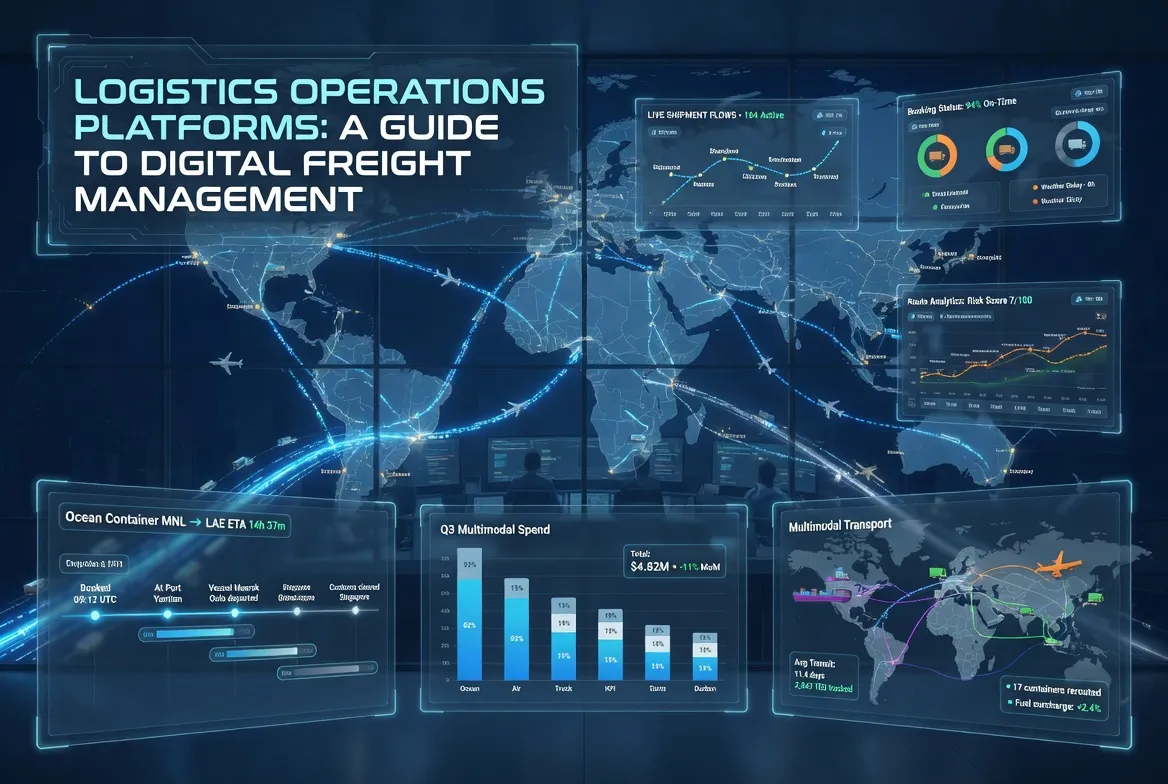
4. Real-Time Monitoring and Dashboards
Performance metrics are visualized through:
Real-time dashboards
KPI scorecards
Trend charts and reports
Exception alerts
This allows logistics teams to monitor performance continuously and take timely action.
5. Analytical Insights and Benchmarking
Logistics systems analyze data to:
Identify performance trends and patterns
Compare performance across regions, routes, or partners
Detect inefficiencies and bottlenecks
Benchmark against historical data or targets
This enables informed decision making and continuous optimization.
6. Automation of Performance Management
Based on performance data, systems can automate:
Exception handling workflows
Notifications and escalations
Task assignments
Billing and reconciliation processes
This ensures that performance insights are translated into action.
Key Features of Supply Chain Performance Systems
End-to-End Visibility
Real-time tracking of shipments and orders
Unified timeline across the supply chain
Milestone-based monitoring
Multi-Role Collaboration
Shared performance data across departments
Coordination between operations, finance, and customer service
Integration with upstream and downstream partners
Workflow Automation
Automated data capture and validation
Automated billing and reconciliation
Rule-based workflow execution
Advanced Analytics
KPI dashboards and performance monitoring
Trend analysis and forecasting
Benchmarking and reporting
System Integration
API connectivity with ERP, WMS, and external systems
Seamless data synchronization
Benefits for Logistics Companies
1. Improved Performance Visibility
Companies gain a clear understanding of how their supply chain is performing.
2. Faster Decision Making
Real-time data enables quick responses to performance issues.
3. Better Cost Management
Tracking cost-related metrics improves financial control and profitability.
4. Enhanced Customer Satisfaction
Reliable performance measurement supports consistent service delivery.
5. Scalable Operations
Standardized metrics and automated processes enable growth without added complexity.
Best Practices and Use Cases
Best Practices
Define clear and relevant KPIs aligned with business objectives
Standardize data structures and processes
Use real-time dashboards for monitoring
Automate data collection and reporting
Encourage cross-functional collaboration using shared metrics
Common Use Cases
1. SLA Monitoring
Track on-time delivery and service performance to ensure compliance.
2. Carrier and Partner Evaluation
Assess performance of logistics partners based on data.
3. Cost and Margin Analysis
Monitor profitability across shipments and operations.
4. Inventory and Fulfillment Optimization
Improve order fulfillment efficiency and inventory turnover.
5. Exception Management
Identify recurring issues and implement corrective actions.
Conclusion
Logistics systems play a crucial role in measuring supply chain performance by transforming operational data into structured, measurable KPIs. Through real-time monitoring, analytics, and automation, these systems enable logistics companies to improve efficiency, reduce costs, and enhance service quality.
In a complex and competitive logistics environment, effective performance measurement is essential for maintaining operational excellence and achieving sustainable growth.
Frequently Asked Questions
What is supply chain performance measurement?
It is the process of evaluating how efficiently and effectively a supply chain operates using key performance metrics.
How do logistics systems measure supply chain performance?
They collect and standardize data, calculate KPIs, and monitor performance through dashboards and analytics tools.
Why is measuring supply chain performance important?
It helps improve efficiency, control costs, and ensure high service quality.
What KPIs are commonly used in supply chain performance?
Common KPIs include on-time delivery rate, transit time, cost per shipment, and order fulfillment cycle time.
How can companies improve supply chain performance?
By using data-driven insights, automating workflows, and optimizing processes based on performance metrics.
About WallTech
WallTech provides digital logistics solutions that help companies measure and improve supply chain performance through data. Its platforms enable end-to-end logistics collaboration, connecting multiple roles and partners within a unified system. With real-time shipment visibility and milestone-based tracking, logistics teams can monitor performance across the entire supply chain. In addition, workflow automation—such as AI-powered data recognition, automated billing, and reconciliation—reduces manual effort and improves accuracy. By combining visibility, collaboration, and automation, WallTech supports logistics providers in enhancing efficiency and scaling their operations effectively.
If you're exploring ways to improve your logistics operations, feel free to connect with us to learn more about our solutions and system capabilities.

.webp "How Logistics Platforms Enable End-to-End Shipment Visibility")


