Apr 10,2026
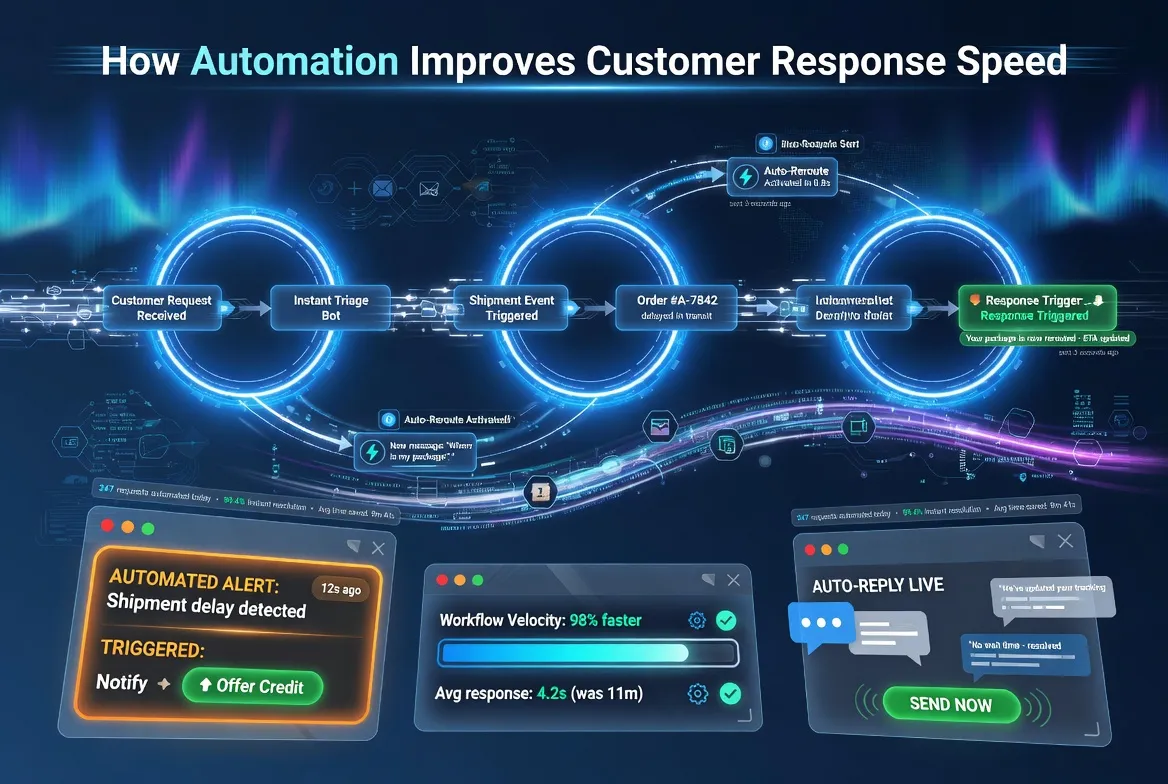
How Automation Improves Customer Response Speed
Introduction
Logistics data platforms support business intelligence (BI) by aggregating shipment and operational data, transforming it into structured datasets, and enabling advanced analytics, reporting, and visualization. This allows logistics companies to gain strategic insights into performance, profitability, and operational trends, supporting both day-to-day decisions and long-term business planning.
In an industry where data is often fragmented across systems and stakeholders, logistics data platforms provide a unified foundation for business intelligence—turning operational complexity into actionable, strategic knowledge.
What Is Business Intelligence in Logistics?
Business intelligence in logistics refers to the use of data analysis tools and technologies to evaluate business performance, identify trends, and support strategic decision making.
In logistics, BI typically focuses on:
Operational performance (e.g., transit times, delivery reliability)
Financial performance (costs, revenues, margins)
Customer and service performance
Carrier and partner performance
Demand and capacity trends
Unlike operational reporting, BI provides a higher-level, strategic view of the business.
Why Business Intelligence Matters in Logistics
1. Enabling Strategic Decision Making
BI provides insights that support long-term planning, such as market expansion, pricing strategies, and capacity investments.
2. Improving Profitability
By analyzing cost and revenue data, companies can identify margin opportunities and control expenses.
3. Enhancing Operational Visibility
BI complements operational dashboards by providing aggregated and trend-based insights.
4. Supporting Data-Driven Culture
Organizations can shift from intuition-based decisions to data-driven strategies.
5. Gaining Competitive Advantage
Companies that effectively use BI can respond faster to market changes and optimize their operations.
How Logistics Data Platforms Support Business Intelligence
1. Data Aggregation Across Systems
Logistics data platforms integrate data from multiple sources:
Freight and shipment management systems
Warehouse and inventory systems
ERP and financial systems
External partners and carriers
eCommerce and order platforms
This creates a centralized data warehouse for analysis.
2. Data Structuring and Modeling
Raw data is transformed into structured datasets:
Standardized shipment and order records
Unified financial data models
Consistent KPI definitions
Historical data repositories
This ensures data consistency and reliability for BI analysis.
3. KPI Definition and Tracking
Logistics data platforms define and monitor KPIs such as:
Revenue and margin per shipment
Cost breakdown by route or customer
On-time delivery performance
Customer profitability
Carrier performance metrics
These KPIs provide the foundation for business intelligence.
4. Data Visualization and Reporting
BI tools within logistics platforms provide:
Interactive dashboards
Customizable reports
Trend charts and analytics views
Drill-down capabilities for detailed analysis
This allows users to explore data at both high-level and granular levels.
5. Advanced Analytics and Insights
Logistics data platforms enable:
Trend analysis and forecasting
Profitability analysis by customer, route, or service
Performance benchmarking
Scenario analysis for decision support
Advanced analytics turn historical data into predictive and prescriptive insights.
6. Automation of BI Processes
Automation ensures efficient data handling:
Automated data collection and updates
Scheduled report generation
Real-time dashboard refresh
Automated alerts for KPI deviations
This reduces manual effort and ensures timely insights.
Key Features of Logistics BI Platforms
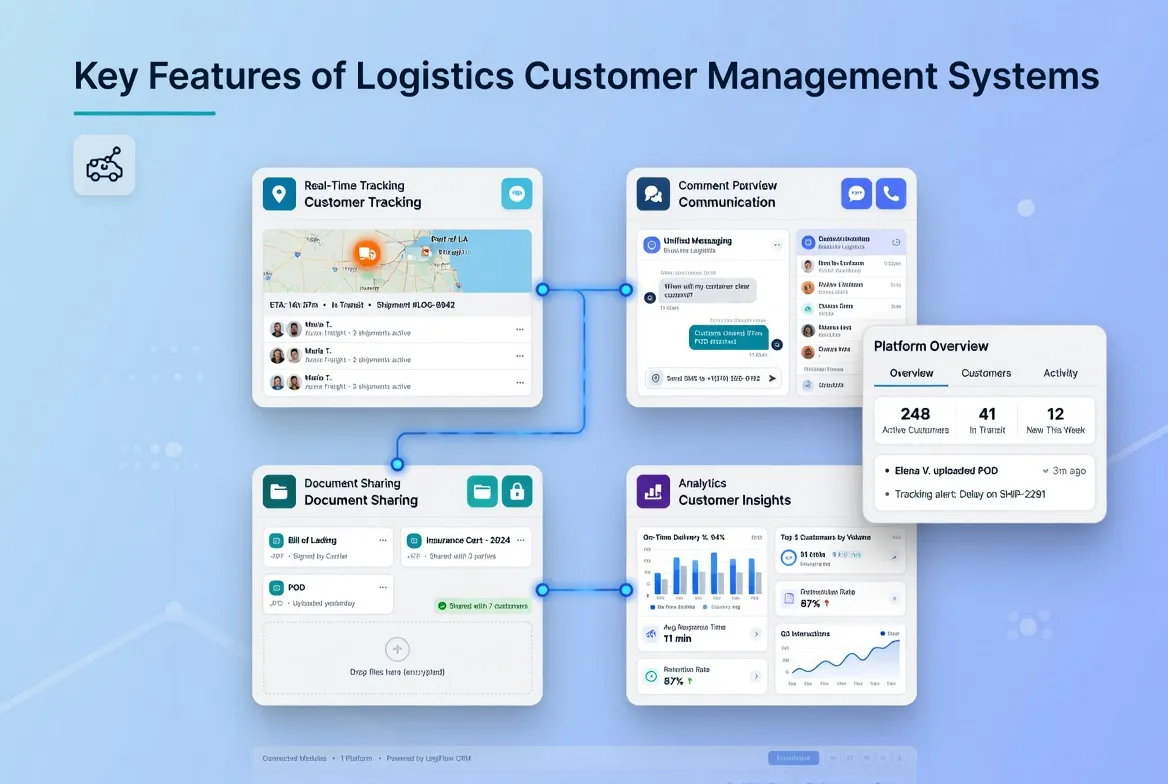
End-to-End Visibility
Consolidated view of shipment and operational data
Unified timeline and data structure
Real-time and historical data access
Multi-Role Collaboration
Shared dashboards across departments
Alignment between operations, finance, and management
Data sharing with partners where needed
Workflow Automation
Automated data processing and reporting
Automated billing and financial reconciliation
Rule-based alerts and notifications
Advanced Analytics
KPI dashboards and performance metrics
Trend analysis and forecasting tools
Profitability and cost analysis
System Integration
API connectivity with ERP, WMS, and external systems
Seamless data synchronization across platforms
Benefits for Logistics Companies
1. Better Strategic Planning
Companies can make informed decisions based on comprehensive data insights.
2. Improved Financial Performance
Detailed cost and revenue analysis supports margin optimization.
3. Enhanced Operational Insights
BI provides a broader view of operational performance beyond individual shipments.
4. Increased Efficiency
Automated reporting and data processing reduce manual workload.
5. Scalable Data Management
Centralized data platforms support business growth and complexity.
Best Practices and Use Cases
Best Practices
Centralize all data sources into a unified platform
Standardize KPI definitions across the organization
Use interactive dashboards for flexible analysis
Automate reporting processes
Promote data-driven decision making across teams
Common Use Cases
1. Profitability Analysis
Evaluate margins by customer, route, or service type.
2. Performance Benchmarking
Compare operational performance across regions or time periods.
3. Demand Forecasting
Use historical data to predict future shipment volumes.
4. Customer Reporting
Provide clients with detailed performance and cost insights.
5. Strategic Planning
Support decisions on expansion, pricing, and resource allocation.
Conclusion
Logistics data platforms are essential for enabling business intelligence in modern supply chains. By aggregating, structuring, and analyzing data, these platforms provide logistics companies with the insights needed to improve performance, optimize costs, and make strategic decisions.
In an increasingly competitive and data-driven logistics industry, the ability to leverage business intelligence is a key differentiator. Companies that invest in logistics data platforms can unlock the full value of their data and drive sustainable growth.
Frequently Asked Questions
What is business intelligence in logistics?
Business intelligence in logistics refers to the use of data analysis tools to evaluate performance and support strategic decision making.
How do logistics data platforms support BI?
They aggregate and structure data, define KPIs, and provide analytics, dashboards, and reporting tools.
Why is business intelligence important in logistics?
It improves decision making, enhances profitability, and provides strategic insights.
What types of insights can BI provide in logistics?
Insights include performance trends, cost analysis, customer profitability, and demand forecasting.
How can logistics companies implement BI effectively?
By centralizing data, standardizing KPIs, and using analytics tools for continuous monitoring and analysis.
About WallTech
WallTech provides digital logistics solutions that support business intelligence through integrated data platforms. Its systems enable end-to-end logistics collaboration, connecting multiple roles and partners within a unified environment. With real-time shipment visibility and milestone-based tracking, companies gain a clear operational foundation for analysis. In addition, workflow automation—such as AI-powered data recognition, automated billing, and reconciliation—ensures data accuracy and efficiency. By combining visibility, collaboration, and automation, WallTech helps logistics companies build a strong data foundation for better decision making and scalable growth.
If you're exploring ways to improve your logistics operations, feel free to connect with us to learn more about our solutions and system capabilities.