Apr 06,2026
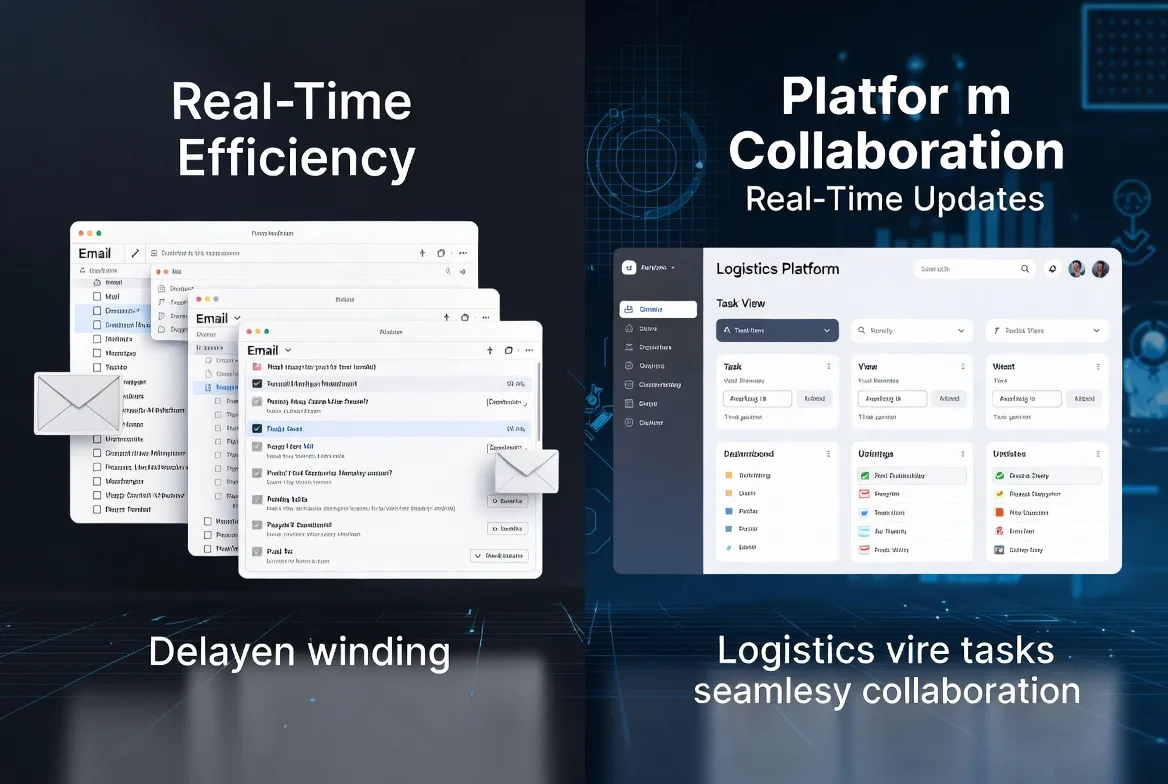
Email vs Logistics Platform: Collaboration Efficiency Comparison
Introduction
Logistics platforms integrate logistics partner systems by using APIs, EDI connections, and shared data frameworks to enable seamless communication and coordination between freight forwarders, carriers, warehouses, agents, and other service providers. This integration ensures that order data, shipment status, documents, and financial information are synchronized across all parties, allowing logistics networks to operate as a unified ecosystem rather than disconnected entities.
For freight forwarders, 3PLs, and cross-border logistics providers, integrating partner systems is essential for managing complex, multi-party operations efficiently and delivering consistent service quality.
What is Logistics Partner System Integration?
Logistics partner system integration refers to the process of connecting a company’s logistics platform with the systems used by its external partners.
These partners may include:
Overseas agents and branch offices
Carriers (ocean, air, trucking, express)
Warehouse operators and fulfillment centers
Customs brokers and compliance service providers
Last-mile delivery providers
Integration allows these systems to exchange data automatically, ensuring that all stakeholders are aligned and informed throughout the shipment lifecycle.
Why Integrating Partner Systems Matters
Logistics operations are inherently collaborative, involving multiple independent organizations.
Without integration, companies face several challenges:
Manual communication via email, phone, or spreadsheets
Delayed updates and inconsistent shipment data
Lack of transparency across partners
Difficulty coordinating multi-leg shipments
Errors in documentation and billing
By integrating partner systems, logistics platforms create a connected network that improves coordination and efficiency.
Key outcomes include:
Real-time information sharing across partners
Faster response to operational changes
Improved service reliability
Reduced operational complexity
How Logistics Platforms Integrate Logistics Partner Systems
Modern logistics platforms use several methods to connect with partner systems:
1. API Integration
APIs enable real-time communication between systems.
Orders are pushed to partner systems automatically
Shipment status updates are received in real time
Partners can access relevant data through secure interfaces
APIs are the most flexible and scalable integration method.
2. EDI Integration
EDI is commonly used for structured data exchange with partners.
Typical use cases include:
Booking confirmations with carriers
Shipping instructions and documentation
Status updates and event notifications
EDI ensures standardized communication, especially with large carriers and regulated systems.
3. Partner Portals and Shared Platforms
Some logistics platforms provide shared portals:
Partners log in to access shipment data
Upload documents and update status
Collaborate within a centralized system
This approach simplifies integration when direct system connections are not available.
4. Data Standardization and Mapping
Different partners use different data formats.
Logistics platforms:
Standardize data structures across partners
Map data fields between systems
Ensure consistent interpretation of information
This enables seamless communication across diverse systems.
5. Event-Driven Synchronization
Event-based workflows ensure timely updates:
Shipment milestones trigger updates across partner systems
Notifications are automatically sent to relevant parties
Exceptions are flagged and managed proactively
This keeps all partners aligned in real time.
Key Features of Partner Integration in Logistics Platforms
Logistics platforms that support partner integration typically include:
Multi-party collaboration: Coordination across internal teams and external partners
Unified shipment timeline: Consolidated view of all partner updates
Real-time data synchronization: Continuous updates across systems
End-to-end visibility: Tracking across all shipment stages and partners
Workflow automation: Automated task assignment and notifications
Document management: Centralized storage and sharing of logistics documents
Financial integration: Automated billing and reconciliation across partners
These features enable efficient collaboration and data sharing across the logistics network.
Benefits for Logistics Companies
1. Improved Partner Collaboration
Enable real-time coordination across multiple organizations
Reduce communication delays and misunderstandings
Strengthen relationships with partners
2. Enhanced Visibility
Track shipments across all partners and transport segments
Access a unified view of shipment progress
Improve transparency for customers
3. Increased Efficiency
Eliminate manual data exchange
Automate workflows across partner systems
Reduce operational workload
4. Better Data Accuracy
Ensure consistent data across all parties
Minimize errors in shipment and documentation data
Improve reporting and analytics
5. Scalable Partner Network
Easily onboard new partners and systems
Expand operations across regions and markets
Support growing logistics networks
Best Practices / Use Cases
Best Practices
Adopt API-first integration strategies for flexibility and scalability
Standardize data formats and processes across partners
Implement role-based access control for secure collaboration
Automate event-driven workflows to ensure timely updates
Continuously onboard partners into the platform ecosystem
Use Cases
Global Freight Forwarding Operations
Connect overseas agents and branches to manage international shipments seamlessly.Carrier Collaboration
Integrate with multiple carriers to manage bookings, tracking, and delivery updates.Warehouse and Fulfillment Integration
Synchronize operations between logistics platforms and partner warehouses.Cross-Border Logistics Networks
Coordinate customs brokers, carriers, and last-mile providers within a unified system.
Conclusion
Integrating logistics partner systems is essential for building a connected and efficient supply chain network. By enabling real-time data exchange, shared visibility, and automated workflows, logistics platforms transform fragmented partner interactions into seamless collaboration.
For freight forwarders and logistics providers, effective partner integration is key to improving operational efficiency, enhancing service quality, and scaling global logistics operations.
Frequently Asked Questions
What is logistics partner system integration?
It is the process of connecting a logistics platform with the systems used by external partners to enable seamless data exchange and collaboration.
How do logistics platforms integrate partner systems?
They use APIs, EDI, partner portals, and data standardization techniques to synchronize data and workflows across systems.
Why is partner integration important in logistics?
It improves collaboration, enhances visibility, reduces manual work, and ensures consistent data across all stakeholders.
What are the benefits of integrating logistics partner systems?
Benefits include better coordination, real-time tracking, improved efficiency, and scalability for global operations.
About WallTech
WallTech provides digital logistics solutions that enable seamless integration with logistics partner systems across global supply chains. Its platform supports multi-role collaboration between internal teams and external partners, offering real-time shipment visibility through milestone-based tracking and unified timelines. With workflow automation, AI-driven document recognition, and automated financial processes such as billing and reconciliation, WallTech helps logistics companies streamline partner coordination, improve operational efficiency, and scale their logistics networks effectively.
If you're exploring ways to improve your logistics operations, feel free to connect with us to learn more about our solutions and system capabilities.