Apr 26,2023
WallTech Leads Unveiling Ceremony of CIFA Digital Committee in Beijing
Introduction
Logistics network communication refers to the structured exchange of shipment information, operational updates, and coordination messages between companies involved in a supply chain. Modern logistics platforms enable this communication by centralizing operational data and connecting partners within a shared digital system, allowing logistics networks to collaborate more efficiently.
What Is Logistics Network Communication?
In global logistics operations, a single shipment may involve multiple organizations. Freight forwarders, carriers, warehouses, customs brokers, and overseas agents must coordinate tasks across different transportation stages.
Logistics network communication describes how these participants exchange operational information during the shipment lifecycle. This includes shipment status updates, documentation sharing, scheduling coordination, and operational instructions.
Without a centralized platform, communication often relies on email threads, spreadsheets, and messaging tools. This fragmented approach can create delays, inconsistent data, and operational misunderstandings.
Logistics platforms address these issues by providing a unified system where shipment information and communication workflows are standardized.
Why Logistics Network Communication Matters
Effective communication is critical for maintaining reliable logistics operations. When multiple partners are involved in shipment handling, operational decisions often depend on timely information sharing.
Poor communication can lead to several operational challenges:
Shipment delays caused by late operational updates
Miscommunication between logistics partners
Incomplete documentation during transportation or customs clearance
Limited visibility across transportation segments
By improving communication between stakeholders, logistics platforms help ensure that all participants work with the same shipment data and operational timelines.
How Logistics Platforms Enable Network Communication
Modern logistics platforms improve communication across logistics networks through structured data management and shared operational workflows.
Centralized Shipment Information
Logistics platforms store shipment data in a centralized database accessible to authorized users. All partners involved in the shipment can view operational updates, shipment details, and status changes through the same system.
This reduces the need for repetitive communication across multiple channels.
Partner Collaboration Interfaces
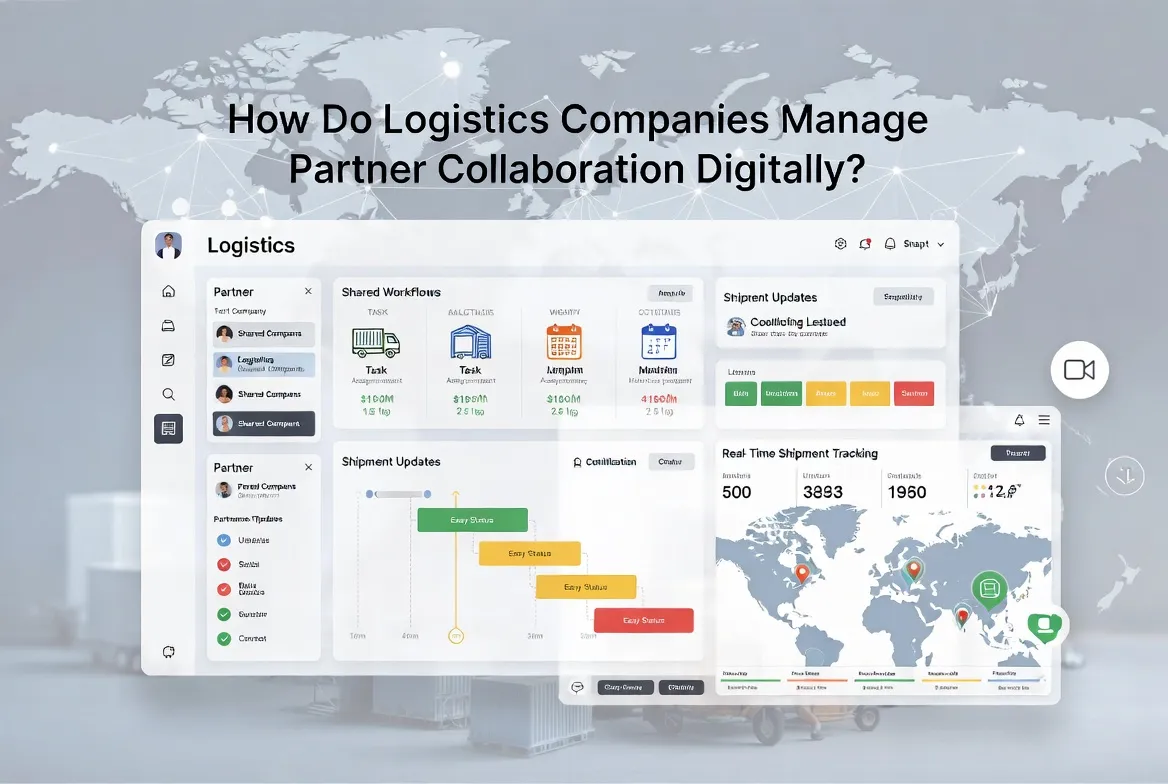
Many logistics platforms provide collaboration portals where partners can update shipment milestones, upload documents, and coordinate operational tasks. These portals allow different stakeholders to contribute operational updates directly to the shipment record.
This ensures that shipment information remains synchronized across the logistics network.
Integrated Tracking and Event Updates
Platforms often integrate tracking data from carriers and service providers. These integrations automatically update shipment milestones, providing real-time operational visibility to all participants in the network.
Automated event synchronization reduces the need for manual communication regarding shipment status.
Document Sharing and Data Exchange
Logistics operations involve multiple documents, including shipping instructions, bills of lading, customs declarations, and invoices. Digital platforms allow these documents to be uploaded and shared within the shipment workflow.
Centralized document management ensures that partners can access the most recent files without relying on external communication channels.
Benefits of Digital Logistics Communication Platforms
Implementing logistics platforms for network communication provides several operational benefits.
Improved operational coordination
Teams and partners can collaborate within a structured system rather than relying on fragmented communication tools.
Greater shipment visibility
Centralized data allows all stakeholders to monitor shipment progress and operational milestones.
Reduced operational delays
Automated updates and shared data reduce waiting time for information exchanges.
Scalable partner collaboration
Digital platforms allow logistics companies to manage larger networks of partners without increasing communication complexity.
Best Practices for Managing Logistics Network Communication
To maximize the value of logistics platforms, companies should follow several best practices.
First, organizations should standardize operational data structures across their logistics processes. Consistent data formats improve communication between systems and partners.
Second, companies should clearly define roles and permissions within the platform. Each participant should have appropriate access to shipment information and collaboration tools.
Third, integrating external systems—such as warehouse systems, transportation management systems, and carrier tracking tools—helps ensure that communication flows automatically across the logistics network.
Finally, training logistics partners to use the platform effectively is essential for achieving full collaboration benefits.
Conclusion
Logistics network communication plays a fundamental role in coordinating modern supply chains. As global logistics operations become more complex, relying on manual communication methods becomes increasingly inefficient.
Logistics platforms provide a digital infrastructure that enables structured communication between supply chain participants. By centralizing shipment data, integrating tracking updates, and supporting partner collaboration, these platforms help logistics companies operate more efficiently and maintain stronger coordination across their logistics networks.