Apr 16,2026
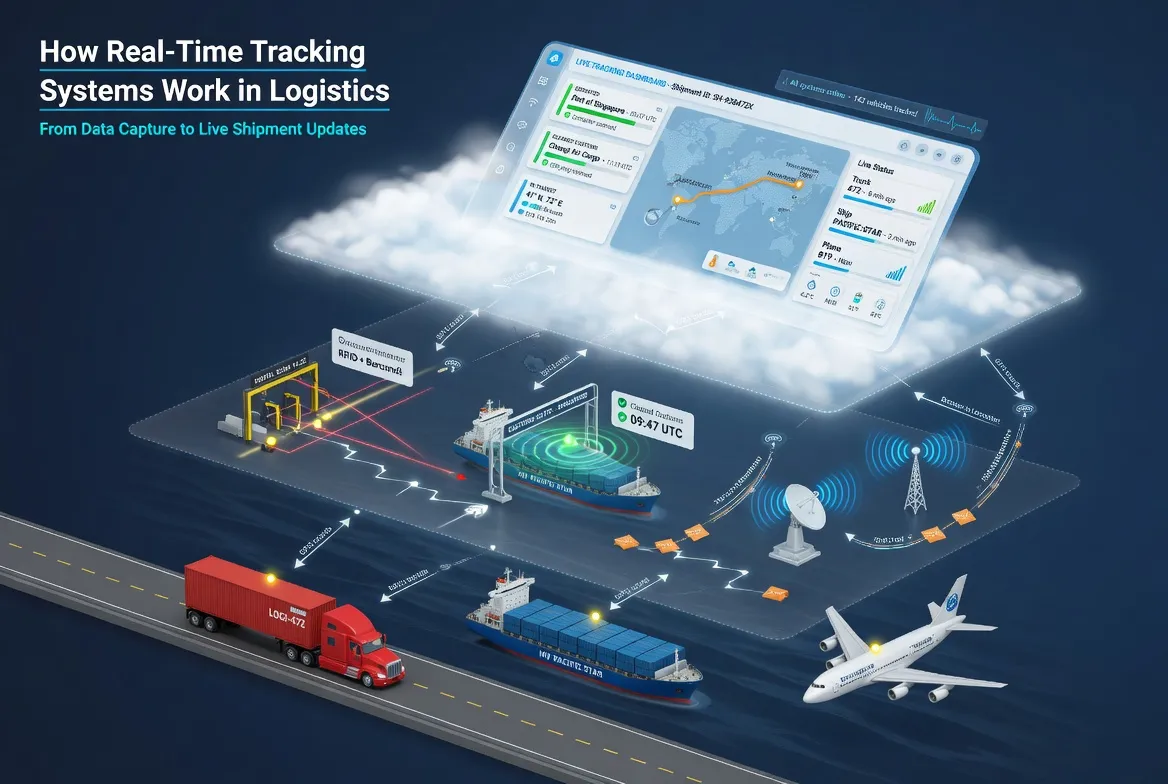
How Real-Time Tracking Systems Work in Logistics
Introduction
Logistics platforms integrate carrier tracking data by connecting directly to carrier systems through APIs, EDI, and third-party tracking aggregators, allowing real-time shipment status updates to be automatically captured, standardized, and displayed within a unified platform. This enables logistics companies to monitor shipments across multiple carriers and transport modes in one place, ensuring consistent visibility and proactive exception management.
For freight forwarders, 3PLs, and cross-border eCommerce logistics providers, integrating carrier tracking data is critical to achieving end-to-end shipment visibility and improving customer experience.
What is Carrier Tracking Data Integration?
Carrier tracking data integration refers to the process of collecting, synchronizing, and displaying shipment status updates from various transportation providers within a logistics platform.
These carriers may include:
Ocean shipping lines
Airlines and air cargo operators
Express couriers (e.g., last-mile delivery providers)
Trucking companies and rail operators
Tracking data typically includes:
Shipment milestones (e.g., departure, arrival, customs clearance)
Location updates
Estimated time of arrival (ETA)
Exception alerts (delays, holds, disruptions)
Integration ensures that this data is automatically pulled into the logistics system without manual tracking.
Why Carrier Tracking Integration Matters
Without integrated tracking, logistics operations rely heavily on manual tracking methods.
Common challenges include:
Logging into multiple carrier websites to check status
Inconsistent tracking formats across carriers
Delayed updates and lack of real-time visibility
Difficulty identifying shipment exceptions early
Poor customer communication due to limited data access
Carrier tracking integration solves these issues by centralizing all tracking data.
For logistics companies, this means:
A single source of truth for shipment status
Faster response to delays or disruptions
Improved customer satisfaction through transparency
Reduced operational workload
How Logistics Platforms Integrate Carrier Tracking Data
Modern logistics platforms use multiple methods to integrate carrier tracking data:
1. Direct API Integration with Carriers
Many carriers provide APIs that allow logistics platforms to:
Subscribe to shipment tracking updates
Retrieve real-time status data
Access ETA and route information
APIs enable continuous, automated tracking without manual intervention.
2. EDI Integration
EDI is widely used in ocean and air freight.
Typical EDI messages include:
Shipment status updates
Booking confirmations
Departure and arrival notifications
EDI ensures structured and reliable data exchange between carriers and logistics systems.
3. Integration with Tracking Aggregators
Logistics platforms often connect with third-party tracking providers that aggregate data from multiple carriers.
Examples of functionality include:
Multi-carrier tracking across different regions
Standardized tracking formats
Faster onboarding of new carriers
This approach reduces the need for individual integrations with each carrier.
4. Event Subscription and Webhooks
Advanced systems use event-driven mechanisms:
Platforms subscribe to tracking events from carriers
Updates are pushed automatically when milestones occur
Real-time notifications are triggered for users and systems
This ensures immediate visibility into shipment progress.
5. Manual and Semi-Automated Data Input
In cases where digital integration is not available:
Tracking data can be uploaded manually
System workflows allow updates to be recorded and shared
While less efficient, this ensures coverage for all shipment scenarios.
Key Features of Carrier Tracking Integration
Logistics platforms with strong tracking integration capabilities typically provide:
End-to-end shipment visibility: Track shipments across all transport legs
Milestone-based tracking: Standardized events across carriers
Unified tracking timeline: Consolidated view of shipment progress
Exception management: Automated alerts for delays and disruptions
Multi-carrier support: Integration with various carriers globally
Real-time updates: Continuous synchronization of tracking data
Customer visibility tools: Portals or notifications for clients
These features enable logistics companies to move from reactive tracking to proactive management.
Benefits for Logistics Companies
1. Centralized Visibility
Access all shipment tracking data in one platform
Eliminate the need to check multiple carrier systems
Provide consistent information across teams
2. Improved Customer Experience
Share real-time tracking updates with customers
Increase transparency and trust
Reduce customer inquiries and support workload
3. Proactive Exception Handling
Identify delays and disruptions early
Trigger automated alerts and workflows
Enable faster decision-making
4. Enhanced Collaboration
Share tracking data with partners and stakeholders
Align upstream and downstream operations
Improve coordination across transport segments
5. Operational Efficiency
Reduce manual tracking efforts
Automate status updates and reporting
Improve overall productivity
Best Practices / Use Cases
Best Practices
Integrate with major carriers via APIs for real-time updates
Use tracking aggregators to expand carrier coverage quickly
Standardize milestone definitions across carriers
Implement automated alerts for exception management
Provide customer-facing tracking portals for transparency
Use Cases
Multi-Carrier Shipment Tracking
Freight forwarders manage shipments across ocean, air, and last-mile carriers with unified visibility.Cross-Border eCommerce Logistics
Platforms track parcels across multiple international carriers and provide real-time updates to end customers.Exception Management
Automated alerts notify teams of delays, enabling proactive intervention.Customer Self-Service Tracking
Customers access shipment status through portals without contacting support teams.
Conclusion
Integrating carrier tracking data is essential for building a modern, visibility-driven logistics operation. By connecting directly with carriers and aggregating tracking information into a unified platform, logistics companies can achieve real-time visibility, improve operational efficiency, and deliver a superior customer experience.
For freight forwarders and logistics providers operating across multiple carriers and regions, tracking integration is a key enabler of digital transformation and competitive advantage.
Frequently Asked Questions
What is carrier tracking data integration in logistics?
It is the process of connecting logistics platforms with carrier systems to automatically collect and display shipment tracking data in real time.
How do logistics platforms get tracking data from carriers?
They use APIs, EDI connections, tracking aggregators, and event-driven updates to retrieve and synchronize shipment status information.
Why is carrier tracking integration important?
It improves visibility, reduces manual tracking work, enhances customer experience, and enables proactive exception management.
What are the benefits of integrating tracking data?
Benefits include centralized visibility, real-time updates, improved collaboration, and better operational efficiency.
About WallTech
WallTech offers digital logistics solutions designed to enhance shipment visibility and operational coordination across global supply chains. Its platforms support end-to-end tracking through milestone-based updates and unified timelines, integrating carrier tracking data from multiple sources into a single view. With built-in workflow automation, multi-role collaboration capabilities, and AI-driven document processing, WallTech helps logistics companies reduce manual work while improving transparency and responsiveness. Financial processes such as billing and reconciliation are also automated, enabling more efficient and scalable operations.
If you're exploring ways to improve your logistics operations, feel free to connect with us to learn more about our solutions and system capabilities.