Mar 27,2026
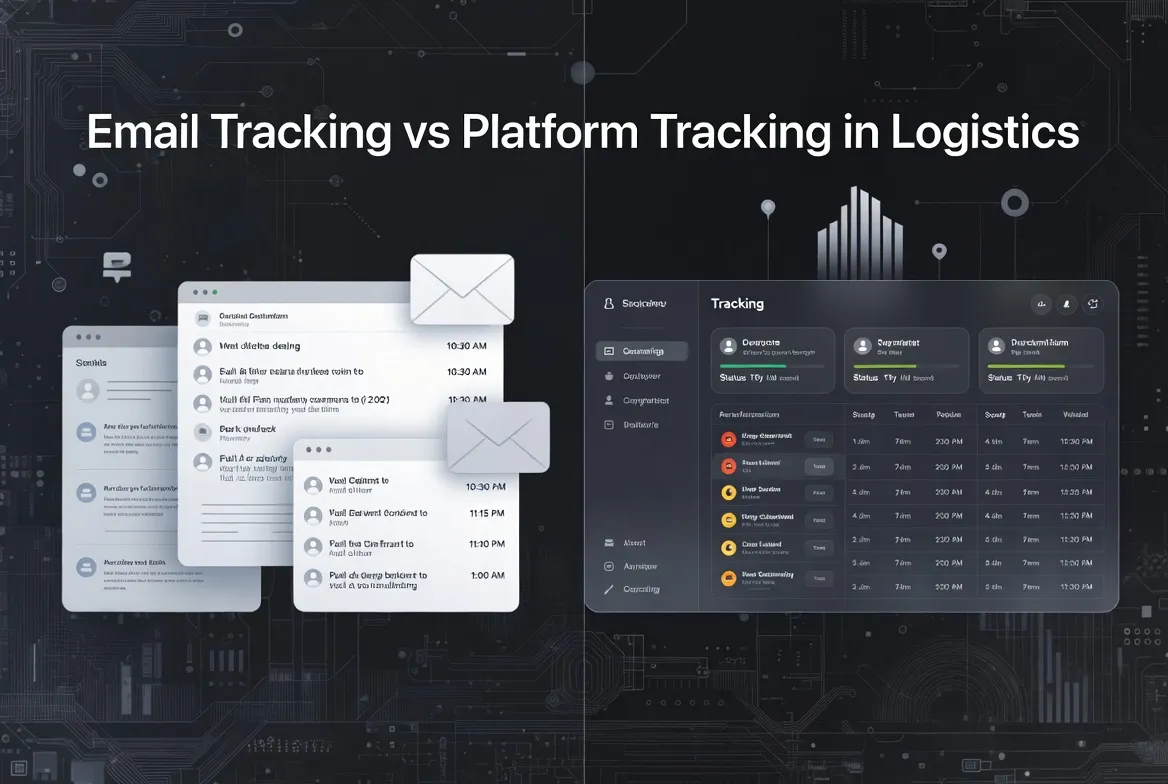
Email Tracking vs Platform Tracking in Logistics
Introduction
API integration powers real-time logistics data exchange by enabling different systems—such as logistics platforms, ERP systems, carrier networks, and eCommerce platforms—to communicate and share data instantly. Through APIs (Application Programming Interfaces), logistics companies can synchronize shipment data, automate workflows, and maintain real-time visibility across the entire supply chain.
In modern logistics operations, where multiple systems and stakeholders are involved, API integration is essential for eliminating data silos and ensuring seamless, real-time coordination.
What is API Integration in Logistics
API integration in logistics refers to the use of standardized interfaces that allow different software systems to exchange data automatically and in real time.
APIs enable systems to:
Send and receive shipment data
Update shipment status and milestones
Synchronize order and financial information
Trigger workflows across platforms
For example:
An eCommerce platform sends order data to a logistics system via API
The logistics system updates shipment status from carrier systems
Financial data is shared with ERP systems for invoicing and reporting
This creates a connected ecosystem where all systems operate on consistent, up-to-date information.
Why API Integration Matters
Logistics operations often involve multiple disconnected systems, leading to:
Manual data entry and duplication
Delayed updates across systems
Inconsistent or outdated information
Inefficient coordination between stakeholders
API integration addresses these challenges by enabling real-time data exchange.
It matters because it allows:
1. Real-Time Visibility
Shipment updates are synchronized across systems instantly, providing accurate and timely information.
2. Operational Efficiency
Automation reduces manual work and accelerates data processing.
3. Data Consistency
All systems operate on the same data, reducing discrepancies.
4. Scalable Integration
Companies can connect multiple systems and partners without increasing complexity.
How API Integration Works in Logistics
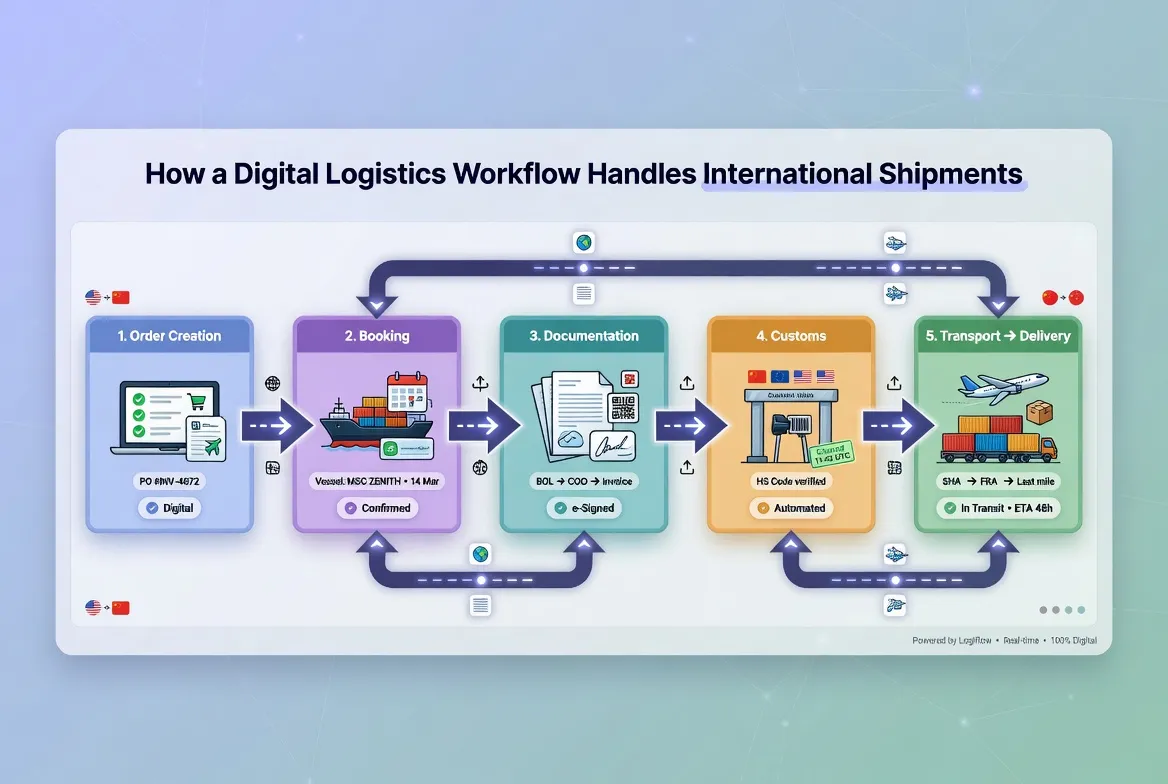
API integration connects systems through defined endpoints that allow data to be exchanged automatically.
1. System Connectivity
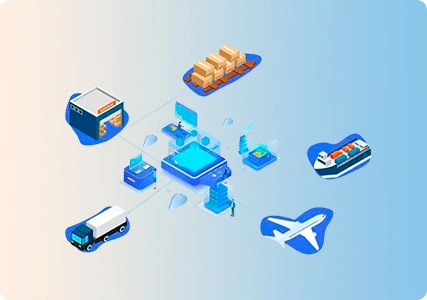
Different systems—such as logistics platforms, ERP, WMS, and carrier systems—are connected via APIs.
2. Data Exchange
When an event occurs in one system, data is transmitted to other systems in real time.
For example:
Order creation triggers shipment creation
Shipment status updates trigger notifications
Financial data updates trigger billing processes
3. Standardized Data Formats
APIs ensure that data is structured consistently across systems, enabling seamless communication.
4. Event-Driven Workflows
APIs enable event-based automation:
Milestones trigger updates and tasks
Exceptions trigger alerts
Status changes trigger financial processes
5. Continuous Synchronization
Data is continuously updated across systems, ensuring that all stakeholders have access to the latest information.
Key Features / Key Capabilities
Modern logistics systems leverage API integration through several key capabilities:
1. Real-Time Data Synchronization
Instant updates across connected systems
Consistent shipment status information
Reduced delays in communication
2. End-to-End Visibility
Integration with carrier systems for tracking updates
Milestone-based tracking across all stages
Unified shipment timeline
3. Multi-Role Collaboration
Shared data across departments and partners
Seamless coordination between upstream and downstream stakeholders
Reduced reliance on manual communication
4. Workflow Automation
API-triggered task assignment and execution
Automated notifications and updates
Reduced manual intervention
5. System Integration Ecosystem
Connectivity with ERP, WMS, eCommerce platforms, and carriers
Flexible integration architecture
Scalable system expansion
6. Financial Data Integration
Real-time cost and revenue updates
Automated billing triggers
Improved financial accuracy
Benefits for Logistics Companies
API integration provides significant advantages for logistics companies:
Improved Efficiency
Reduced manual data entry
Faster data processing
Streamlined workflows
Enhanced Visibility
Real-time tracking of shipments
Better control over operations
Improved transparency
Better Collaboration
Seamless communication between systems and stakeholders
Reduced coordination delays
Improved workflow alignment
Increased Accuracy
Consistent data across all systems
Reduced errors and discrepancies
Improved reliability
Scalability
Easy integration with new systems and partners
Flexible system architecture
Support for business growth
Best Practices / Use Cases
1. Integrating eCommerce Platforms
APIs connect order data directly to logistics systems, enabling automated fulfillment.
2. Connecting Carrier Systems
Real-time tracking updates are synchronized across systems.
3. Linking ERP and Financial Systems
Operational data is shared with ERP for accurate billing and reporting.
4. Automating Multi-System Workflows
APIs enable seamless coordination across multiple platforms.
Best Practices
Use standardized API formats for compatibility
Ensure real-time data synchronization
Monitor API performance and reliability
Secure data exchange through authentication and encryption
Conclusion
API integration is a foundational technology for modern logistics operations. By enabling real-time data exchange across systems, it eliminates data silos, improves efficiency, and enhances visibility across the supply chain.
As logistics networks become more interconnected and data-driven, API integration is essential for achieving seamless coordination, automation, and scalability.
Frequently Asked Questions
What is API integration in logistics?
It is the use of APIs to connect different systems and enable real-time data exchange across logistics operations.
How does API integration work in logistics?
It allows systems to communicate through defined interfaces, automatically exchanging data and triggering workflows.
Why is API integration important in logistics?
It improves efficiency, enhances visibility, ensures data consistency, and enables seamless collaboration.
What are the benefits of API integration?
Benefits include real-time data synchronization, reduced manual work, improved accuracy, and scalable system connectivity.
About WallTech
WallTech provides digital logistics solutions designed to support freight forwarders, 3PL providers, and cross-border eCommerce logistics companies. Its platforms enable seamless API integration across ERP systems, carrier networks, and eCommerce platforms, ensuring real-time data exchange and end-to-end logistics collaboration. With milestone-based shipment visibility and unified timelines, companies can maintain full control over operations. In addition, workflow automation, AI-powered data recognition, and integrated financial processes help reduce manual workload and improve operational efficiency at scale.
If you're exploring ways to improve your logistics operations, feel free to connect with us to learn more about our solutions and system capabilities.