May 25,2026
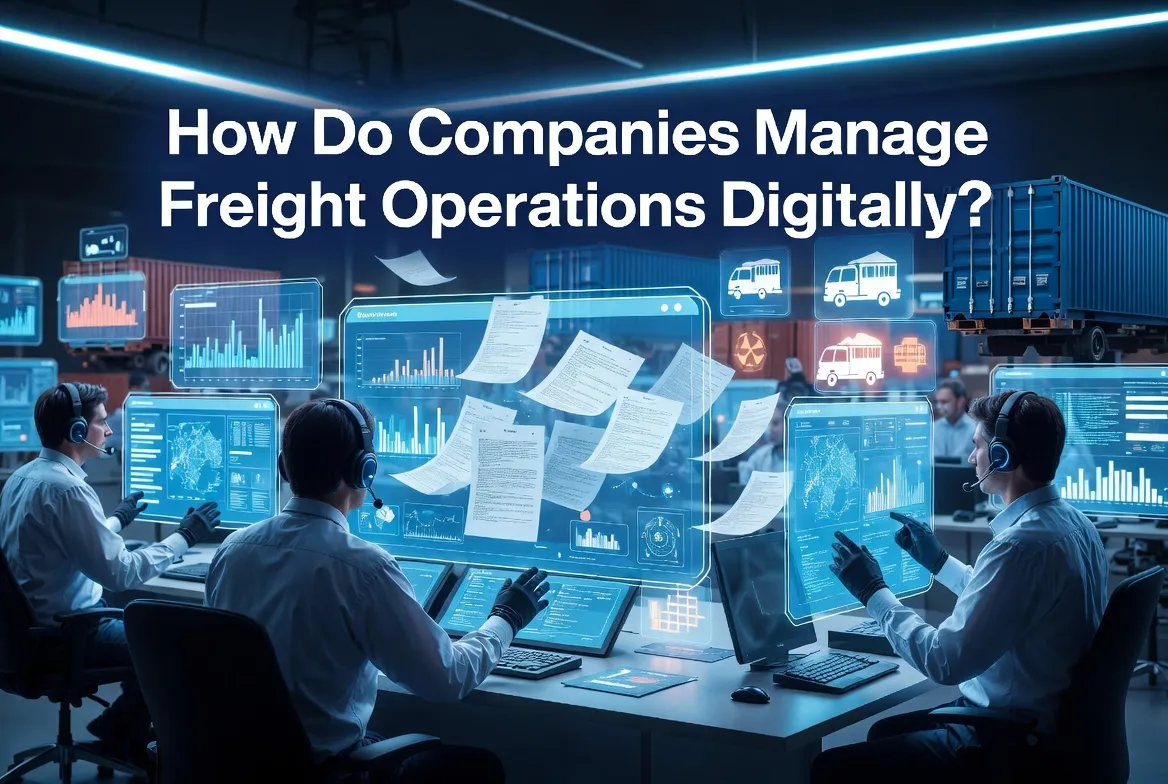
How Do Companies Manage Freight Operations Digitally?
Introduction
Traditional freight operations rely on manual processes, disconnected tools, and fragmented communication, while digital logistics platforms integrate operations, data, and workflows into a unified system with real-time visibility and automation. The key difference lies in efficiency, accuracy, and scalability—digital platforms enable logistics companies to operate faster, with better control and data-driven decision making.
As global logistics becomes more complex and competitive, many freight forwarders and 3PL providers are transitioning from traditional methods to digital platforms to improve operational performance and customer experience.
What Are Traditional Freight Operations vs Digital Logistics Platforms
Traditional Freight Operations
Traditional freight operations are typically characterized by:
Heavy reliance on spreadsheets, emails, and manual data entry
Disconnected systems across departments
Limited integration with partners and carriers
Reactive rather than proactive management
Manual tracking and communication
These operations often evolve organically over time, leading to inefficiencies and lack of standardization.
Digital Logistics Platforms
Digital logistics platforms are integrated systems designed to manage the entire logistics lifecycle within a single environment. They provide:
Centralized data and workflows
Real-time shipment visibility
Automated processes and task management
Seamless collaboration across teams and partners
Integration with external systems via APIs and EDI
They serve as the digital backbone of modern logistics operations.
Why the Shift to Digital Platforms Matters
The limitations of traditional freight operations become more evident as shipment volumes increase and supply chains become more complex. Common challenges include:
Data silos and inconsistent information
Delayed communication and manual handovers
Limited visibility into shipment status
High error rates in documentation and billing
Difficulty scaling operations
Digital logistics platforms address these challenges by enabling:
Operational efficiency through automation
Real-time visibility for better decision making
Seamless collaboration across stakeholders
Data accuracy and consistency
Scalable operations for business growth
The shift is not just technological—it is a strategic move toward more agile and resilient logistics operations.
How Digital Logistics Platforms Work
Digital logistics platforms transform traditional workflows into integrated, automated processes:
1. Centralized Data Management
All shipment, document, and financial data is stored in a single system, eliminating data silos.
2. Workflow Automation
Processes such as order creation, documentation, and billing are automated, reducing manual intervention.
3. Real-Time Tracking and Visibility
Shipment progress is tracked through milestone-based timelines, providing a clear and up-to-date view.
4. Multi-Role Collaboration
Different teams—sales, operations, documentation, and finance—work within the same platform, ensuring alignment.
5. System Integration
APIs and EDI connections enable seamless data exchange with carriers, partners, and external systems.
6. Financial Synchronization
Operational data is linked with financial processes, enabling automated billing and real-time profitability tracking.
Key Differences Between Traditional and Digital Logistics
1. Data Management
Traditional: Dispersed across spreadsheets and emails
Digital: Centralized and structured within a unified system
2. Visibility
Traditional: Limited, often delayed updates
Digital: Real-time, end-to-end visibility through milestone tracking
3. Collaboration
Traditional: Manual communication via email or phone
Digital: Integrated multi-role collaboration within the platform
4. Process Efficiency
Traditional: Manual workflows and repetitive tasks
Digital: Automated workflows and task triggers
5. Error Rates
Traditional: High risk of human error
Digital: Reduced errors through automation and data validation
6. Scalability
Traditional: Difficult to scale without increasing manpower
Digital: Scalable operations supported by system automation
Benefits for Logistics Companies
Adopting digital logistics platforms provides significant advantages:
Increased efficiency: Automation reduces manual workload
Enhanced visibility: Real-time tracking improves control
Improved collaboration: Teams and partners work seamlessly together
Better decision making: Data-driven insights enable proactive management
Reduced operational risk: Early detection of issues minimizes disruptions
Scalability: Systems support growth without proportional cost increases
These benefits are critical for freight forwarders and logistics providers aiming to remain competitive in a digital-first environment.
Best Practices / Use Cases
1. Transitioning from Spreadsheets to Systems
Replace manual tools with integrated platforms to centralize data and workflows.
2. Standardizing Operations
Use digital systems to define and enforce standardized processes across teams and branches.
3. Enhancing Customer Experience
Provide customers with real-time tracking and transparent communication through digital platforms.
4. Automating Financial Processes
Implement automated billing and reconciliation to improve accuracy and efficiency.
5. Integrating with Partners
Connect with carriers, agents, and other stakeholders through APIs to streamline collaboration.
Conclusion
The shift from traditional freight operations to digital logistics platforms represents a fundamental transformation in how logistics companies operate. By integrating data, automating workflows, and enabling real-time visibility, digital platforms provide the tools needed to manage complexity, improve efficiency, and scale effectively.
As the logistics industry continues to evolve, companies that embrace digital transformation will be better positioned to adapt, compete, and deliver high-quality service.
Frequently Asked Questions
What are traditional freight operations?
Traditional freight operations rely on manual processes, spreadsheets, and disconnected systems to manage logistics activities.
What is a digital logistics platform?
A digital logistics platform is an integrated system that centralizes operations, provides real-time visibility, and automates workflows across the logistics lifecycle.
Why are digital logistics platforms better than traditional methods?
They improve efficiency, reduce errors, enhance visibility, and enable scalable operations through automation and integration.
What are the benefits of digital transformation in logistics?
Benefits include faster processes, better collaboration, improved decision making, and enhanced customer experience.
About WallTech
WallTech provides digital logistics solutions designed to help companies transition from traditional freight operations to integrated, modern platforms. Its systems enable end-to-end collaboration across teams and partners, real-time shipment visibility through milestone-based tracking, and automation of workflows and financial processes such as billing and reconciliation. By centralizing operational and financial data, WallTech supports logistics companies in improving efficiency, enhancing transparency, and scaling their business in an increasingly digital supply chain environment.
If you're exploring ways to improve your logistics operations, feel free to connect with us to learn more about our solutions and system capabilities.