Jul 30,2025
Development Trends of International Shipping Software
Introduction
Logistics data platforms for global logistics data integration are systems that connect and unify logistics data across countries, regions, systems, and partners into a single, consistent data environment. These platforms enable seamless data exchange and synchronization across global supply chains, supporting real-time visibility, efficient collaboration, and scalable operations.
For freight forwarders, 3PL providers, and cross-border eCommerce logistics companies operating internationally, managing data across multiple regions and systems is a major challenge. Global data integration platforms solve this by creating a unified data layer that connects all stakeholders and systems involved in global logistics operations.
What is Logistics Data Platforms for Global Logistics Data Integration
A logistics data platform for global logistics data integration is a centralized system that:
Connects multiple systems across different regions and countries
Integrates data from internal operations and external partners
Standardizes and synchronizes data globally
Provides a unified view of logistics operations
These platforms typically integrate:
ERP, WMS, and TMS systems
Carrier and tracking systems
Customs and compliance systems
eCommerce platforms and marketplaces
Financial and billing systems
The goal is to ensure that all logistics data flows seamlessly across the entire global supply chain.
Why Logistics Data Platforms Matter
1. Global Data Fragmentation
International logistics operations often involve:
Different systems in different regions
Multiple partners and agents
Diverse data formats and standards
This leads to fragmented and inconsistent data.
2. Lack of End-to-End Visibility
Without global integration, companies struggle to:
Track shipments across borders
Monitor multi-segment transportation
Maintain a unified operational view
3. Inefficient Cross-Border Collaboration
Global logistics requires coordination between:
Headquarters and overseas branches
Agents and partners
Customers and service providers
Without integrated data, collaboration becomes slow and error-prone.
4. Compliance and Risk Challenges
Cross-border logistics must comply with:
Customs regulations
Local reporting requirements
Financial and tax rules
Integrated data platforms help ensure compliance and reduce risk.
How Logistics Data Platforms Work
1. Global Data Integration Layer
Connects systems across regions via APIs and EDI
Integrates with global carriers and partners
Supports multi-system connectivity
2. Data Standardization
Converts different data formats into unified structures
Aligns shipment milestones globally
Ensures consistency across regions
3. Real-Time Data Synchronization
Updates data across all systems simultaneously
Ensures all stakeholders access the same information
Eliminates delays and discrepancies
4. Centralized Data Management
Stores global logistics data in a unified platform
Supports both real-time and historical data
Enables global analytics and reporting
5. Workflow Integration
Connects data with operational workflows
Automates cross-border processes
Supports seamless execution across regions
Key Features / Key Capabilities
1. Multi-System Integration
API and EDI connectivity with global systems
Integration with ERP, WMS, and TMS platforms
Connection with external partners and carriers
2. End-to-End Global Visibility
Milestone-based tracking across international shipments
Unified timeline across all transport stages
Real-time updates from multiple regions
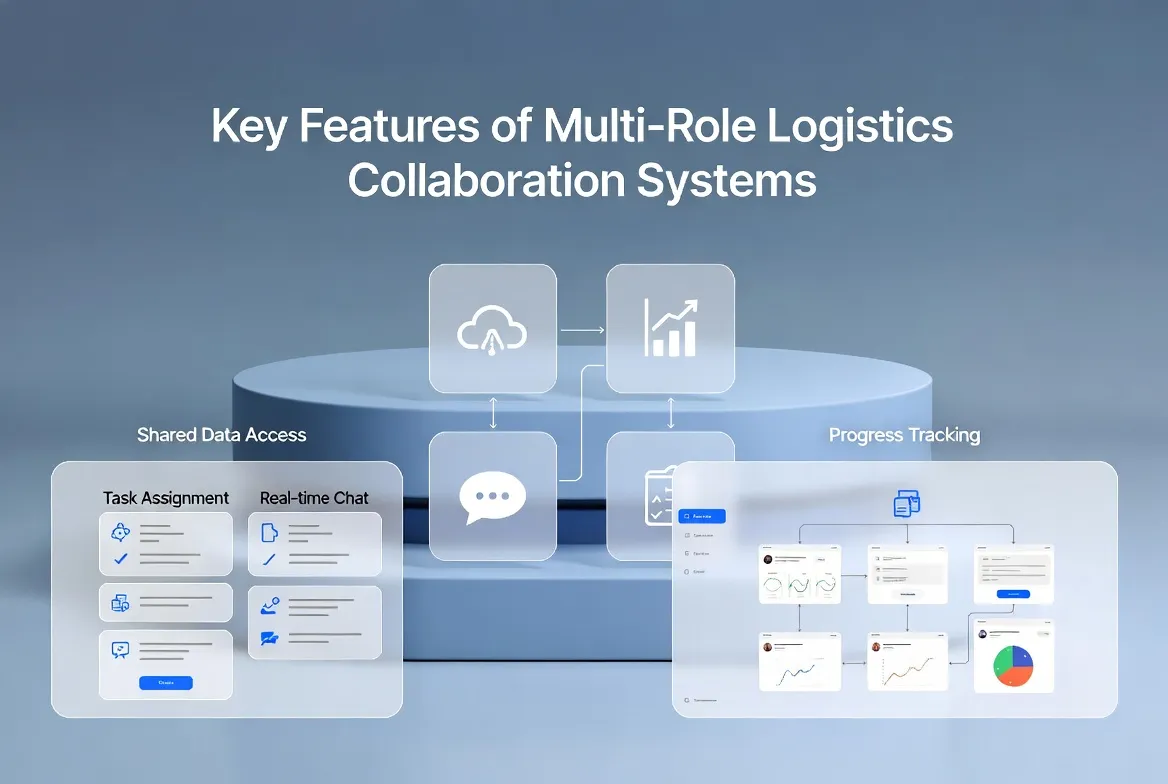
3. Multi-Role and Multi-Region Collaboration
Shared data access across global teams
Coordination between headquarters and overseas branches
Integration with agents and partners
4. Automation and AI
AI-based data recognition (OCR)
Automated workflows across regions
Automated billing and reconciliation
5. Multi-Currency and Financial Integration
Support for different currencies
Automated financial synchronization
Compliance with local financial requirements
6. Data Governance and Security
Role-based access control
Data encryption and compliance
Audit trails for global operations
Modern logistics systems support cross-border data sharing, multi-system integration, and real-time synchronization to enable seamless global operations and collaboration .
Benefits for Logistics Companies
1. Unified Global Operations
Single platform for managing global logistics
Consistent processes across regions
Improved operational control
2. Enhanced Visibility
Real-time tracking across borders
Unified view of shipments and operations
Better monitoring of global performance
3. Improved Collaboration
Seamless communication between global teams
Integration with partners and agents
Reduced reliance on manual communication
4. Reduced Operational Risks
Improved data accuracy
Better compliance with regulations
Faster response to disruptions
5. Scalability for International Growth
Ability to expand into new markets
Integration with new partners and systems
Support for increasing data volumes
Best Practices / Use Cases
1. Global Freight Forwarding Operations
Integrate data across headquarters and overseas branches
Manage export and import processes seamlessly
Track shipments across multiple countries
2. Cross-Border eCommerce Logistics
Integrate with global marketplaces and carriers
Manage high-volume parcel data
Provide real-time tracking to customers
3. Multi-Region 3PL Operations
Standardize processes across regions
Integrate warehouse and transportation systems
Improve service consistency
4. Financial and Compliance Integration
Manage multi-currency transactions
Ensure compliance with local regulations
Automate billing and reconciliation
5. Partner Ecosystem Integration
Connect with global logistics partners
Share data in real time
Improve coordination and efficiency
Conclusion
Logistics data platforms for global logistics data integration are essential for managing complex, cross-border supply chains. By connecting systems, standardizing data, and enabling real-time synchronization, these platforms provide the foundation for efficient global operations. In an increasingly interconnected logistics landscape, global data integration is critical for visibility, collaboration, and scalability.
Frequently Asked Questions
What is global logistics data integration?
Global logistics data integration is the process of connecting and synchronizing logistics data across multiple regions, systems, and stakeholders into a unified platform.
How do logistics data platforms enable global integration?
They use APIs and integration tools to connect systems, standardize data, and ensure real-time synchronization across global operations.
Why is global data integration important in logistics?
It improves visibility, enhances collaboration, reduces errors, and supports efficient cross-border operations.
What systems are involved in global logistics integration?
Common systems include ERP, WMS, TMS, carrier systems, eCommerce platforms, and customs systems.
Who benefits from global logistics data integration platforms?
Freight forwarders, 3PL providers, and cross-border logistics companies benefit most, especially those operating internationally.
About WallTech
WallTech provides digital logistics solutions designed to help logistics companies operate seamlessly across global supply chains. Its platforms enable end-to-end logistics collaboration by connecting multiple systems, regions, and stakeholders into a unified environment. With capabilities such as real-time shipment visibility, milestone-based tracking, and automation of workflows and financial processes, WallTech supports logistics enterprises in achieving efficient, scalable, and globally integrated operations.
If you're exploring ways to improve your logistics operations, feel free to connect with us to learn more about our solutions and system capabilities.