
Mar 27,2026
What Is Data Privacy in Logistics SaaS Platforms
Intro
The best freight forwarding software in 2026 is defined by its ability to manage complex global logistics operations through a single, connected platform. As freight forwarders handle increasing shipment volumes, multiple transport modes, and cross-border requirements, digital systems have become essential for operational efficiency and visibility.
What is Freight Forwarding Software
Freight forwarding software is a digital platform designed to manage the end-to-end lifecycle of international shipments. It supports logistics companies in coordinating bookings, documentation, transportation, tracking, and financial processes within a unified system.
A modern freight forwarding system typically includes:
Shipment order management
Multi-modal transportation coordination (air, ocean, land)
Documentation handling (BL, invoices, customs files)
Real-time tracking and milestone updates
Cost calculation and financial reconciliation
These systems replace fragmented workflows that traditionally relied on spreadsheets, emails, and disconnected tools.
Key Challenges in Global Freight Forwarding
Global logistics operations are inherently complex. Freight forwarders face several operational challenges:
1. Fragmented workflows
Different teams—sales, operations, documentation, and finance—often work in separate systems, leading to inefficiencies and data silos.
2. Limited shipment visibility
Tracking shipments across multiple carriers and transport legs is difficult without centralized visibility.
3. Manual processes
Data entry, document handling, and status updates are frequently performed manually, increasing error rates.
4. Multi-party coordination
Freight forwarding involves collaboration with carriers, agents, customs brokers, warehouses, and customers.
5. Inconsistent process control
Without standardized workflows, managing exceptions and delays becomes reactive rather than proactive.
Top 10 Best Freight Forwarding Software of 2026
Quick Overview
1#1: CargoWare - Comprehensive enterprise platform automating freight forwarding, online booking, SOP management, customer and rate management, and finance management.
2#2: Magaya - Integrated cloud-based solution for freight forwarding, warehouse management, transportation, and supply chain visibility.
3#3: GoFreight - Modern SaaS platform streamlining quoting, booking, documentation, and tracking for freight forwarders.
4#4: Flexport - Digital freight forwarding platform offering end-to-end logistics management, real-time tracking, and API integrations.
5#5: Freightos - Online freight marketplace and rate management tool for instant quoting, booking, and procurement in forwarding.
6#6: Logitude World - ERP system tailored for freight forwarders handling ocean, air, and customs clearance operations.
7#7: Shipthis - Cloud logistics platform automating freight forwarding workflows, invoicing, and customer portals.
8#8: MercuryGate - Cloud TMS supporting multi-modal freight forwarding, optimization, and execution across global networks.
9#9: Tai Software - Cloud-based TMS for freight brokers and forwarders focusing on load management and EDI integrations.
10#10: Descartes Aljex - Freight brokerage and forwarding software providing order management, billing, and carrier tools.
How Freight Forwarding Software Works
Modern freight forwarding software operates as a centralized control layer for logistics operations.
1. Order creation and data input
Shipments can be created manually, via batch uploads, or through API integration with external systems such as ERP or eCommerce platforms.
2. Workflow orchestration
Each shipment follows predefined operational steps, including booking, documentation, customs clearance, and delivery.
3. Multi-leg transportation management
The system tracks shipments across multiple transport segments (e.g., ocean + trucking + last-mile delivery).
4. Real-time tracking updates
Tracking data is aggregated from carriers, APIs, and manual inputs into a unified timeline.
5. Financial processing
Costs and revenues are calculated based on rate structures, enabling profit analysis at shipment or container level.
This structured approach allows logistics companies to manage operations with consistency and transparency.
Why It Matters for Logistics Companies
Freight forwarding software is no longer optional—it is a core infrastructure for scaling global logistics operations.
Improved operational efficiency
Automating repetitive tasks reduces manual workload and accelerates shipment processing.
Enhanced visibility
Centralized tracking improves transparency for both internal teams and customers.
Better decision-making
Access to real-time data allows managers to identify bottlenecks and optimize operations.
Increased customer satisfaction
Accurate tracking and faster response times improve service reliability.
Scalable operations
Standardized workflows enable companies to handle higher shipment volumes without proportional increases in manpower.
How Modern Logistics Platforms Solve This
Modern logistics platforms are designed to unify fragmented operations into a single digital environment, often described as a “control tower” for logistics.
End-to-end shipment visibility
Digital systems aggregate tracking data from multiple sources, providing a single timeline across all transport stages.
Milestone-based workflow management
Shipments are managed through predefined milestones, enabling teams to monitor progress and identify delays early.
Multi-role collaboration
Sales, operations, documentation, and finance teams work within the same system, reducing communication gaps and duplicated work.
System integration via APIs
Modern platforms connect with external systems such as carriers, customs systems, warehouses, and customer platforms, ensuring seamless data flow.
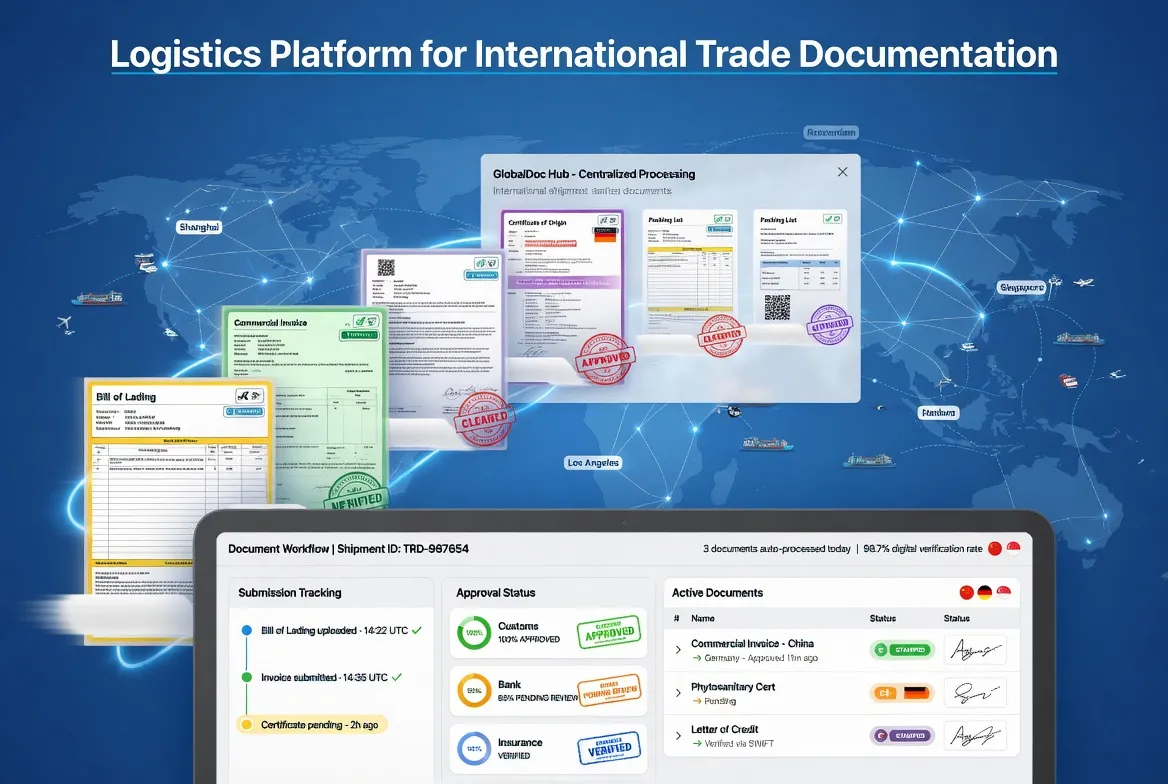
Automated document processing
OCR and digital document management tools extract and structure shipment data, reducing manual input.
AI-driven operational assistance
AI capabilities support tasks such as data extraction, rate processing, and operational insights, improving efficiency and accuracy.
Cross-party collaboration
Logistics platforms enable coordination between internal teams and external partners, ensuring all stakeholders operate on the same shipment data.
In practice, these capabilities allow freight forwarders to manage complex global operations through a unified system, improving both execution speed and operational control.
Key Benefits of Freight Forwarding Software
Operational standardization: Consistent workflows across all shipments
Reduced manual workload: Automation of repetitive tasks
Improved accuracy: Less reliance on manual data entry
Real-time visibility: Unified tracking across all transport stages
Financial transparency: Clear profit and cost tracking
Enhanced collaboration: Seamless coordination across departments and partners
Scalability: Ability to handle growing shipment volumes efficiently
Conclusion
The best freight forwarding software in 2026 is not just a system for managing shipments—it is a comprehensive platform that connects people, processes, and data across global logistics operations. By enabling end-to-end visibility, standardized workflows, and cross-party collaboration, modern systems help freight forwarders move from reactive operations to proactive, data-driven management.
WallTech provides digital logistics solutions designed to support global freight forwarders with integrated systems and advanced operational capabilities—feel free to contact us to learn more.
FAQ
1. What is the best freight forwarding software for global logistics companies?
The best freight forwarding software is one that provides end-to-end shipment management, real-time visibility, and seamless collaboration across all operational roles.
2. How does freight forwarding software improve efficiency?
It automates repetitive tasks, standardizes workflows, and integrates multiple systems, reducing manual work and improving processing speed.
3. Can freight forwarding software integrate with other systems?
Yes, modern platforms support API-based integration with ERP systems, warehouse systems, carrier platforms, and customer portals, enabling seamless data exchange.
.webp "Global Ocean Freight Forwarders Rankings 2025")