Dec 20,2023
Green Logistics: 3 Environmentally Friendly Strategies
Introduction
Managing an international shipment involves coordinating multiple processes—order creation, documentation, transportation, customs clearance, and final delivery—across different countries, carriers, and stakeholders. The process requires structured workflows, real-time visibility, and seamless collaboration to ensure goods move efficiently from origin to destination. In modern logistics, digital platforms streamline this process by connecting all roles, automating tasks, and providing end-to-end shipment tracking.
For freight forwarders, 3PL providers, and cross-border eCommerce logistics companies, understanding and optimizing this process is critical to maintaining service quality and operational efficiency.
What is Managing an International Shipment
Managing an international shipment refers to the end-to-end coordination of goods movement across borders, from booking to final delivery.
This process typically includes:
Shipment booking and order creation
Cargo pickup and origin handling
Transportation (air, ocean, rail, or multimodal)
Customs clearance (export and import)
Destination handling and last-mile delivery
Financial settlement and documentation
Because multiple parties are involved, this process requires:
Multi-role collaboration across teams and partners
Standardized workflows for consistency
Real-time tracking and visibility
Accurate documentation and compliance
Why Managing International Shipments Matters
1. Complexity of Global Supply Chains
International shipments involve:
Multiple transport legs
Different regulatory environments
Diverse stakeholders
Without structured management, this complexity leads to delays and errors.
2. Compliance and Documentation Requirements
Cross-border logistics requires:
Customs declarations
Commercial invoices
Packing lists
Regulatory compliance
Errors can result in:
Shipment delays
Fines or penalties
Cargo holds
3. Customer Expectations for Visibility
Customers expect:
Real-time tracking
Accurate delivery timelines
Transparent communication
This requires integrated systems and unified tracking.
4. Financial Accuracy
Each shipment involves:
Multiple cost components
Revenue tracking
Billing and reconciliation
Proper management ensures profitability and cost control.
How It Works
Managing an international shipment follows a structured step-by-step process:
Step 1: Order Creation and Booking
The process begins when a shipment order is created:
Manual entry, bulk upload, or API integration
Capture shipment details (origin, destination, cargo type, weight, etc.)
Assign service routes and carriers
Modern systems support multiple input methods, including API integration and batch uploads, to streamline order creation .
Step 2: Quotation and Rate Confirmation
Apply rate cards and pricing rules
Calculate estimated costs
Confirm service options and timelines
Automation ensures accurate and consistent pricing.
Step 3: Cargo Pickup and Origin Handling
Schedule pickup from shipper
Perform scanning, weighing, and labeling
Consolidate cargo if needed
Operational milestones such as pickup and warehouse processing are recorded in the system.
Step 4: Export Customs Clearance
Prepare export documentation
Submit customs declarations
Ensure compliance with origin country regulations
Systems can support document management and automated data extraction to reduce manual work.
Step 5: Line-Haul Transportation
Transport goods via air, ocean, rail, or multimodal routes
Monitor shipment progress
Track key events such as departure and arrival
Shipment tracking systems maintain milestones like ETD, ETA, ATD, and ATA.
Step 6: Import Customs Clearance
Submit import documentation
Handle duties and taxes
Ensure compliance with destination country regulations
Accurate documentation and timely submission are critical to avoid delays.
Step 7: Destination Handling and Last-Mile Delivery
Receive cargo at destination
Process through local warehouse or distribution center
Assign last-mile carrier
Deliver to final recipient
Systems can automatically select optimal last-mile carriers based on routing rules and service conditions .
Step 8: Tracking and Exception Management
Throughout the shipment lifecycle:
Track milestones in real time
Detect delays or exceptions
Trigger alerts and notifications
This enables proactive issue resolution.
Step 9: Billing and Financial Settlement
Generate cost and revenue records
Apply billing rules
Perform reconciliation
Automated billing improves accuracy and reduces manual effort.
Key Features / Key Capabilities
Modern logistics systems support international shipment management through:
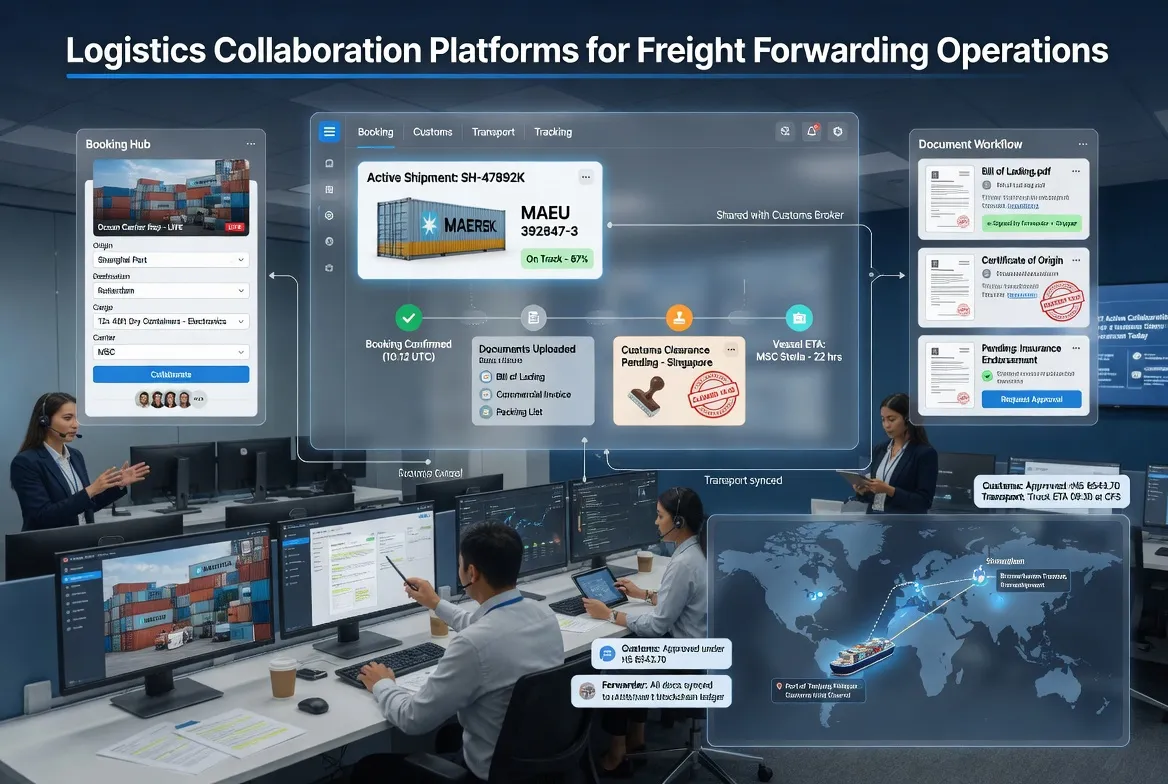
End-to-end shipment visibility
Unified tracking across all transport stagesMulti-role collaboration
Connect sales, operations, finance, and partnersMilestone-based tracking
Standardized shipment lifecycle eventsAutomated workflow management
Trigger actions based on shipment statusDocument management and automation
Centralized storage and AI-assisted data extractionRate and quotation management
Automated pricing and cost calculationMulti-carrier coordination
Manage different carriers across transport legsFinancial automation
Billing, reconciliation, and profit tracking
Benefits for Logistics Companies
1. Improved Operational Efficiency
Reduce manual processes
Streamline workflows
Minimize errors
2. Enhanced Visibility and Control
Monitor shipments in real time
Identify bottlenecks early
Improve delivery performance
3. Better Collaboration
Align internal teams and external partners
Share data across stakeholders
Improve coordination
4. Increased Customer Satisfaction
Provide accurate tracking information
Improve communication
Deliver more reliable services
5. Stronger Financial Management
Track costs and revenues per shipment
Automate billing processes
Improve profitability analysis
Best Practices / Use Cases
Use Case 1: Freight Forwarders Handling Multi-Modal Shipments
Forwarders manage:
Ocean + trucking + last-mile delivery
Multiple partners across regions
Complex documentation workflows
A structured system ensures seamless coordination.
Use Case 2: Cross-Border eCommerce Logistics
High-volume parcel operations require:
Automated order intake
Real-time tracking
Efficient last-mile carrier selection
Systems enable scalable operations.
Use Case 3: 3PL Providers Managing Global Clients
3PLs use digital platforms to:
Handle multiple clients simultaneously
Standardize processes
Provide visibility across all shipments
Best Practices
Use a centralized logistics platform
Standardize shipment workflows and milestones
Integrate with carriers and external systems via APIs
Automate documentation and billing processes
Implement real-time tracking and alerts
Conclusion
Managing an international shipment is a complex, multi-step process that requires coordination across multiple stakeholders, systems, and regions. By following structured workflows and leveraging digital logistics platforms, companies can streamline operations, improve visibility, and enhance service quality.
As global trade continues to grow, efficient shipment management becomes a key competitive advantage for logistics providers.
Frequently Asked Questions
What is the process of managing an international shipment?
It includes order creation, pickup, transportation, customs clearance, delivery, and financial settlement, all coordinated across multiple stakeholders.
How do logistics systems support international shipments?
They provide workflow automation, real-time tracking, multi-role collaboration, and integrated financial management to streamline operations.
Why is shipment visibility important?
It allows companies to monitor progress, detect issues early, and provide accurate updates to customers.
What challenges are involved in international shipment management?
Challenges include regulatory compliance, multi-carrier coordination, fragmented systems, and manual processes.
How can automation improve shipment management?
Automation reduces manual tasks, improves accuracy, speeds up workflows, and enhances overall efficiency.
About WallTech
WallTech provides digital logistics solutions that support the end-to-end management of international shipments. Its platforms enable seamless collaboration across multiple roles and partners, ensuring that all stakeholders operate within a unified workflow. With real-time shipment visibility, milestone-based tracking, and integrated data across transport stages, logistics companies can monitor and control operations more effectively. Automation capabilities—such as workflow automation, AI-assisted document processing, and financial automation—help reduce manual effort and improve accuracy.
If you're exploring ways to improve your logistics operations, feel free to connect with us to learn more about our solutions and system capabilities.