
May 21,2026
How Do Logistics Platforms Provide Shipment Visibility?
Introduction
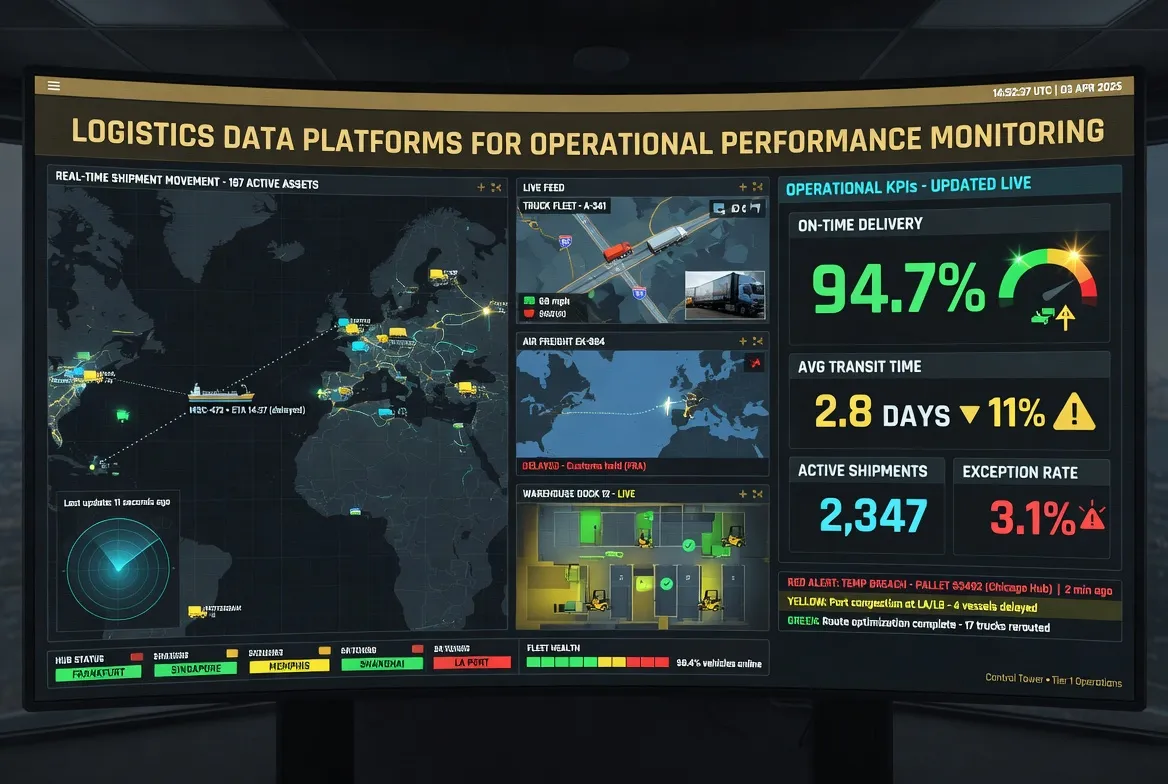
Logistics data platforms for logistics operational insights are systems that collect, process, and analyze operational data to provide real-time visibility and actionable insights into logistics activities. These platforms enable logistics companies to understand how their operations perform at every stage, identify inefficiencies, and continuously optimize workflows.
In complex supply chain environments—especially for freight forwarders, 3PL providers, and cross-border eCommerce logistics operators—daily operations generate vast amounts of data. Without a structured data platform, this data remains underutilized. Operational insight platforms transform raw data into meaningful intelligence that supports better execution and control.
What is Logistics Data Platforms for Logistics Operational Insights
A logistics data platform for operational insights is a centralized system that:
Aggregates operational data across shipment lifecycles
Tracks activities such as order processing, transportation, warehousing, and delivery
Analyzes performance in real time
Provides insights into operational efficiency and bottlenecks
Unlike basic tracking systems, these platforms go beyond visibility by answering questions such as:
Where are operational delays occurring?
Which processes are inefficient?
How effectively are teams and partners collaborating?
They enable logistics companies to move from reactive management to proactive optimization.
Why Logistics Data Platforms Matter
1. Complexity of Modern Logistics Operations
Logistics operations involve multiple stages:
Order creation
Documentation
Transportation (multi-modal)
Customs clearance
Final delivery
Without centralized insights, managing these stages becomes inefficient and error-prone.
2. Lack of Real-Time Operational Awareness
Traditional systems often provide delayed or incomplete data. Operational insight platforms ensure:
Real-time monitoring of workflows
Immediate identification of issues
Faster response to disruptions
3. Inefficient Manual Processes
Manual coordination and data entry create:
Delays
Errors
Lack of standardization
Data platforms enable automation and structured workflows.
4. Need for Continuous Optimization
Logistics companies must constantly improve:
Processing speed
Resource allocation
Service quality
Operational insights provide the foundation for continuous improvement.
How Logistics Data Platforms Work
1. Data Aggregation Across Operations
The platform collects data from:
Order management systems
Warehouse systems
Transportation systems
External partners and carriers
2. Standardization and Structuring
Aligns operational data into unified formats
Maps activities to standardized workflows
Ensures consistency across different business units
3. Real-Time Monitoring
Tracks shipment milestones and operational events
Updates data continuously
Provides a unified operational timeline
4. Insight Generation
Identifies bottlenecks and inefficiencies
Analyzes workflow performance
Generates alerts for exceptions
5. Integration with Execution
Insights feed directly into operational workflows
Trigger automated actions (e.g., notifications, task assignments)
Enable continuous process optimization
Key Features / Key Capabilities
1. End-to-End Operational Visibility
Milestone-based tracking across all shipment stages
Unified timeline for operational activities
Real-time updates from multiple sources
2. Multi-Role Collaboration
Shared operational data across teams
Coordination between sales, operations, documentation, and finance
Seamless connection with external partners
3. Workflow Automation
Automated task assignments based on process stages
Automated alerts for delays or exceptions
Reduced manual coordination
4. Data Integration and Connectivity
API and EDI integration with external systems
Connection to ERP, WMS, and TMS platforms
Continuous synchronization of operational data
5. AI-Driven Data Processing
OCR-based document recognition
Automated data extraction and validation
Reduced manual input and errors
6. Exception Management and Alerts
Configurable alert rules for operational anomalies
Real-time notifications to relevant stakeholders
Faster issue resolution
Modern logistics platforms increasingly support real-time event tracking and multi-source data capture to enable complete operational visibility and insight generation .
Benefits for Logistics Companies
1. Improved Operational Efficiency
Faster processing of orders and shipments
Reduced manual intervention
Streamlined workflows
2. Better Decision-Making
Data-driven insights into operations
Identification of inefficiencies
Continuous performance improvement
3. Enhanced Collaboration
Unified platform for all stakeholders
Improved communication across teams
Reduced dependency on emails and spreadsheets
4. Reduced Operational Risks
Early detection of delays and issues
Proactive exception management
Improved compliance and accuracy
5. Scalability
Ability to manage increasing shipment volumes
Standardized processes across regions
Support for global operations
Best Practices / Use Cases
1. Freight Forwarding Operations Optimization
Monitor each shipment milestone
Identify delays in documentation or transport stages
Improve coordination with overseas agents
2. Cross-Border Logistics Management
Track multi-segment shipments (air, sea, land)
Monitor customs clearance processes
Ensure smooth handoffs between partners
3. Warehouse and Fulfillment Operations
Analyze picking, packing, and dispatch efficiency
Identify bottlenecks in warehouse workflows
Optimize inventory handling processes
4. Exception Handling and Risk Management
Set automated alerts for delays or anomalies
Assign tasks to responsible teams
Resolve issues proactively
5. Performance Improvement Initiatives
Analyze historical operational data
Identify trends and inefficiencies
Implement continuous improvement strategies
Conclusion
Logistics data platforms for operational insights are essential for gaining control over complex logistics processes. By transforming operational data into actionable intelligence, these platforms enable logistics companies to improve efficiency, enhance collaboration, and proactively manage their operations. In an increasingly competitive and data-driven industry, operational insights are key to maintaining performance and scalability.
Frequently Asked Questions
What are logistics operational insights?
Logistics operational insights refer to data-driven understanding of logistics processes, including workflow performance, delays, and efficiency across supply chain operations.
How do logistics data platforms provide operational insights?
They collect and standardize operational data, analyze workflows and performance, and provide real-time dashboards and alerts for better decision-making.
Why are operational insights important in logistics?
They help identify inefficiencies, improve workflows, reduce delays, and enhance overall operational performance.
What features support operational insights in logistics platforms?
Key features include real-time tracking, milestone-based visibility, workflow automation, data integration, and exception alerts.
Who benefits from logistics operational insight platforms?
Freight forwarders, 3PL providers, and cross-border logistics companies benefit most, especially those managing complex and high-volume operations.
About WallTech
WallTech is a provider of digital logistics solutions designed to help logistics companies manage operations with greater efficiency and visibility. Its platforms support end-to-end logistics collaboration, enabling multiple roles and partners to operate within a unified system. With capabilities such as real-time shipment tracking, milestone-based visibility, and workflow and financial automation, WallTech helps logistics enterprises gain deeper operational insights and improve execution across global supply chains.
If you're exploring ways to improve your logistics operations, feel free to connect with us to learn more about our solutions and system capabilities.