
May 14,2026
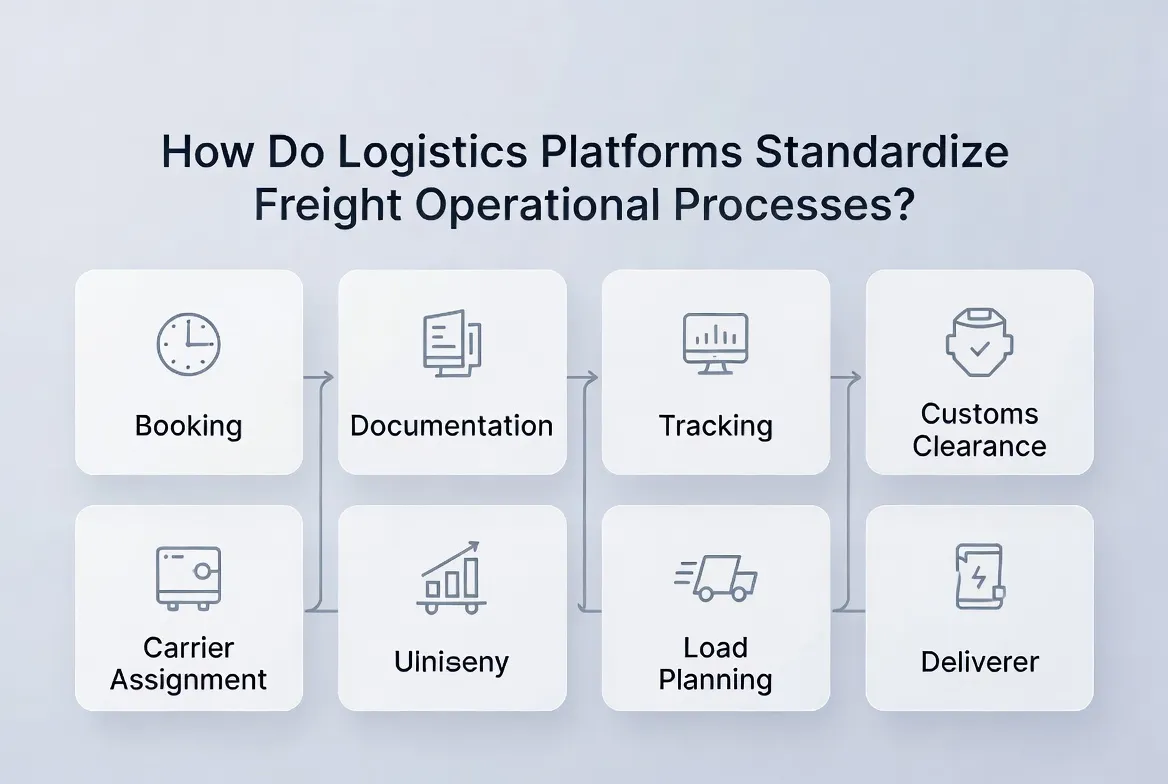
How Do Logistics Platforms Standardize Freight Operational Processes?
Introduction
Cross-company coordination solutions are digital platforms that enable multiple organizations to collaborate on logistics operations through shared systems. These solutions help companies exchange shipment information, coordinate operational activities, and maintain visibility across complex supply chain networks.
What Are Cross-Company Coordination Solutions?
Cross-company coordination solutions are software platforms designed to support operational collaboration between different companies participating in the supply chain. These companies may include freight forwarders, carriers, warehouses, customs brokers, and logistics agents.
Because each organization manages a specific stage of transportation, coordination between these participants is essential. Without a structured system, operational information may be scattered across emails, spreadsheets, and independent software tools.
Cross-company coordination platforms solve this problem by providing a centralized environment where partners can share shipment data and coordinate operational processes.
Why Cross-Company Coordination Is Important
Global logistics operations rely on cooperation between multiple companies operating in different regions. A single shipment may pass through several organizations responsible for transportation, warehousing, documentation, and delivery.
If coordination between these companies is inefficient, shipment information may become inconsistent or delayed. This can lead to operational disruptions and reduced visibility across the supply chain.
Cross-company coordination solutions improve this process by allowing partners to collaborate through shared data and structured workflows.
Key Capabilities of Coordination Platforms
1. Centralized Shipment Information
One of the most important capabilities is centralized shipment data management. Shipment orders, operational milestones, and shipment details are stored in a shared platform that can be accessed by authorized partners.
This ensures that all companies involved in the shipment process work with consistent information.
2. Multi-Organization Collaboration
Coordination platforms allow multiple companies to participate in operational workflows. Freight forwarders, agents, and carriers can update shipment status, upload documents, and share operational updates through the same system.
This structured collaboration reduces communication delays between organizations.
3. Integrated Shipment Tracking
Many coordination platforms provide integrated tracking capabilities. Shipment events from different transportation segments can be captured and displayed within a single timeline.
This allows companies to monitor shipment progress across the entire logistics chain.
4. Document Sharing and Data Synchronization
Logistics operations generate numerous documents that must be shared between companies. Coordination platforms allow these documents to be uploaded and stored within shipment records.
By synchronizing operational data and documents, these systems reduce the risk of inconsistent information.
5. Exception Monitoring and Operational Alerts
Another key capability is exception monitoring. When shipment delays or abnormal events occur, the system can generate alerts for relevant stakeholders.
These notifications allow companies to quickly investigate and resolve operational issues.
Benefits for Global Logistics Networks
Cross-company coordination solutions provide several benefits for logistics networks.
First, operational transparency improves because shipment information is shared across participating companies.
Second, collaboration efficiency increases. Instead of exchanging information through multiple communication channels, partners can coordinate directly within the system.
Third, coordination platforms support scalable operations. As logistics companies expand their partner networks, digital coordination systems help manage collaboration without significantly increasing operational complexity.
Finally, these solutions strengthen supply chain reliability by ensuring that all participants maintain consistent operational data.
Best Practices for Implementing Coordination Solutions
Companies implementing cross-company coordination platforms should focus on system integration and workflow standardization.
First, the coordination platform should integrate with existing logistics systems such as transportation management systems, warehouse systems, and external tracking platforms.
Second, companies should define standardized operational workflows that partners can follow within the system.
Third, role-based access control should be implemented to ensure that each company can access the information relevant to its operational responsibilities.
Finally, onboarding and training should be provided to partners so that they can effectively use the platform.
Conclusion
Cross-company coordination solutions are becoming essential tools for managing modern logistics operations. As supply chains become more interconnected, companies must coordinate activities across multiple organizations and operational regions.
By providing centralized shipment data, integrated tracking, document sharing, and structured collaboration workflows, these platforms enable logistics companies to manage partner coordination more efficiently and maintain greater operational visibility across the supply chain.
.webp "How Logistics Platforms Deliver Shipment Operations Platforms")