


May 07,2026
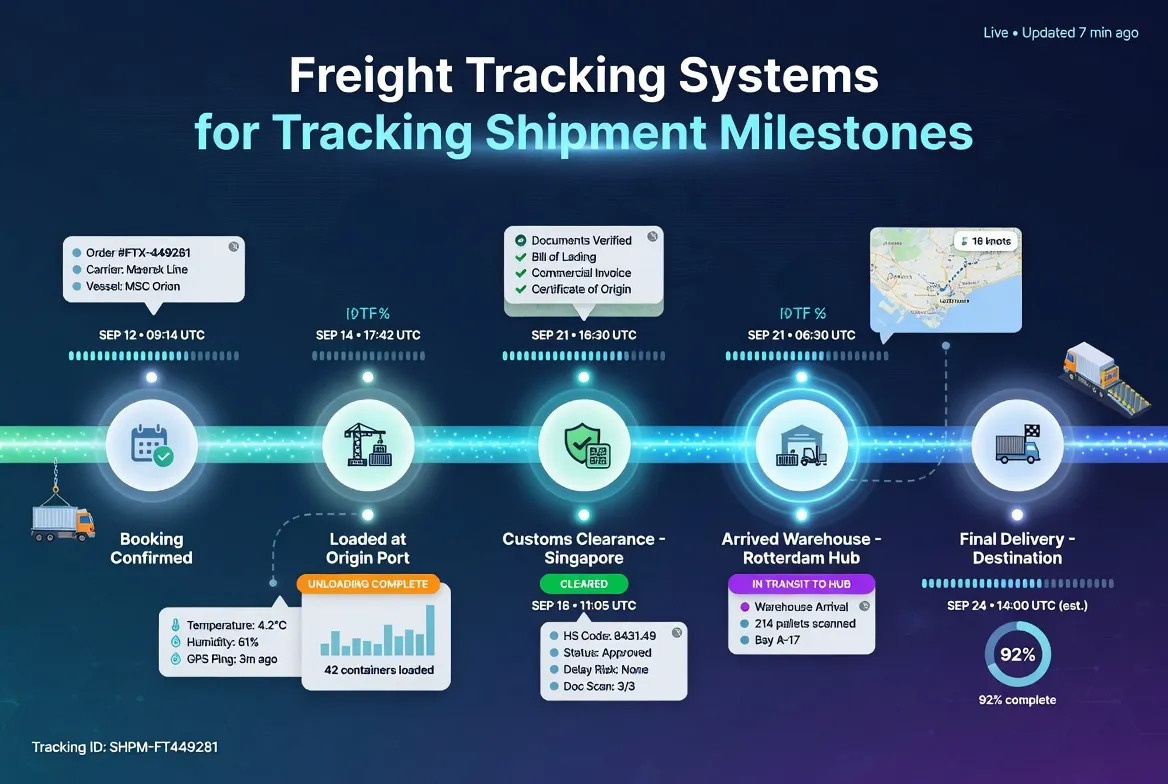
Freight Tracking Systems for Tracking Shipment Milestones
Introduction
Inventory visibility is one of the most critical challenges in modern logistics and supply chain management. As businesses operate across multiple warehouses, regions, and sales channels, maintaining accurate and real-time inventory data becomes increasingly difficult.
A Warehouse Management System (WMS) plays a key role in solving this problem. By digitizing inventory tracking and warehouse operations, a WMS provides real-time visibility into stock levels, locations, and movement across the entire warehouse network.
What Is Inventory Visibility in Warehouse Management
Inventory visibility refers to the ability to track and monitor inventory in real time across all stages of the warehouse and supply chain.
This includes:
Current stock levels
Inventory locations within the warehouse
Inbound shipments (goods being received)
Outbound shipments (orders being fulfilled)
Reserved or allocated inventory
Inventory status (available, frozen, damaged, etc.)
Without proper visibility, businesses may experience stock discrepancies, delayed order fulfillment, and inefficient warehouse operations.
A WMS provides a centralized system where all inventory data is recorded, updated, and accessible in real time.
Why Inventory Visibility Is Important
Lack of inventory visibility can lead to several operational challenges.
Stock Inaccuracy
Manual tracking methods often result in mismatches between actual and recorded inventory.
Order Fulfillment Issues
Without accurate inventory data, businesses may oversell or fail to fulfill orders on time.
Inefficient Warehouse Operations
Warehouse staff may spend excessive time searching for products or correcting errors.
Poor Decision-Making
Without reliable inventory data, it becomes difficult to plan replenishment, allocate stock, or forecast demand.
Improving inventory visibility helps businesses operate more efficiently and deliver better customer experiences.
How WMS Improves Inventory Visibility
Real-Time Inventory Tracking
A WMS updates inventory data automatically whenever goods are received, moved, or shipped.
This ensures that stock levels are always accurate and up to date.
Centralized Inventory Data
All inventory information is stored in a single system, allowing managers to access real-time data across warehouses.
For example, warehouse systems can display inventory by status such as available, reserved, inbound, and outbound across different locations.
Barcode and Scanning Integration
Warehouse staff use barcode scanners or mobile devices to record inventory movements instantly.
This reduces manual data entry and improves accuracy.
Multi-Warehouse Visibility
A WMS provides visibility across multiple warehouses, enabling businesses to track inventory globally.
Managers can monitor stock distribution and allocate inventory more effectively.
Inventory Status Tracking
The system categorizes inventory into different statuses, such as:
Available stock
Frozen or reserved stock
Pending inbound inventory
Pending outbound inventory
This allows businesses to understand how inventory is being used and managed.
Automated Alerts and Notifications
WMS platforms can trigger alerts when certain conditions occur, such as:
Low stock levels
Overstock situations
Aging or slow-moving inventory
Systems can also provide safety stock alerts and inventory aging warnings to support proactive inventory management.
Key Features That Enhance Inventory Visibility
Inventory Dashboards
Visual dashboards display real-time inventory data, making it easier for managers to monitor warehouse operations.
Inventory History Tracking
A WMS records all inventory movements, providing a complete history of stock transactions.
Batch and Lot Tracking
Businesses can track inventory by batch, lot, or production date, which is especially important for regulated industries.
Inventory Forecasting Support
Some WMS platforms provide analytics to help forecast demand and plan inventory levels.
Integration with Other Systems
A WMS can integrate with:
Order management systems
ERP systems
E-commerce platforms
This ensures consistent inventory data across the entire supply chain.
Benefits of Improved Inventory Visibility
Higher Inventory Accuracy
Real-time tracking reduces discrepancies and ensures reliable stock data.
Faster Order Fulfillment
Accurate inventory information enables faster picking, packing, and shipping processes.
Better Inventory Utilization
Businesses can optimize stock levels and reduce excess inventory.
Reduced Operational Costs
Improved visibility minimizes errors, returns, and manual corrections.
Enhanced Customer Satisfaction
Accurate inventory data helps businesses fulfill orders on time and avoid stockouts.
Best Practices for Improving Inventory Visibility with WMS
Implement Barcode or RFID Systems
Automated tracking technologies improve data accuracy and efficiency.
Maintain Data Accuracy
Ensure all inventory movements are recorded consistently in the system.
Use Real-Time Dashboards
Monitor inventory data regularly to identify issues and trends.
Set Up Inventory Alerts
Configure alerts for low stock, aging inventory, and other critical conditions.
Integrate Systems
Ensure the WMS is connected with other business systems for seamless data flow.
Conclusion
Inventory visibility is essential for efficient warehouse and logistics operations. A warehouse management system improves visibility by providing real-time inventory tracking, centralized data management, and automated monitoring tools.
By adopting a WMS, businesses can gain better control over inventory, improve operational efficiency, and deliver more reliable order fulfillment in increasingly complex supply chain environments.
.webp "Why Companies Use International Logistics Documentation Systems")