Apr 09,2026
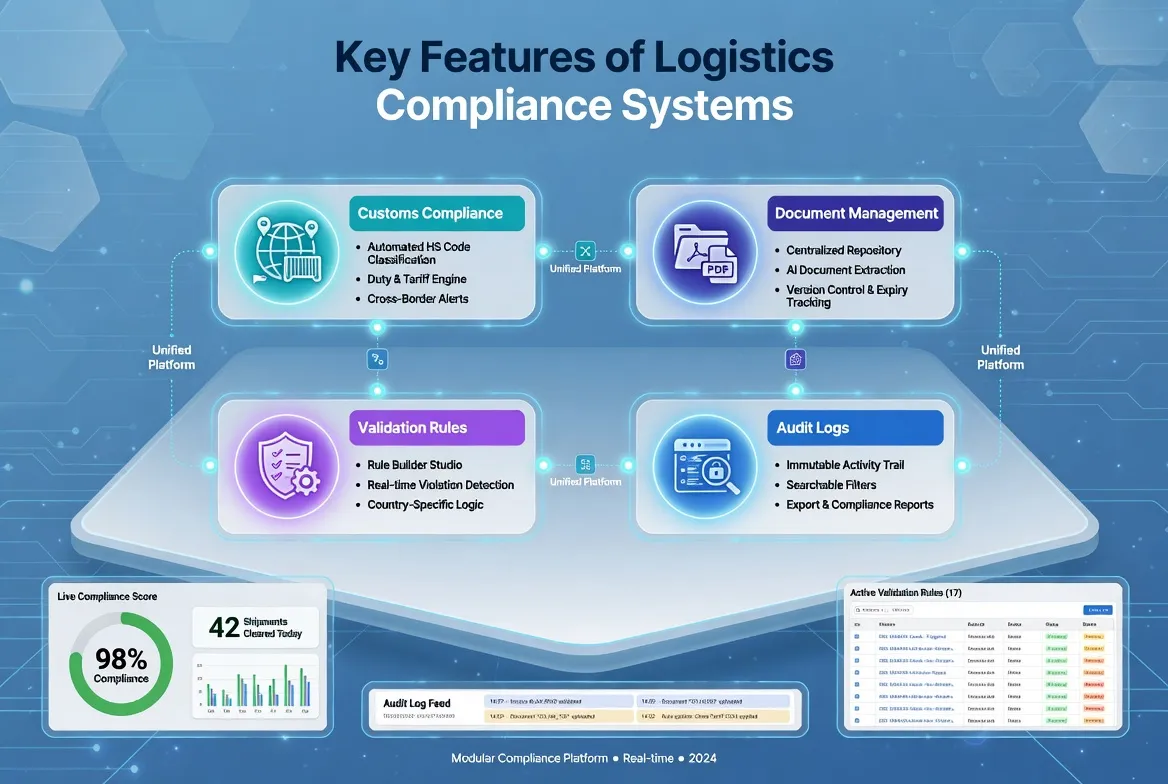
Key Features of Logistics Compliance Systems
Introduction
Manual dispatch and smart routing systems represent two fundamentally different approaches to managing shipment planning and carrier selection in logistics. Manual dispatch relies on human decision-making, experience, and static data, while smart routing systems use automation, real-time data, and algorithms to optimize routing and carrier selection. In modern logistics operations, smart routing systems significantly outperform manual dispatch by improving efficiency, consistency, and scalability.
What is Manual Dispatch vs Smart Routing Systems
Manual Dispatch
Manual dispatch refers to the traditional process where logistics personnel:
Review shipment details manually
Select carriers based on experience
Plan routes using static information
Coordinate execution through emails, calls, or spreadsheets
This approach depends heavily on human judgment and operational familiarity.
Smart Routing Systems
Smart routing systems are software-driven solutions that:
Automatically select carriers
Optimize routes based on dynamic data
Apply predefined rules and logic
Integrate with operational workflows
They leverage automation and system intelligence to manage routing decisions at scale.
Why the Comparison Matters
1. Increasing Operational Complexity
Modern logistics operations involve:
Multi-channel order sources
Multi-modal transport
Global carrier networks
Cross-border compliance requirements
Manual dispatch struggles to handle this complexity efficiently.
2. Growing Shipment Volumes
With the rise of eCommerce and global trade:
Shipment volumes have increased significantly
Decision speed has become critical
Smart routing systems enable high-volume processing without delays.
3. Demand for Real-Time Decision-Making
Customers expect:
Fast processing
Accurate delivery estimates
Real-time updates
Manual processes cannot keep up with these expectations.
4. Need for Cost Optimization
Transportation costs are constantly fluctuating.
Smart routing systems:
Analyze multiple variables instantly
Identify cost-saving opportunities
Manual dispatch often lacks this capability.
How Manual Dispatch and Smart Routing Systems Work
Manual Dispatch Process
Order is received
Dispatcher reviews shipment details
Carrier options are manually compared
Route is selected based on experience
Instructions are communicated manually
Execution is tracked through separate systems
This process is:
Time-consuming
Dependent on individual expertise
Difficult to standardize
Smart Routing System Process
Order is automatically captured and standardized
System evaluates shipment requirements
Routing rules and algorithms are applied
Carriers are compared based on cost, time, and service
Optimal carrier and route are selected automatically
Workflow execution is triggered within the system
Shipment is tracked in real time
This process is:
Automated
Scalable
Consistent
Key Differences Between Manual Dispatch and Smart Routing
1. Decision-Making Approach
Manual Dispatch:
Experience-based
Subjective
Inconsistent
Smart Routing:
Data-driven
Rule-based
Standardized
2. Speed and Efficiency
Manual Dispatch:
Slow decision-making
Limited processing capacity
Smart Routing:
Instant decisions
High-volume processing
3. Accuracy
Manual Dispatch:
Prone to errors
Inconsistent outcomes
Smart Routing:
High accuracy
Consistent results
4. Scalability
Manual Dispatch:
Requires more staff as volume grows
Smart Routing:
Scales without proportional manpower increase
5. Visibility and Control
Manual Dispatch:
Limited visibility across operations
Fragmented tracking
Smart Routing:
End-to-end visibility
Unified tracking and monitoring
6. Cost Optimization
Manual Dispatch:
Limited ability to compare options
Higher risk of suboptimal decisions
Smart Routing:
Continuous cost optimization
Automated comparison of multiple carriers
Key Features of Smart Routing Systems
1. Rule-Based Routing Engine
Configurable business rules
Flexible decision logic
Support for complex routing scenarios
2. Real-Time Data Processing
Dynamic carrier rates
Transit time updates
Operational constraints
3. Automated Carrier Selection
Multi-carrier comparison
Intelligent assignment
Consistent decision-making
4. Workflow Automation
Automated task execution
SOP-driven processes
Exception handling workflows
5. End-to-End Visibility
Real-time shipment tracking
Milestone-based updates
Unified operational timeline
6. Collaboration Across Stakeholders
Multi-role coordination
Integration with partners and carriers
Shared data access
7. Financial Integration
Automated cost calculation
Billing and invoicing
Reconciliation processes
Benefits for Logistics Companies
Increased Efficiency
Eliminates manual routing processes
Speeds up operations
Improved Consistency
Standardized decision-making
Reduced dependency on individual expertise
Better Cost Control
Optimized carrier selection
Reduced transportation expenses
Enhanced Visibility
Real-time monitoring of shipments
Improved operational transparency
Scalability
Handles growing shipment volumes
Supports business expansion
Best Practices / Use Cases
1. Transitioning from Manual to Digital Operations
Replace manual dispatch processes with smart routing systems to improve efficiency and accuracy.
2. High-Volume Logistics Operations
Use smart routing to handle large shipment volumes without operational bottlenecks.
3. Multi-Carrier Environments
Optimize carrier selection across multiple providers using automated comparison.
4. Cross-Border Logistics
Manage complex routing scenarios involving multiple countries and regulations.
5. Service-Level Optimization
Match shipments with carriers based on delivery requirements and customer expectations.
Conclusion
The shift from manual dispatch to smart routing systems represents a critical evolution in logistics operations. While manual processes may still work in low-volume or simple scenarios, they cannot keep up with the complexity and scale of modern logistics.
Smart routing systems provide the automation, intelligence, and visibility needed to optimize operations, reduce costs, and deliver consistent service quality. For logistics companies aiming to remain competitive, adopting smart routing is no longer optional—it is essential.
Frequently Asked Questions
What is manual dispatch in logistics?
Manual dispatch is the process of assigning carriers and planning routes based on human decision-making, often using spreadsheets or basic tools.
What is a smart routing system?
A smart routing system is software that automatically selects optimal carriers and routes based on data, rules, and real-time conditions.
How does smart routing improve logistics operations?
It improves efficiency, reduces costs, ensures consistency, and enables scalable operations through automation and data-driven decisions.
What are the benefits of replacing manual dispatch?
Benefits include faster decision-making, improved accuracy, better cost control, and enhanced visibility.
Is smart routing suitable for all logistics companies?
Yes, especially for companies handling high volumes, multi-carrier networks, or complex logistics operations.
About WallTech
WallTech provides digital logistics solutions that support the transition from manual dispatch to intelligent, automated routing systems. Its platforms enable logistics companies to standardize routing logic, automate carrier selection, and manage shipment workflows within a unified environment. With real-time visibility and milestone-based tracking, operations teams can monitor execution across the entire shipment lifecycle. WallTech also supports multi-role collaboration and integrates financial processes such as automated billing and reconciliation, helping logistics providers improve efficiency, reduce costs, and scale their operations effectively.
If you're exploring ways to improve your logistics operations, feel free to connect with us to learn more about our solutions and system capabilities.