Mar 02,2026
Weekly Logistics Industry Update - Week 8 of 2026
Introduction
Multi-role coordination in logistics platforms refers to the ability for different stakeholders—such as sales, operations, customer service, finance teams, and external partners—to collaborate within a single system on the same shipment or workflow. It is a core capability in modern logistics platforms because it eliminates silos, aligns responsibilities, and ensures that all parties work with consistent, real-time data.
In global logistics operations, where multiple departments and partners are involved in every shipment, multi-role coordination is essential for efficiency, accuracy, and scalability.
What is Multi-Role Coordination
Multi-role coordination is the structured collaboration of different roles within a logistics process, all working on a unified platform with shared data and clearly defined responsibilities.
Typical roles involved include:
Sales teams: Handling quotations and customer communication
Operations teams: Managing shipment execution and documentation
Customer service: Providing tracking updates and support
Finance teams: Managing billing, invoicing, and reconciliation
External partners: Carriers, agents, warehouses, and customs brokers
Instead of each role working in separate tools or systems, multi-role coordination brings all participants into a single workflow, centered around one shipment or order.
Modern systems support this by allowing multiple roles to create, manage, and update orders collaboratively within the same platform .
Why Multi-Role Coordination Matters
In traditional logistics operations, different roles often work in isolation. This creates several challenges:
1. Data Silos
Each department maintains its own data, leading to inconsistencies and duplication.
2. Communication Gaps
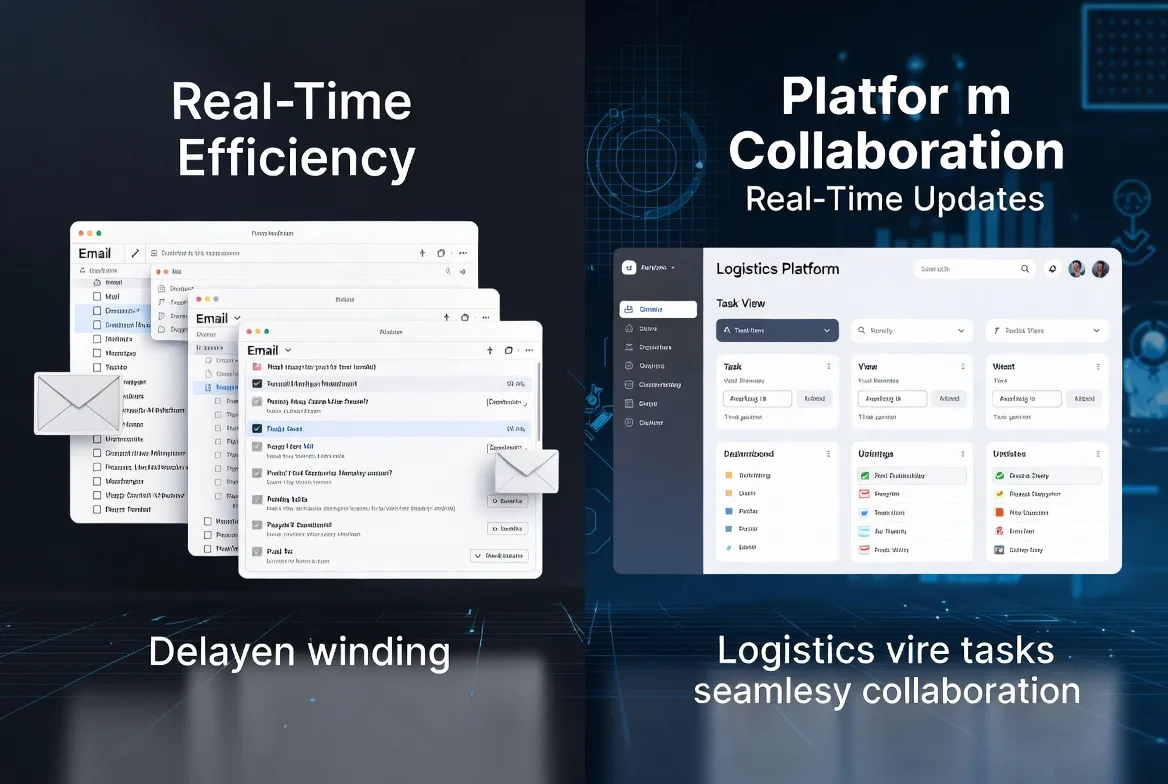
Information is shared through emails or messages, which can be delayed or lost.
3. Process Inefficiency
Manual handoffs between teams slow down operations.
4. Error-Prone Workflows
Repeated data entry increases the risk of mistakes.
5. Lack of Accountability
Unclear responsibilities make it difficult to track who is responsible for each task.
Multi-role coordination solves these issues by creating a transparent, structured environment where all roles operate on the same data and workflow.
How Multi-Role Coordination Works
Multi-role coordination is enabled through logistics platforms that integrate workflows, permissions, and real-time data sharing.
1. Unified Shipment Record
All roles access and update the same shipment or job file, ensuring data consistency.
2. Role-Based Permissions
Each user has access to specific functions and data based on their role.
3. Workflow-Driven Task Assignment
Tasks are automatically assigned based on predefined SOPs (Standard Operating Procedures).
4. Real-Time Updates
Changes made by one role are instantly visible to others.
5. Cross-Department Collaboration
Teams collaborate within the system rather than relying on external communication tools.
For example, a shipment may follow this coordinated workflow:
Sales creates a quotation
Operations converts it into an order and manages execution
Customer service tracks and updates shipment status
Finance generates invoices and manages reconciliation
All actions are connected within a single system, reducing friction and delays.
Key Features / Key Capabilities
A logistics platform that supports multi-role coordination typically includes:
1. Centralized Workflow Management
One system for all roles
Standardized processes across departments
2. Role-Based Access Control
Granular permissions for different users
Secure data visibility
3. End-to-End Visibility
Unified timeline for all shipment milestones
Real-time tracking updates
4. Workflow Automation
Automatic task assignment
SOP-driven process execution
5. Integrated Communication
Internal notes and updates linked to shipments
Reduced reliance on emails
6. Financial Integration
Automated billing based on operational data
Real-time cost and profit tracking
7. AI and Data Automation
OCR for document processing
Reduced manual data entry
These capabilities ensure that all roles operate efficiently within a connected system.
Benefits for Logistics Companies
1. Increased Efficiency
Faster handoffs between departments
Reduced manual coordination
2. Improved Data Accuracy
Single source of truth for all shipment data
Less duplication and fewer errors
3. Better Visibility
Real-time updates across all roles
Improved tracking and monitoring
4. Enhanced Accountability
Clear task ownership
Transparent workflow tracking
5. Improved Customer Experience
Faster responses
More accurate shipment updates
6. Scalable Operations
Ability to handle higher volumes without increasing complexity
Best Practices / Use Cases
1. Freight Forwarders Managing Complex Shipments
Coordinate sales, operations, and finance within a single shipment workflow.
2. 3PL Companies Handling Multi-Client Operations
Maintain separate workflows for different clients while ensuring standardized processes.
3. Cross-Border Logistics Operations
Synchronize activities across origin, transit, and destination teams.
4. Multi-Branch Organizations
Enable seamless collaboration between headquarters and overseas offices.
5. Partner Collaboration
Allow carriers and agents to access relevant shipment data and updates.
Conclusion
Multi-role coordination is a fundamental capability in modern logistics platforms. It enables different teams and partners to collaborate efficiently within a unified system, reducing silos, improving visibility, and enhancing operational performance.
As logistics operations become more complex, companies that adopt multi-role coordination gain a significant advantage in efficiency, accuracy, and scalability. It transforms fragmented workflows into structured, collaborative processes that support long-term growth.
Frequently Asked Questions
What is multi-role coordination in logistics?
Multi-role coordination refers to the collaboration of different stakeholders—such as sales, operations, and finance—within a single system to manage logistics workflows efficiently.
How does multi-role coordination work?
It works through centralized platforms that provide shared data access, role-based permissions, and workflow automation, enabling all roles to collaborate on the same shipment.
Why is multi-role coordination important in logistics?
It eliminates data silos, improves communication, reduces errors, and increases operational efficiency.
What are the benefits of multi-role coordination systems?
Key benefits include faster workflows, better visibility, improved accuracy, and enhanced customer service.
Who uses multi-role coordination in logistics platforms?
Freight forwarders, 3PL providers, and cross-border logistics companies rely on multi-role coordination to manage complex operations.
About WallTech
WallTech provides digital logistics solutions designed to enable seamless multi-role coordination across global supply chains. Its platforms connect internal teams and external partners within a unified workflow, ensuring real-time shipment visibility through milestone-based tracking and shared timelines. By combining workflow automation, AI-driven data recognition, and integrated financial processes such as automated billing and reconciliation, WallTech helps logistics companies improve efficiency, reduce errors, and scale operations effectively. These capabilities support more structured and collaborative logistics management across complex, multi-party environments.
If you're exploring ways to improve your logistics operations, feel free to connect with us to learn more about our solutions and system capabilities.
.webp "What Is a Customer Portal in Logistics Software?")