Apr 06,2026
What Is Data Security in SaaS Logistics Platforms
Logistics Platform for Multi-System Data Integration
Introduction
A logistics platform for multi-system data integration is a centralized system designed to connect and unify data from multiple logistics-related systems—such as ERP, WMS, TMS, carrier systems, and e-commerce platforms—into a single operational environment. It enables seamless data flow, real-time synchronization, and unified visibility across the entire supply chain.
This type of platform is essential for logistics companies because modern operations rely on multiple disconnected systems. Without integration, businesses face data silos, manual processes, and limited visibility. With a multi-system integration platform, logistics companies can streamline workflows, improve collaboration, and scale operations more effectively.
What Is a Logistics Platform for Multi-System Data Integration
A logistics platform for multi-system data integration is a digital infrastructure layer that connects various internal and external systems into a unified ecosystem.
It acts as a central hub that:
Aggregates data from multiple sources
Standardizes and synchronizes information
Enables real-time data exchange
Supports collaboration across departments and partners
Typical systems integrated include:
ERP and financial systems
Warehouse management systems (WMS)
Transportation and freight systems
Carrier and tracking platforms
E-commerce and order management systems
Customs and compliance systems
Instead of switching between multiple tools, users can manage operations through one integrated platform.
Why Multi-System Data Integration Matters
1. Eliminates Fragmented Workflows
Without integration, teams must work across multiple systems, leading to inefficiencies and duplicated effort.
2. Creates a Single Source of Truth
All stakeholders access the same synchronized data, reducing inconsistencies and confusion.
3. Enhances End-to-End Visibility
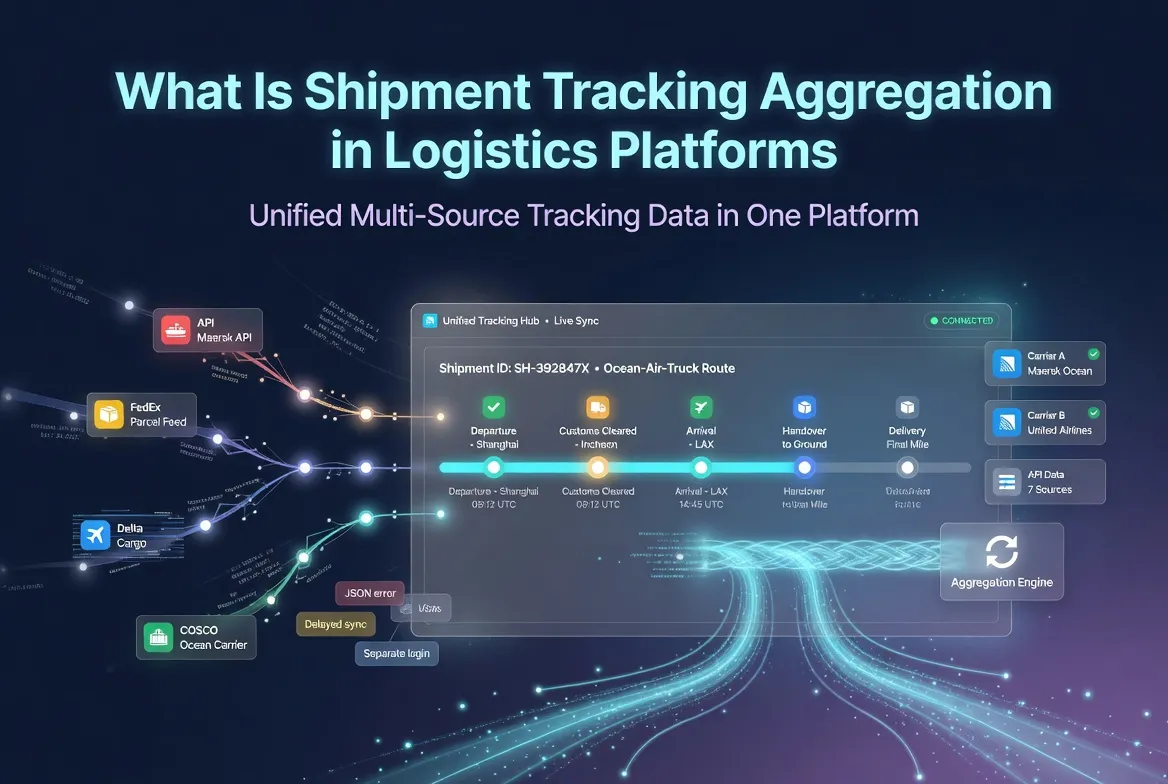
Integrated platforms provide a unified timeline of shipment milestones across all transport modes.
4. Improves Collaboration Across the Supply Chain
Internal teams and external partners can coordinate in real time using shared data.
5. Supports Digital Transformation
Multi-system integration is a foundational step toward building a fully digital logistics operation.
How Multi-System Data Integration Platforms Work
1. Centralized Data Hub
The platform collects data from various systems and stores it in a centralized database, creating a unified data model.
2. API and Connector Framework
APIs and pre-built connectors enable seamless integration with:
External carrier systems
ERP and accounting platforms
E-commerce platforms
Third-party logistics services
3. Data Mapping and Standardization
Data from different systems is mapped into a standardized structure to ensure consistency and compatibility.
4. Real-Time Synchronization
Updates from any system—such as shipment status or financial transactions—are automatically synchronized across all connected systems.
5. Workflow Automation
The platform uses automation to trigger actions based on data events, such as:
Shipment status updates triggering notifications
Order creation triggering operational workflows
Financial data triggering billing and reconciliation processes
6. AI and Data Processing Enhancements
Modern platforms incorporate:
AI-based data recognition (e.g., extracting data from documents)
Automated exception detection
Intelligent workflow routing
These capabilities ensure efficient and accurate data handling.
Key Features of Multi-System Integration Platforms
End-to-end shipment visibility
Unified milestone tracking across ocean, air, land, and expressMulti-role collaboration
Seamless coordination between sales, operations, documentation, and financeCentralized data management
A single platform for all operational and financial dataReal-time data synchronization
Instant updates across all connected systemsFlexible API integration
Easy connection with internal and external systemsAutomation capabilities
Workflow automation, automated billing, and reconciliationScalable architecture
Ability to support growing business needs and additional system integrations
Benefits for Logistics Companies
1. Increased Operational Efficiency
Teams can manage all operations within a single platform, reducing time spent switching between systems.
2. Reduced Errors and Redundancy
Automated data synchronization eliminates duplicate entries and inconsistencies.
3. Improved Decision-Making
Access to real-time, unified data enables better planning and faster responses to disruptions.
4. Enhanced Customer Experience
Customers benefit from accurate, real-time tracking and faster service delivery.
5. Stronger Ecosystem Connectivity
Logistics companies can connect with upstream suppliers and downstream partners more effectively.
Best Practices / Use Cases
1. Integrating Carrier and Tracking Systems
Connect multiple carrier systems to aggregate tracking data and provide unified shipment visibility.
2. Linking ERP and Financial Systems
Ensure operational data flows seamlessly into financial systems for accurate billing and reporting.
3. Connecting E-Commerce Platforms
Automate order intake and fulfillment processes for cross-border eCommerce logistics.
4. Centralizing Document Management
Store and manage all shipping documents in one platform with synchronized access.
5. Enabling Partner Collaboration
Allow external partners to access relevant data and collaborate within the same system.
Conclusion
A logistics platform for multi-system data integration is a critical enabler of modern logistics operations. By connecting multiple systems into a unified environment, it eliminates data silos, improves efficiency, and enhances visibility across the supply chain.
As logistics networks become more complex and interconnected, the ability to integrate systems and synchronize data will be essential for maintaining operational control and achieving scalable growth.
Frequently Asked Questions
What is a multi-system data integration platform in logistics?
It is a platform that connects multiple logistics systems and enables unified data management and real-time synchronization.
Why is multi-system integration important in logistics?
It eliminates data silos, improves efficiency, and enables better collaboration and visibility across operations.
How does a logistics integration platform work?
It uses APIs, data mapping, and automation to connect systems and synchronize data in real time.
What are the benefits of using such a platform?
Improved efficiency, reduced errors, better visibility, and enhanced scalability.
What systems can be integrated?
ERP, WMS, TMS, carrier systems, e-commerce platforms, and financial systems can all be integrated.
About WallTech
WallTech provides digital logistics platforms designed to support multi-system data integration across complex supply chain environments. Its solutions enable end-to-end collaboration by connecting internal teams and external partners within a unified system. With real-time shipment visibility based on milestone tracking, logistics companies can monitor operations across all transport modes. The platform also incorporates automation capabilities such as AI-driven data recognition, workflow automation, and automated billing and reconciliation, helping businesses reduce manual effort, improve accuracy, and scale efficiently.
If you're exploring ways to improve your logistics operations, feel free to connect with us to learn more about our solutions and system capabilities.
.webp "How Modern Platforms Enable Operational Cost Visibility")