
May 15,2023
Data Analytics in Logistics: Shaping the Future
Introduction
Logistics control towers manage global operations by centralizing data, coordinating workflows, and providing real-time visibility across all supply chain activities. They integrate multiple systems, stakeholders, and transport modes into a single platform, enabling logistics companies to monitor shipments, automate processes, and respond to disruptions efficiently.
In a global logistics environment characterized by fragmented systems and complex multi-party coordination, control towers serve as the operational “brain” that ensures consistency, transparency, and control across international operations.
What is a Logistics Control Tower
A logistics control tower is a digital platform that acts as a centralized hub for managing and monitoring supply chain operations. It connects internal teams, external partners, and systems into a unified ecosystem.
Unlike traditional systems that focus on specific functions (such as transportation or warehousing), a control tower provides:
End-to-end operational visibility
Cross-functional coordination
Real-time monitoring and decision support
It is designed around the concept of managing logistics as a continuous, interconnected process rather than isolated activities. In many implementations, all stakeholders collaborate around “one shipment” with shared data and workflows, improving coordination efficiency.
Why Logistics Control Towers Matter
1. Managing Complexity in Global Logistics
Global supply chains involve:
Multiple countries and regulatory environments
Various transport modes (sea, air, land)
Numerous stakeholders (carriers, agents, customs, warehouses)
Without a centralized system, managing these elements becomes inefficient and error-prone. Control towers provide a unified structure to handle this complexity.
2. Eliminating Fragmented Systems
Many logistics companies operate with disconnected systems and manual processes, leading to data silos.
Control towers integrate these systems, ensuring seamless data flow and reducing duplication of work.
3. Enabling Real-Time Operational Control
Traditional logistics operations often rely on delayed updates.
Control towers provide real-time visibility and alerts, allowing teams to monitor progress and react immediately to issues.
4. Improving Collaboration Across Stakeholders
Coordination across departments and partners is a major challenge.
Control towers enable:
Multi-role collaboration
Shared workflows
Real-time communication
This reduces delays and misalignment between stakeholders.
How Logistics Control Towers Work
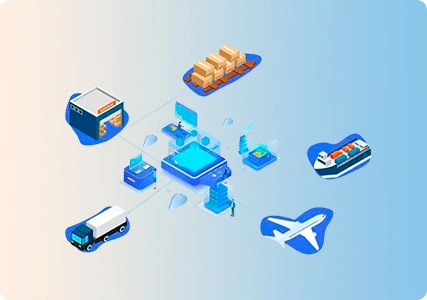
Logistics control towers manage global operations through a combination of data integration, workflow orchestration, and real-time monitoring.
Step 1: System and Data Integration
The control tower connects with:
Internal systems (ERP, WMS, TMS)
External partners (carriers, agents, customs brokers)
Third-party data sources (tracking systems, schedules, rates)
This creates a centralized data environment for all operations.
Step 2: Centralized Data Processing
Data from multiple sources is standardized and consolidated into a unified format.
This ensures consistency and enables accurate tracking and reporting.
Step 3: Workflow Orchestration
Operations are structured into standardized workflows, such as:
Quotation and booking
Documentation and compliance
Transport execution
Delivery and invoicing
Tasks are automatically assigned based on predefined SOPs, ensuring smooth execution across departments.
Step 4: Real-Time Tracking and Monitoring
Shipments are tracked through milestone-based events, including:
Booking confirmation
Departure and arrival
Customs clearance
Final delivery
These milestones are displayed in a unified timeline for easy monitoring.
Step 5: Exception Detection and Response
The system continuously monitors for deviations, such as delays or missing documents.
When issues occur:
Alerts are triggered automatically
Relevant stakeholders are notified
Corrective actions can be taken quickly
Step 6: Performance Analytics
Control towers analyze operational data to provide insights into:
Transit times
Bottlenecks
Carrier performance
Cost efficiency
This supports continuous improvement and strategic decision-making.
Key Features / Key Capabilities
1. End-to-End Visibility
Unified tracking across all transport modes
Real-time shipment status updates
Milestone-based tracking and timelines
2. Multi-Role Collaboration
Coordination between sales, operations, documentation, and finance
Partner collaboration across global networks
Role-based access control
3. Workflow Automation
Automated task assignment based on SOPs
Exception alerts and notifications
Process standardization across operations
4. AI-Driven Data Processing
OCR for document recognition
Automated data extraction and validation
Reduced manual input and errors
5. Financial Integration
Automated billing and invoicing
Cost and profit tracking per shipment
Reconciliation and reporting
6. Scalable System Connectivity
API integration with external systems
Real-time data exchange across partners
Support for global logistics ecosystems
These capabilities allow control towers to manage complex global operations efficiently and effectively.
Benefits for Logistics Companies
1. Improved Operational Efficiency
Automation and centralized workflows reduce manual tasks and streamline operations.
2. Enhanced Visibility and Control
Real-time tracking provides full visibility into shipment progress and operational status.
3. Faster Response to Disruptions
Automated alerts enable teams to identify and resolve issues quickly.
4. Better Collaboration
All stakeholders work within a shared system, improving coordination and reducing communication gaps.
5. Scalable Global Operations
Control towers support multi-country and multi-partner operations, enabling business expansion without operational complexity.
Best Practices / Use Cases
1. Global Freight Forwarding Networks
Control towers help forwarders manage shipments across multiple regions and partners within a single platform.
2. Cross-Border eCommerce Logistics
They enable coordination between fulfillment centers, carriers, and last-mile delivery networks.
3. Multi-Branch Logistics Organizations
Companies with global offices can synchronize workflows, data, and financial processes across locations.
4. Exception-Driven Operations
Control towers allow teams to focus on managing disruptions rather than routine tracking tasks.
Best Practices
Integrate all critical systems and partners
Standardize workflows using SOPs
Use milestone-based tracking for consistency
Leverage automation to reduce manual processes
Conclusion
Logistics control towers play a critical role in managing global operations by centralizing data, enabling collaboration, and providing real-time visibility.
By transforming fragmented logistics processes into connected and automated workflows, control towers allow logistics companies to operate more efficiently, respond faster to disruptions, and scale their operations across global markets.
Frequently Asked Questions
What is a logistics control tower?
A logistics control tower is a centralized platform that provides visibility, coordination, and control over supply chain operations. It integrates data from multiple systems and stakeholders.
How do logistics control towers manage global operations?
They connect systems and partners, standardize workflows, track shipments in real time, and automate processes to ensure efficient global coordination.
Why are control towers important in logistics?
They improve visibility, reduce inefficiencies, enhance collaboration, and enable faster decision-making across complex global supply chains.
What are the benefits of using a control tower?
Key benefits include improved efficiency, reduced errors, better customer service, and scalability for global operations.
Who uses logistics control towers?
Freight forwarders, 3PL providers, and cross-border eCommerce logistics companies commonly use control towers to manage complex operations.
About WallTech
WallTech provides digital logistics solutions that enable companies to manage global operations through centralized platforms and connected workflows. Its systems support end-to-end collaboration across internal teams and external partners, ensuring that all stakeholders operate within a unified environment.
With capabilities such as real-time shipment visibility, milestone-based tracking, workflow automation, and integrated financial management, WallTech helps logistics companies improve operational efficiency and reduce complexity. By enabling structured processes and seamless data flow, organizations can scale their global logistics operations with greater control and transparency.
If you're exploring ways to improve your logistics operations, feel free to connect with us to learn more about our solutions and system capabilities.
.webp "How Modern Platforms Enable Operational Cost Visibility")

.webp "How Digital Systems Improve Logistics Visibility")