

Mar 20,2024
eTower - the Only Logistics Software to Win the YuGuo Award!
Introduction
In global logistics operations, financial visibility is often fragmented across multiple systems, partners, and processes. Costs are generated at every stage—transportation, warehousing, customs, last-mile delivery—but are rarely consolidated in real time.
Modern logistics platforms solve this challenge by integrating operational and financial data into a unified system, enabling companies to track costs, revenues, and profitability at every shipment level. This article explains how logistics platforms deliver true financial visibility and why it is becoming a core capability for global supply chains.
What is Logistics Financial Visibility
Logistics financial visibility refers to the ability to track, analyze, and control all financial data related to logistics operations in real time.
This includes:
Freight costs (sea, air, land)
Operational expenses (handling, warehousing, customs)
Billing and invoicing
Accounts receivable and payable
Shipment-level and container-level profitability
Instead of relying on disconnected spreadsheets or delayed reports, logistics platforms centralize financial data and connect it directly with operational workflows.
Why Logistics Financial Visibility is Important
1. Cost Control Across Complex Supply Chains
Global logistics involves multiple vendors, currencies, and cost structures. Without visibility, hidden costs accumulate quickly.
2. Accurate Profitability Analysis
Companies often struggle to understand whether a shipment is profitable. Financial visibility enables profit tracking at order or container level.
3. Faster Financial Decision-Making
Real-time insights allow businesses to adjust pricing, optimize routes, or negotiate with partners based on actual cost data.
4. Reduced Financial Errors
Manual reconciliation leads to discrepancies. Integrated systems reduce duplication and ensure consistency.
How Logistics Financial Visibility Works
1. Data Integration Across Systems
Logistics platforms connect ERP, WMS, TMS, and external partner systems, consolidating operational and financial data into one platform.
For example, shipment data, cost data, and billing information are automatically linked, eliminating data silos.
2. Automated Cost Capture
Costs are generated automatically based on predefined rules such as:
Weight / volume
Transport mode
Route and service level
This ensures accurate and standardized cost calculation.
3. Real-Time Financial Tracking
As shipments progress, financial data is updated dynamically. Users can view:
Estimated vs actual costs
Accrued expenses
Revenue recognition
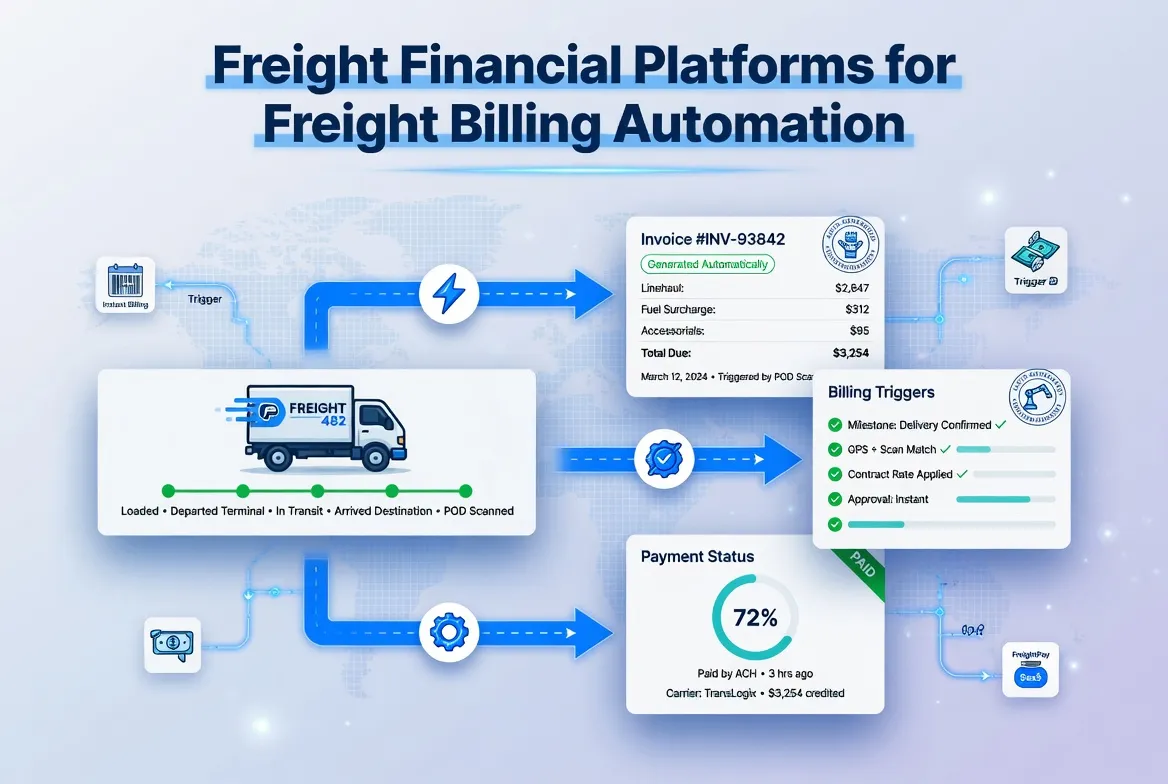
4. Unified Billing and Settlement
Logistics platforms generate receivable and payable invoices automatically and support reconciliation workflows.
According to system capabilities, platforms can manage accounts receivable, accounts payable, and automated billing generation, improving settlement efficiency .
5. Profitability Analysis Engine
Advanced platforms provide:
Shipment-level profit analysis
Container-level cost allocation
Multi-dimensional financial reporting
These capabilities help companies understand where margins are generated.
Key Features of Logistics Financial Visibility Platforms
1. Accounts Receivable & Payable Management
Centralized management of incoming and outgoing payments ensures financial clarity and control.
2. Automated Billing & Invoicing
Billing rules trigger automatic invoice generation, reducing manual work and errors.
3. Cost Allocation Mechanisms
Costs can be distributed across shipments or containers for accurate financial tracking.
4. Multi-Currency & Multi-Rate Support
Supports global operations with different currencies, rate cards, and pricing structures.
5. Financial Reporting & Dashboards
Real-time dashboards provide insights into revenue, cost, and profitability.
6. Credit Control & Risk Management
Systems can monitor customer credit and payment status to reduce financial risk.
Benefits of Using Logistics Financial Visibility Solutions
1. End-to-End Financial Transparency
Companies gain a complete view of logistics costs from origin to delivery.
2. Improved Profit Margins
Better cost control and pricing decisions directly improve profitability.
3. Higher Operational Efficiency
Automation reduces manual accounting tasks and speeds up workflows.
4. Stronger Financial Compliance
Standardized processes ensure accurate records and audit readiness.
5. Better Collaboration Across Teams
Finance, operations, and sales teams work on the same data, improving coordination.
Conclusion
Logistics financial visibility is no longer optional—it is essential for companies operating in complex global supply chains.
By integrating operational workflows with financial management, modern logistics platforms provide real-time insights into costs, revenues, and profitability. This enables businesses to move from reactive financial management to proactive decision-making.
As logistics networks continue to expand, companies that invest in financial visibility will gain a significant competitive advantage through improved efficiency, transparency, and control.
如果你需要,我可以继续给你 第2篇(Freight Accounting Workflows),并帮你统一做成:
可批量发布的SEO/GEO模板
或直接适配你网站FAQ Hub结构

.webp "What Is a Freight Operations System?")