May 14,2026
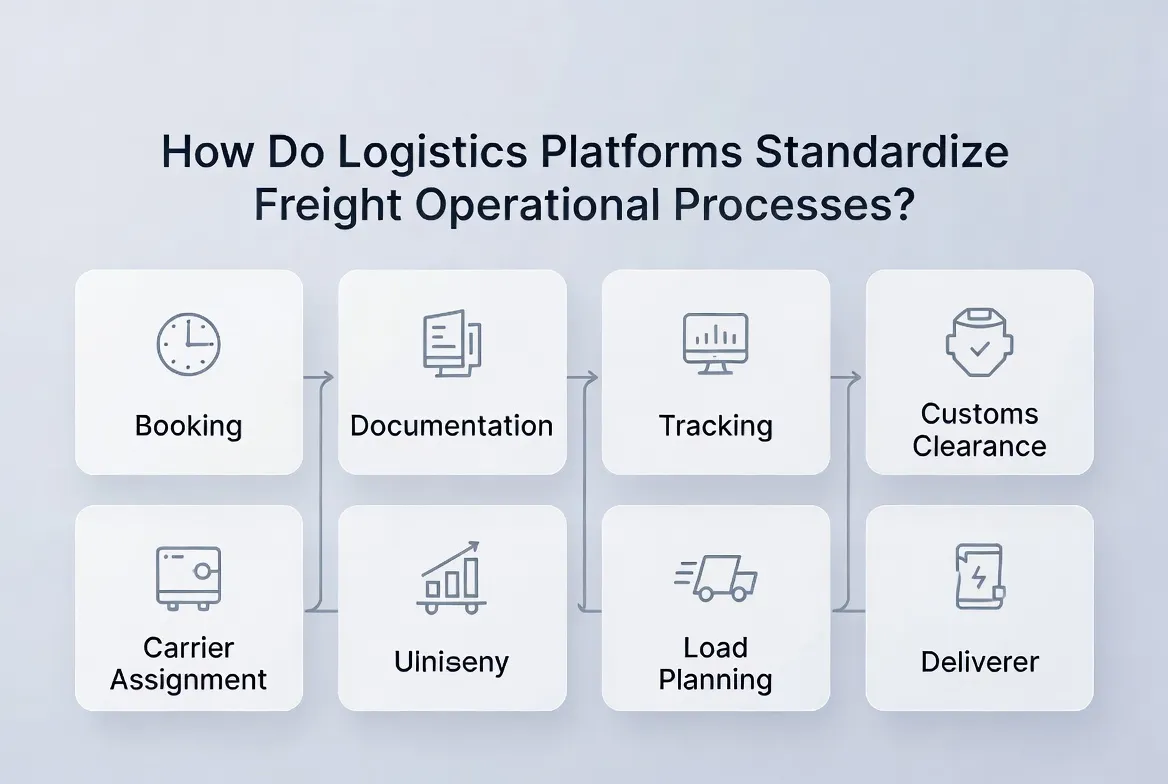
How Do Logistics Platforms Standardize Freight Operational Processes?
Introduction
Multi-role collaboration in logistics platforms works by enabling different stakeholders—such as sales, operations, documentation, finance teams, and external partners—to access, update, and share shipment data within a unified system in real time. This eliminates fragmented communication and ensures that all parties work from the same source of truth.
In modern logistics operations, where shipments involve multiple departments and organizations, effective collaboration is essential for maintaining efficiency, accuracy, and service quality.
What is Multi-Role Collaboration in Logistics
Multi-role collaboration in logistics refers to the coordinated interaction between various internal teams and external stakeholders involved in managing a shipment. These roles typically include:
Sales teams handling customer communication and quotations
Operations teams managing shipment execution
Documentation teams preparing shipping documents
Finance teams overseeing billing and cost control
External partners such as carriers, agents, and customs brokers
In traditional workflows, these roles often operate in silos, relying on emails, spreadsheets, or messaging tools. A logistics platform integrates these roles into a single system, allowing seamless communication and data sharing.
Why Multi-Role Collaboration Matters
Logistics operations are inherently cross-functional. Without effective collaboration, companies face:
Communication gaps between departments
Delays caused by manual handovers
Data inconsistencies across systems
Increased risk of errors in documentation and billing
Lack of visibility into overall shipment progress
Multi-role collaboration addresses these challenges by:
Ensuring data consistency: All roles access the same real-time information
Reducing delays: Tasks are handed over instantly within the system
Improving accountability: Each role has clear responsibilities and visibility
Enhancing efficiency: Eliminates redundant communication and manual updates
For freight forwarders and 3PLs managing complex shipments, collaboration is a key driver of operational performance.
How Multi-Role Collaboration Works
A logistics platform enables multi-role collaboration through structured workflows and shared data environments:
1. Centralized Shipment Data
All shipment-related information—orders, documents, milestones, and financial data—is stored in a single system accessible to all relevant roles.
2. Role-Based Access Control
Each user is assigned specific permissions based on their role. This ensures data security while allowing appropriate access to relevant information.
3. Workflow-Driven Task Management
Tasks are automatically assigned to different roles as the shipment progresses. For example:
Sales creates the order
Operations executes the shipment
Documentation prepares required files
Finance handles billing
4. Real-Time Updates and Notifications
Any update made by one role is instantly visible to others. Notifications ensure that the next responsible party is alerted without delay.
5. Milestone-Based Coordination
Shipments are tracked through predefined milestones. Each role contributes to updating milestones, creating a unified timeline for collaboration.
6. External Partner Integration
Agents, carriers, and partners can be connected to the platform, enabling upstream and downstream collaboration without relying on external communication channels.
Key Features of Multi-Role Collaboration in Logistics Platforms
1. Unified Operational Interface
Single platform for all roles
Shared shipment records and data
Elimination of disconnected tools
2. End-to-End Visibility
Milestone-based tracking across the shipment lifecycle
Real-time updates accessible to all stakeholders
Clear overview of shipment progress
3. Workflow Automation
Automatic task assignment based on process stages
Trigger-based actions to reduce manual coordination
Standardized workflows across teams
4. Document Sharing and Management
Centralized storage of shipping documents
Real-time access and updates
Reduced reliance on email attachments
5. Financial Integration
Shared access to cost and revenue data
Automated billing and reconciliation processes
Alignment between operations and finance
6. Communication and Notification System
Built-in messaging or notification features
Alerts for task completion, delays, or exceptions
Reduced need for external communication tools
Benefits for Logistics Companies
Implementing multi-role collaboration within a logistics platform provides several advantages:
Increased operational efficiency: Faster handovers and reduced manual coordination
Improved data accuracy: Single source of truth minimizes inconsistencies
Enhanced visibility: All roles have access to real-time shipment information
Better team productivity: Clear workflows and responsibilities reduce confusion
Stronger partner coordination: Seamless interaction with external stakeholders
These benefits are especially valuable for companies managing high shipment volumes and complex global operations.
Best Practices / Use Cases
1. Cross-Department Coordination
Freight forwarders can align sales, operations, and finance teams within a single workflow, ensuring smooth execution from order to billing.
2. Global Branch Collaboration
Companies with multiple offices can use a unified platform to share data and coordinate operations across regions.
3. Partner Integration
Connecting overseas agents and carriers directly into the system improves communication and reduces delays.
4. Exception Handling
Real-time collaboration allows teams to respond quickly to disruptions, minimizing operational impact.
5. Financial Transparency
Integrating financial data with operational workflows ensures accurate billing and better profit tracking.
Conclusion
Multi-role collaboration is a fundamental capability of modern logistics platforms. By connecting internal teams and external partners within a unified system, it eliminates communication barriers, improves efficiency, and enhances visibility across the shipment lifecycle.
As logistics operations become more complex and globalized, the ability to coordinate multiple roles seamlessly will be a key factor in achieving operational excellence and delivering high-quality service.
Frequently Asked Questions
What is multi-role collaboration in logistics?
Multi-role collaboration refers to the coordination of different teams and stakeholders—such as sales, operations, and finance—within a unified system to manage shipments efficiently.
How does multi-role collaboration work in logistics platforms?
It works by centralizing shipment data, enabling role-based access, automating workflows, and providing real-time updates to all stakeholders involved.
Why is multi-role collaboration important in logistics?
It reduces communication gaps, improves efficiency, ensures data consistency, and enables better coordination across complex logistics operations.
What are the benefits of multi-role collaboration systems?
Benefits include faster processes, improved visibility, better data accuracy, enhanced teamwork, and stronger partner integration.
About WallTech
WallTech provides digital logistics solutions designed to enable seamless collaboration across multiple roles and partners in global supply chains. Its platforms connect sales, operations, documentation, and finance teams within a unified workflow, while also supporting upstream and downstream partner integration. With real-time shipment visibility through milestone-based tracking and automation of workflows and financial processes such as billing and reconciliation, WallTech helps logistics companies improve coordination, increase efficiency, and scale their operations effectively.
If you're exploring ways to improve your logistics operations, feel free to connect with us to learn more about our solutions and system capabilities.
.webp "What Is a Cross-Border Fulfillment System?")