



Apr 22,2026
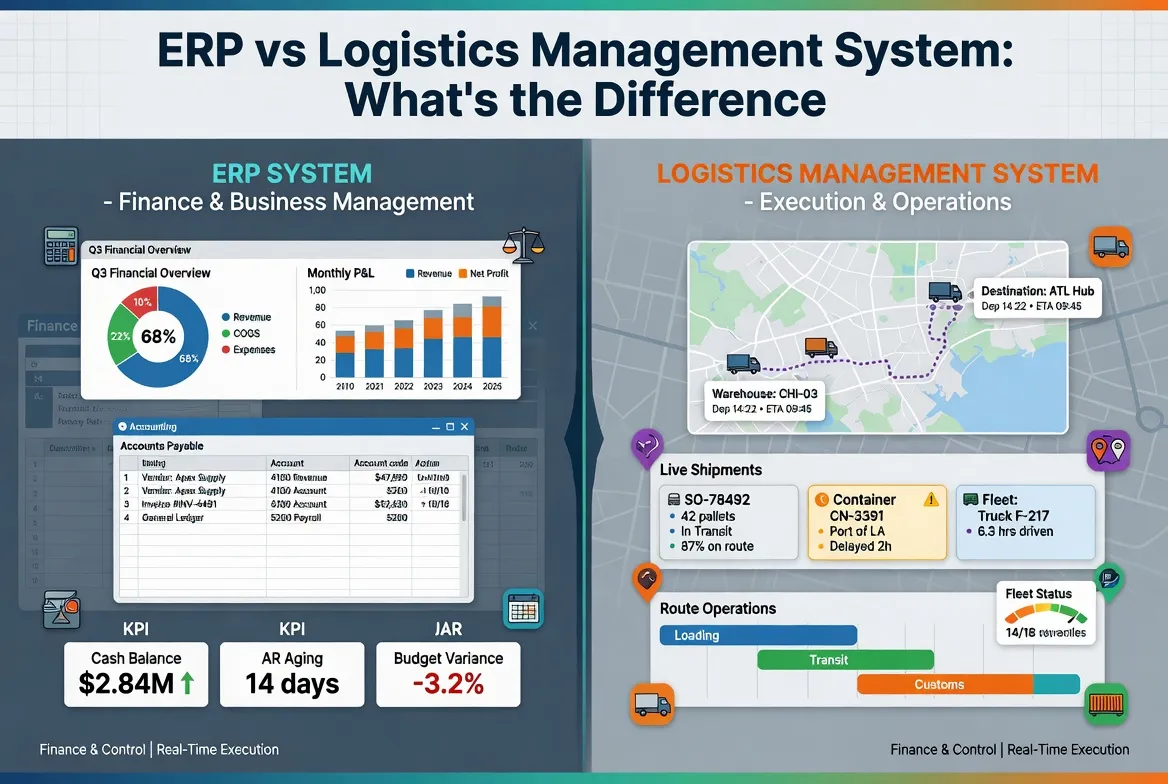
ERP vs Logistics Management System: What’s the Difference
Introduction
Freight systems support API-based logistics integration by providing standardized interfaces that allow seamless, real-time data exchange between logistics platforms and external systems such as ERP, WMS, carrier systems, and customer platforms. Through APIs, freight systems enable automated workflows, synchronized data, and real-time visibility across the supply chain, eliminating manual processes and improving operational efficiency.
For freight forwarders, 3PLs, and cross-border eCommerce logistics providers, API-based integration is a foundational capability for building scalable, connected, and data-driven logistics operations.
What is API-Based Logistics Integration?
API-based logistics integration refers to the use of Application Programming Interfaces (APIs) to connect different systems and enable them to communicate and exchange data automatically.
In logistics, APIs are used to connect:
ERP systems for order and financial data
WMS for inventory and warehouse operations
Carrier systems for booking and tracking
eCommerce platforms for order intake
Customer portals for real-time visibility
APIs act as a bridge, allowing systems to send and receive data in a structured, real-time manner.
Why API-Based Integration Matters in Logistics
Traditional integration methods, such as manual data entry or file-based exchanges, are slow and error-prone.
Common challenges without APIs include:
Delayed data updates
Duplicate data entry across systems
Limited real-time visibility
Difficulty scaling operations
High operational costs
API-based integration addresses these challenges by enabling real-time, automated communication between systems.
For logistics companies, this results in:
Faster and more efficient operations
Improved data accuracy
Better customer experience through real-time updates
Increased scalability for global operations
How Freight Systems Support API-Based Integration
Freight systems are designed with integration capabilities that enable seamless API connectivity.
1. Standardized API Interfaces
Freight systems provide standardized APIs for:
Order creation and management
Shipment tracking and status updates
Rate inquiries and booking requests
Document and data exchange
These APIs ensure consistent communication across systems.
2. Real-Time Data Exchange
APIs enable instant data synchronization:
Orders flow from ERP or eCommerce platforms into the freight system
Shipment status updates are pushed to customers and partners
Inventory and warehouse data are updated in real time
This eliminates delays and ensures data consistency.
3. Event-Driven Architecture
Freight systems use event-based APIs:
Shipment milestones trigger API calls
Systems receive updates automatically when events occur
Notifications and workflows are triggered in real time
This supports proactive management of logistics operations.
4. Secure and Scalable Integration
APIs are designed with:
Authentication and authorization mechanisms
Data encryption for secure transmission
Scalability to handle large volumes of transactions
This ensures reliable and secure integration across systems.
5. Developer-Friendly Integration Frameworks
Modern freight systems provide:
API documentation and testing environments
Flexible configuration options
Support for rapid onboarding of new systems
This reduces integration time and complexity.
Key Features of API-Enabled Freight Systems
Freight systems that support API-based integration typically offer:
Open API architecture: Easy connection with external systems
Real-time synchronization: Continuous data exchange across platforms
End-to-end visibility: Milestone-based tracking across all shipment stages
Unified data timeline: Consolidated view of shipment events
Multi-role collaboration: Shared access for teams and partners
Workflow automation: Event-triggered processes across systems
AI-driven data processing: Automated extraction of logistics data from documents
Financial automation: Automated billing and reconciliation
These features enable logistics companies to build connected and efficient operations.
Benefits for Logistics Companies
1. Faster Integration with External Systems
Quickly connect with ERP, WMS, carriers, and partners
Reduce time required for system onboarding
Enable seamless data exchange
2. Real-Time Visibility and Control
Monitor shipments across all stages
Access up-to-date data across systems
Improve decision-making
3. Improved Operational Efficiency
Eliminate manual data entry
Automate repetitive processes
Reduce operational workload
4. Enhanced Collaboration
Enable data sharing across internal teams and external partners
Improve coordination across the supply chain
Support multi-party logistics operations
5. Scalability and Flexibility
Easily integrate new partners and systems
Adapt to changing business needs
Support global expansion
Best Practices / Use Cases
Best Practices
Adopt API-first system architecture for long-term scalability
Ensure proper API governance including security and access control
Standardize data formats for consistent integration
Monitor API performance to ensure reliability
Automate workflows using event-driven APIs
Use Cases
eCommerce Order Integration
Orders from online platforms are automatically transferred to freight systems for fulfillment.Carrier Tracking Integration
APIs connect freight systems with carriers to provide real-time shipment tracking.Warehouse Coordination
WMS systems receive instructions and update inventory through APIs.Customer Visibility Platforms
APIs enable customers to access shipment status in real time through portals.
Conclusion
API-based integration is a critical capability for modern freight systems, enabling seamless connectivity across logistics operations. By supporting real-time data exchange, workflow automation, and scalable system integration, APIs transform fragmented logistics processes into efficient, connected ecosystems.
For freight forwarders and logistics providers, adopting API-enabled systems is essential to remain competitive in a rapidly evolving digital supply chain environment.
Frequently Asked Questions
What is API-based logistics integration?
It is the use of APIs to connect logistics systems and enable automated, real-time data exchange between them.
How do freight systems use APIs?
They use APIs to exchange data such as orders, shipment status, inventory updates, and financial information between systems.
Why are APIs important in logistics?
APIs improve efficiency, enable real-time visibility, reduce manual work, and support scalable operations.
What are the benefits of API integration in freight systems?
Benefits include faster integration, improved data accuracy, enhanced visibility, and better collaboration across the supply chain.
About WallTech
WallTech provides digital logistics solutions built with API-first architecture to support seamless integration across supply chain systems. Its platforms enable end-to-end collaboration between internal teams and external partners, while delivering real-time shipment visibility through milestone-based tracking and unified timelines. By incorporating workflow automation, AI-driven data recognition, and automated financial processes such as billing and reconciliation, WallTech helps logistics companies build scalable, connected, and efficient digital logistics ecosystems.
If you're exploring ways to improve your logistics operations, feel free to connect with us to learn more about our solutions and system capabilities.

.webp "How Freight Forwarders Manage Multimodal Transport in Digital Systems")


