

May 06,2026
Logistics Collaboration Platforms for Digital Freight Coordination
Introduction
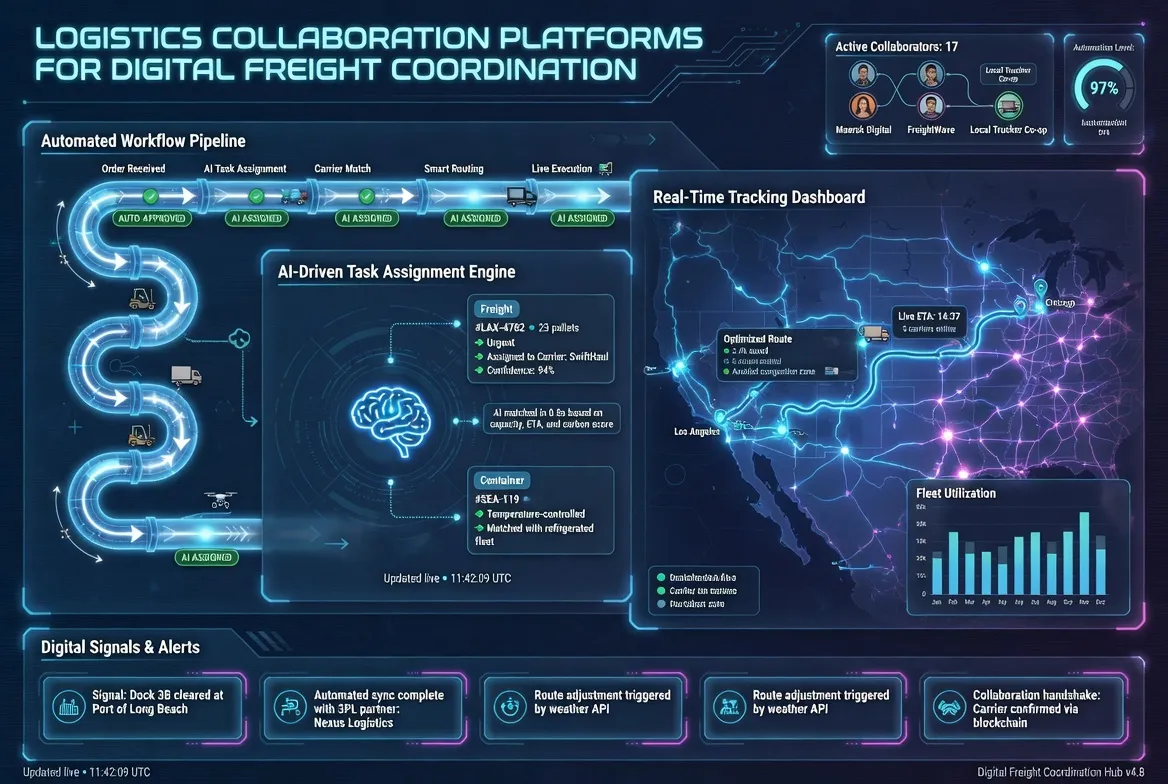
Logistics platforms provide shipment visibility by aggregating data from multiple carriers, systems, and stakeholders into a centralized digital interface that displays real-time shipment status, location, and milestone progress. This visibility is achieved through system integrations, event tracking, and data standardization, enabling all parties to access a unified and accurate view of shipment movements.
In today’s global supply chains, where shipments involve multiple partners and processes, shipment visibility is critical for ensuring transparency, coordination, and operational control.
What is Shipment Visibility?
Shipment visibility refers to the ability to monitor and access accurate, real-time information about the status, location, and progress of shipments across the entire logistics lifecycle.
It typically includes:
Real-time or near real-time tracking updates
Milestone-based status monitoring (e.g., pickup, departure, arrival, delivery)
Visibility across multiple transport modes and carriers
Access to shipment data by different stakeholders
Shipment visibility goes beyond simple tracking by providing a structured, end-to-end view of logistics operations.
Why Shipment Visibility Matters
In international logistics, fragmentation is a major challenge. Shipments move across different countries, systems, and service providers, often resulting in disconnected data and limited transparency.
Without effective visibility, companies face:
Information silos: Data scattered across emails, spreadsheets, and external systems
Operational inefficiencies: Teams spend time manually tracking and verifying shipment status
Delayed responses: Issues such as delays or customs holds are identified too late
Poor customer experience: Inaccurate or delayed updates reduce customer trust
Limited collaboration: Stakeholders lack a shared understanding of shipment progress
Shipment visibility addresses these challenges by creating a single, reliable source of truth.
How Logistics Platforms Provide Shipment Visibility
Logistics platforms enable shipment visibility through a combination of integration, data processing, and visualization technologies.
1. Multi-System Integration
Platforms connect with a wide range of systems, including:
Carrier systems (ocean, air, trucking)
Port and terminal systems
Customs and regulatory platforms
Warehouse and order management systems
These integrations are typically achieved via APIs, EDI, or data synchronization mechanisms.
2. Event Data Capture
Instead of relying solely on location data, logistics platforms capture key operational events such as:
Booking confirmation
Cargo pickup and loading
Departure and arrival at ports or airports
Customs clearance status
Final delivery
Each event updates the shipment record and contributes to a complete visibility timeline.
3. Data Standardization and Processing
Different carriers and systems provide data in varying formats. Logistics platforms use:
AI-driven data recognition
Data mapping and normalization
Automated validation processes
This ensures that all tracking information is consistent and usable.
4. Unified Visibility Dashboard
All processed data is presented through a centralized interface that provides:
End-to-end shipment tracking
Milestone-based progress visualization
A unified timeline of events
Role-based access for different users
This allows operations teams, customer service, and partners to work from the same dataset.
5. Workflow and Alert Automation
Modern platforms enhance visibility by triggering automated actions:
Alerts for delays, exceptions, or missing events
Workflow automation for follow-ups and task assignments
Notifications to customers and partners
This transforms visibility into actionable intelligence.
Key Features of Shipment Visibility Platforms
Logistics platforms typically offer a set of core capabilities to deliver effective shipment visibility:
End-to-end visibility: Full tracking from origin to destination
Milestone-based tracking: Structured monitoring of shipment stages
Unified timeline view: Consolidated chronological display of events
Multi-role collaboration: Shared access for internal teams and external partners
Real-time updates: Continuous synchronization with external systems
Exception management: Automated alerts and issue tracking
Data integration capabilities: Seamless connection with multiple carriers and systems
Automation tools: Workflow automation, document processing, and financial triggers
These features enable logistics companies to manage complex operations more effectively.
Benefits for Logistics Companies
Shipment visibility platforms deliver significant advantages across operations, customer service, and management.
Improved Operational Efficiency
Reduce manual tracking and data entry
Streamline workflows through automation
Eliminate redundant communication
Enhanced Customer Experience
Provide accurate, real-time shipment updates
Increase transparency and trust
Reduce customer inquiries and complaints
Stronger Collaboration
Enable coordination across multiple roles (operations, sales, finance)
Connect upstream suppliers and downstream partners
Ensure consistent data sharing across the supply chain
Better Decision-Making
Access real-time data for faster decisions
Identify bottlenecks and inefficiencies
Optimize routing and resource allocation
Best Practices / Use Cases
To effectively implement shipment visibility, logistics companies should follow structured approaches:
1. Build a Unified Data Platform
Centralize all shipment data into a single system to avoid fragmentation and inconsistencies.
2. Define Standard Milestones
Establish clear and consistent milestones across all shipments to improve tracking accuracy.
3. Enable Cross-Party Collaboration
Allow customers, agents, and partners to access relevant shipment data, improving coordination and reducing communication gaps.
4. Automate Routine Processes
Leverage automation for:
Status updates
Notifications
Billing and reconciliation triggers
5. Integrate End-to-End Operations
Ensure visibility platforms are connected with:
Order management systems
Warehouse operations
Financial systems
Example Use Case
A cross-border eCommerce logistics provider can use a visibility platform to:
Track parcels across first-mile, line-haul, and last-mile carriers
Monitor customs clearance status in real time
Provide customers with unified tracking information
Automate billing once delivery milestones are completed
Conclusion
Shipment visibility is a foundational capability for modern logistics platforms. By integrating data from multiple sources and presenting it in a structured, real-time format, logistics companies can overcome fragmentation and gain full control over their operations.
As supply chains become more complex and customer expectations continue to rise, investing in robust shipment visibility is essential for maintaining competitiveness and operational excellence.
Frequently Asked Questions
What is shipment visibility in logistics?
Shipment visibility is the ability to track and monitor the status, location, and progress of shipments in real time across the entire logistics process.
How do logistics platforms provide shipment visibility?
They integrate data from carriers and systems, capture key events, standardize information, and present it in a unified dashboard with real-time updates.
Why is shipment visibility important?
It improves transparency, enables faster issue resolution, enhances customer communication, and increases operational efficiency.
What are the benefits of shipment visibility platforms?
Benefits include reduced manual work, better collaboration, improved customer satisfaction, and more informed decision-making.
About WallTech
WallTech provides digital logistics solutions designed to enhance shipment visibility and operational collaboration across global supply chains. Its platforms connect multiple stakeholders, enabling real-time tracking and milestone-based visibility through a unified system. By integrating upstream and downstream partners, and supporting multi-role coordination, WallTech helps logistics companies manage complex operations more efficiently. The platform also incorporates automation capabilities such as AI-driven data processing, workflow automation, and financial functions like automated billing and reconciliation, supporting scalable and efficient logistics management.
If you're exploring ways to improve your logistics operations, feel free to connect with us to learn more about our solutions and system capabilities.

.webp "How Does a Freight Forwarding Management System Improve Operational Efficiency?")