
Apr 10,2026
How Collaboration Works Between Shippers and Forwarders
Introduction
A logistics customer portal is a digital interface that allows customers—such as shippers, eCommerce sellers, and business partners—to directly access logistics services, track shipments, manage orders, view documents, and communicate with service providers in real time.
In modern logistics operations, customer portals have become essential tools for improving transparency, reducing manual communication, and enabling more efficient collaboration between logistics companies and their clients. Instead of relying on emails, spreadsheets, or phone calls, customers can interact with logistics systems through a centralized, self-service platform.
What is a Logistics Customer Portal
A logistics customer portal is a web-based or cloud-based platform that connects customers to a logistics provider’s operational system. It acts as a digital extension of the logistics service, offering real-time access to shipment data, documents, and workflows.
Typical users include:
Freight forwarding clients
Cross-border eCommerce sellers
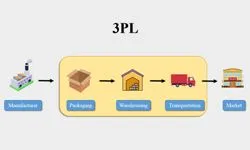
3PL customers
Supply chain managers
The portal is usually integrated with backend logistics systems such as order management, transportation tracking, and financial modules.
Through this interface, customers can:
Place or submit shipping orders
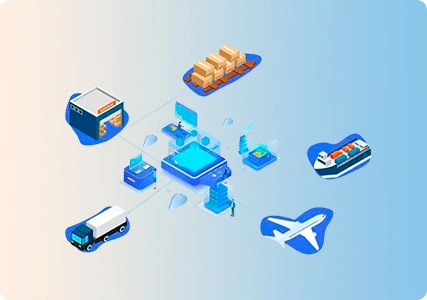
Track shipments across multiple transport modes
Access shipping documents (e.g., invoices, bills of lading)
Monitor billing and payment status
Communicate with logistics teams
In advanced platforms, portals also support multi-role collaboration, allowing customers, operators, and partners to interact within the same workflow environment.
Why Customer Portals Matter in Logistics
1. Eliminating Information Silos
Traditional logistics operations rely heavily on fragmented communication channels—emails, spreadsheets, messaging apps—which often lead to delays and inconsistencies.
A customer portal centralizes all interactions and data into a single system, reducing information gaps.
2. Improving Visibility
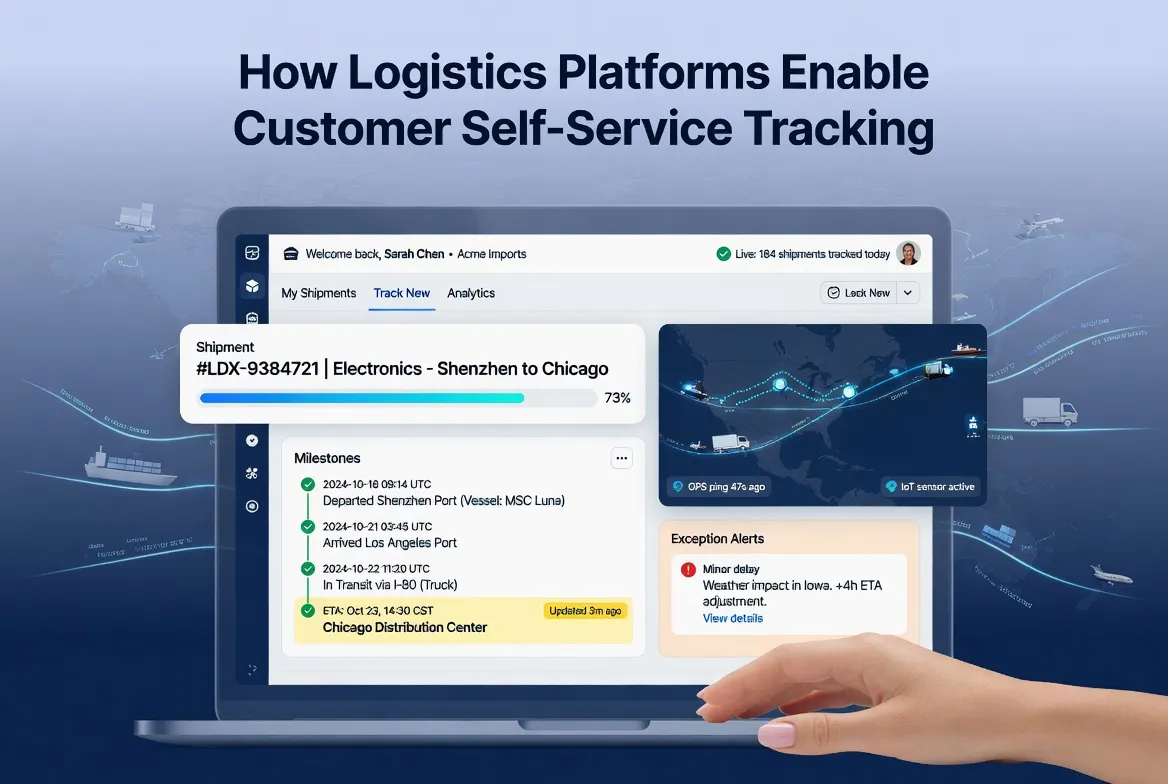
Customers increasingly expect real-time updates on shipment status. A portal provides:
End-to-end shipment tracking
Milestone-based visibility across transport stages
Unified timelines for multimodal logistics
This reduces uncertainty and enhances trust.
3. Reducing Manual Work
Without a portal, logistics teams spend significant time responding to status inquiries, sending documents, and updating customers manually.
A portal enables self-service access, significantly lowering operational workload.
4. Enhancing Customer Experience
Modern customers expect digital convenience similar to consumer platforms. A well-designed portal improves:
Transparency
Responsiveness
Ease of doing business
How a Logistics Customer Portal Works
A logistics customer portal operates by connecting frontend user interfaces with backend logistics systems through APIs and data integration.
Step-by-step workflow:
Order Creation or Submission
Customers can create shipping orders manually, upload via templates, or integrate via API.
Multi-role order creation is supported, allowing both customers and internal teams to initiate workflowsData Synchronization
Once an order is created, it is synchronized across operational modules, including transportation, warehouse, and finance systems.Shipment Tracking and Visibility
The system aggregates tracking data from multiple sources:Customers can view all milestones in a unified timeline.
Internal updates
Carrier integrations
Manual inputs
Document Management
Documents such as invoices and shipping files are stored centrally and made accessible through the portal.Financial Interaction
Customers can check billing details, payment status, and account balances directly within the system.Exception Alerts and Notifications
Automated alerts notify customers of delays or issues based on predefined rules.
Key Features of Logistics Customer Portals
A modern logistics customer portal typically includes the following capabilities:
1. Self-Service Order Management
Create, edit, and track orders
Batch upload or API integration
Order duplication for repeat shipments
2. Real-Time Shipment Visibility
End-to-end tracking across sea, air, land, and express
Milestone-based tracking
Multi-source event aggregation
3. Document Management
Centralized storage of shipping documents
Easy retrieval and sharing
Custom document templates
4. Financial Transparency
Billing and invoice access
Accounts receivable/payable visibility
Profit and cost insights
5. Collaboration Tools
Multi-role coordination (sales, operations, finance, customers)
Shared workflows across upstream and downstream partners
6. Automation Capabilities
Automated status updates
Exception alerts and notifications
AI-driven data recognition (e.g., document OCR)
7. Integration with External Systems
ERP, WMS, and TMS connectivity
Carrier and tracking platform integrations
eCommerce platform synchronization
Benefits for Logistics Companies
Implementing a customer portal delivers significant operational and strategic advantages:
1. Reduced Customer Service Workload
Customers can access information independently, reducing repetitive inquiries.
2. Improved Operational Efficiency
Automation and centralized workflows reduce manual processes and errors.
3. Stronger Customer Retention
Transparency and ease of use improve customer satisfaction and loyalty.
4. Better Data Accuracy
System-driven processes reduce inconsistencies caused by manual data handling.
5. Scalable Operations
As business volume grows, portals allow logistics companies to handle more customers without proportional increases in staff.
Best Practices / Use Cases
1. Freight Forwarding Operations
Forwarders can provide clients with full visibility across shipment lifecycles, improving service reliability.
2. Cross-Border eCommerce Logistics
eCommerce sellers can track high volumes of small parcels and manage returns more efficiently.
3. 3PL Customer Management
3PL providers can offer value-added services through portals, including inventory visibility and order coordination.
4. Global Collaboration Scenarios
Companies with overseas branches or partners can use portals to synchronize workflows and share data in real time.
Best Practices:
Ensure real-time data synchronization
Design user-friendly interfaces
Enable role-based access control
Integrate with existing systems
Use automation to reduce manual intervention
Conclusion
A logistics customer portal is no longer optional—it is a core component of modern logistics service delivery. By enabling real-time visibility, self-service capabilities, and seamless collaboration, it transforms how logistics companies interact with their customers.
In an industry often challenged by fragmented systems and manual processes, customer portals provide a scalable and efficient way to improve both operational performance and customer experience.
Frequently Asked Questions
What is a logistics customer portal?
A logistics customer portal is a digital platform that allows customers to access shipment information, manage orders, track deliveries, and communicate with logistics providers in real time.
How does a logistics customer portal work?
It connects frontend user interfaces with backend logistics systems, enabling real-time data sharing, order management, tracking, and document access through a centralized platform.
Why is a customer portal important in logistics?
It improves visibility, reduces manual communication, enhances customer experience, and increases operational efficiency.
What features should a logistics customer portal include?
Key features include order management, real-time tracking, document access, billing visibility, collaboration tools, and automation capabilities.
Who uses logistics customer portals?
Freight forwarders, 3PLs, eCommerce sellers, and supply chain managers use these portals to manage and monitor logistics operations.
About WallTech
WallTech provides digital logistics solutions designed to support freight forwarders, 3PLs, and cross-border logistics companies in managing complex global operations. Its platforms enable end-to-end logistics collaboration, connecting multiple roles and partners within a unified workflow. With real-time shipment visibility, milestone-based tracking, and integrated financial management, logistics teams can operate with greater transparency and control. Automation capabilities—including workflow automation and intelligent data processing—help reduce manual effort and improve efficiency, allowing companies to scale their operations more effectively.
If you're exploring ways to improve your logistics operations, feel free to connect with us to learn more about our solutions and system capabilities.