




Aug 01,2023
Surviving 2023: A Study of the Global Economy and Strategies for Logistics Companies
Introduction
Digital logistics systems connect global logistics providers by creating a unified platform that enables real-time data exchange, standardized workflows, and end-to-end shipment visibility across multiple organizations. These systems integrate freight forwarders, carriers, warehouses, customs brokers, and local service providers into a single collaborative network, ensuring seamless coordination throughout the logistics process.
As global supply chains expand, logistics providers must work closely with partners across regions and functions. Without digital connectivity, operations become fragmented and inefficient. Digital logistics systems solve this challenge by enabling structured, system-driven collaboration across the entire ecosystem.
What is a Digital Logistics System?
A digital logistics system is a cloud-based platform designed to manage and coordinate logistics operations across multiple stakeholders. It serves as a central hub where global logistics providers can:
Share shipment data
Track operational progress
Exchange documents
Manage financial transactions
Coordinate workflows
These systems go beyond traditional internal tools by enabling external connectivity between different organizations, forming a digital logistics network.
Why Connecting Global Logistics Providers Matters
In international logistics, no single company handles the entire shipment lifecycle. Instead, multiple providers collaborate across different stages:
Origin logistics providers handle pickup and export
Carriers manage international transportation
Destination providers handle customs clearance and delivery
Without effective connectivity, several challenges arise:
1. Data silos across organizations
Each provider maintains separate systems, leading to inconsistent data.
2. Lack of real-time visibility
Shipment updates are delayed or incomplete.
3. Inefficient coordination
Manual communication slows down operations and increases errors.
4. Complex multi-party processes
Managing handoffs between providers becomes difficult.
5. Financial fragmentation
Billing and reconciliation across multiple providers are time-consuming.
Connecting global logistics providers through digital systems eliminates these inefficiencies and improves overall supply chain performance.
How Digital Logistics Systems Connect Providers
Digital logistics systems enable connectivity through several key mechanisms:
1. Centralized data platform
Shipment data is stored and managed in a single system, accessible to all authorized providers.
2. Multi-role collaboration framework
Different logistics providers are assigned roles with specific permissions, enabling structured collaboration.
3. Real-time data synchronization
Updates from one provider are instantly visible to others, ensuring alignment.
4. Milestone-based tracking
Shipments are tracked through standardized milestones, providing a unified timeline across all stages.
5. API and system integration
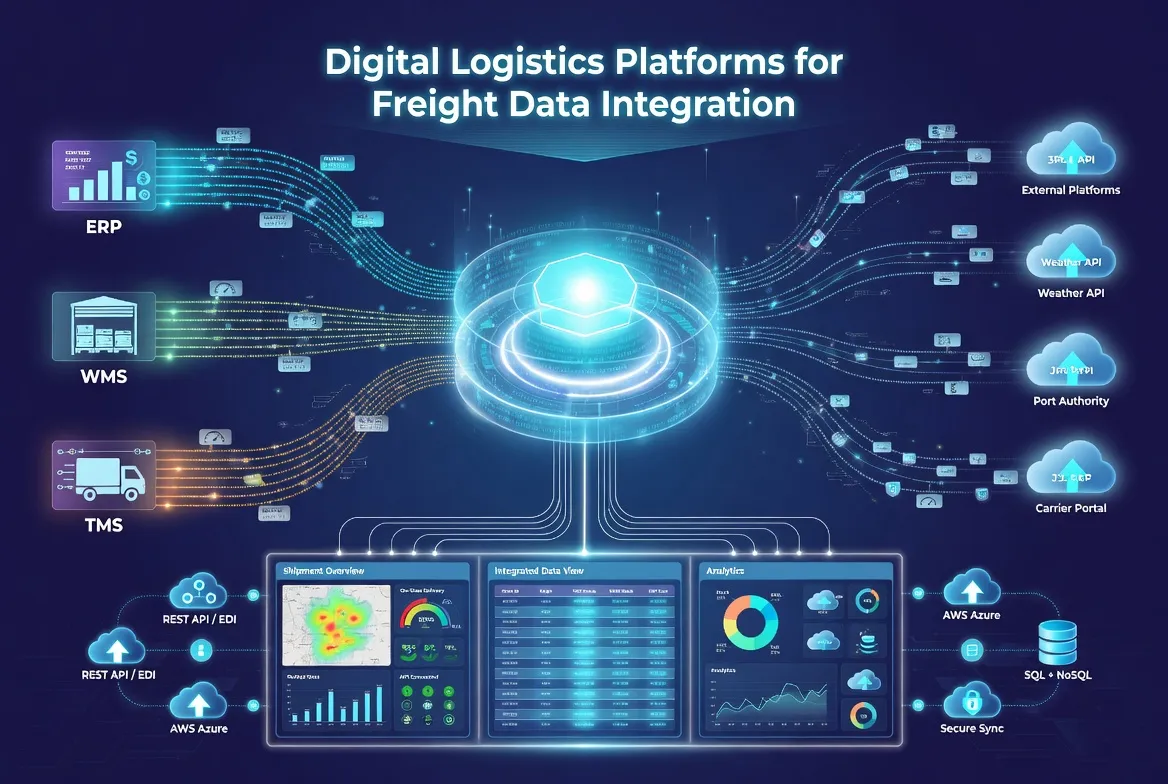
Digital systems integrate with external platforms such as ERP, WMS, carrier systems, and eCommerce platforms.
6. Workflow automation
Tasks, approvals, and notifications are automated to reduce manual coordination.
This approach ensures that all providers operate within a connected and synchronized environment.
Key Features / Key Capabilities
Digital logistics systems offer several capabilities that enable global provider connectivity:
1. Multi-party collaboration
Connects upstream and downstream partners
Enables seamless coordination across organizations
2. End-to-end visibility
Provides real-time tracking across all transport legs
Offers a unified shipment timeline
3. Workflow automation
Automates operational processes and task assignments
Reduces manual intervention
4. AI-driven data recognition
Extracts information from documents automatically
Improves data accuracy and efficiency
5. Document management
Centralizes storage and sharing of shipping documents
Ensures accessibility and version control
6. Financial automation
Supports automated billing and invoicing
Simplifies reconciliation across multiple providers
These features enable logistics companies to operate as part of a connected global network.
Benefits for Logistics Companies
Connecting global logistics providers through digital systems delivers significant benefits:
Improved operational efficiency
Standardized workflows reduce manual coordination and streamline processes.
Enhanced visibility and transparency
Real-time tracking provides full insight into shipment progress.
Better collaboration across partners
All providers work within the same system, reducing communication gaps.
Reduced errors and risks
Automation minimizes manual data entry and inconsistencies.
Scalability
Companies can expand their global network without increasing operational complexity.
Improved customer experience
Accurate and timely updates enhance service quality and reliability.
Best Practices / Use Cases
To effectively connect global logistics providers, companies should adopt the following practices:
1. Standardize data formats and workflows
Ensure all providers follow consistent processes.
2. Enable real-time updates
Encourage partners to update shipment data promptly.
3. Integrate systems across providers
Connect digital platforms with external systems for seamless data flow.
4. Automate repetitive processes
Use workflow automation to reduce manual workload.
5. Establish clear collaboration structures
Define roles, responsibilities, and permissions for each provider.
Use case example:
A cross-border logistics company manages shipments involving:
Asian origin logistics providers
International air carriers
European destination agents and warehouses
Using a digital logistics system:
Shipment data is shared across all providers
Milestones are updated in real time
Documents are centrally managed
Billing is automated across multiple parties
This ensures efficient coordination and reduces operational complexity.
Conclusion
Digital logistics systems are essential for connecting global logistics providers in today’s complex supply chain environment. By enabling centralized data management, real-time visibility, and automated workflows, these systems transform fragmented operations into integrated, efficient networks.
As logistics ecosystems continue to grow, digital connectivity will be a key factor in achieving operational excellence and maintaining competitiveness.
Frequently Asked Questions
What is a digital logistics system?
It is a cloud-based platform that connects logistics providers, enabling them to manage shipments, share data, and coordinate operations in real time.
How do digital logistics systems connect global providers?
They use centralized data, real-time synchronization, workflow automation, and system integrations to enable seamless collaboration.
Why is connectivity important in global logistics?
It improves visibility, reduces inefficiencies, and ensures smooth coordination across multiple providers.
What are the benefits of digital logistics systems?
They enhance efficiency, improve transparency, reduce errors, and support scalable global operations.
About WallTech
WallTech provides digital logistics solutions that connect global logistics providers through integrated platforms. Its systems enable end-to-end collaboration, real-time shipment visibility, and workflow automation, helping logistics companies streamline operations across complex international networks. By bringing multiple stakeholders into a unified system, WallTech supports efficient coordination, reduces manual processes, and enables scalable growth in global logistics environments.
If you're exploring ways to improve your logistics operations, feel free to connect with us to learn more about our solutions and system capabilities.

.webp "What Is a Container Management System in Freight Forwarding?")


