
.webp "How Logistics Platforms Enable Centralized Customer and Partner Management")
Mar 09,2026
How Logistics Platforms Enable Centralized Customer and Partner Management
Digital freight documentation platforms are transforming how logistics companies manage shipping paperwork across international supply chains. In freight forwarding operations, documentation plays a critical role in coordinating shipments, ensuring regulatory compliance, and facilitating communication between partners such as carriers, customs brokers, agents, and customers.
Traditionally, logistics documents were handled through emails, spreadsheets, and manual file storage. This fragmented approach often leads to version inconsistencies, lost files, and operational delays. Freight documentation software centralizes these documents within a structured system environment, enabling logistics companies to manage shipping documents digitally, maintain accurate records, and streamline document exchange across the supply chain.
What Is a Digital Freight Documentation Platform
A digital freight documentation platform is a specialized logistics software system designed to manage shipping documents electronically throughout the lifecycle of a shipment. It centralizes the creation, storage, distribution, and retrieval of documents used in freight forwarding operations.
Typical logistics documents include bills of lading, commercial invoices, packing lists, customs declarations, shipping instructions, delivery orders, and cargo manifests. These documents are generated and exchanged between multiple stakeholders during shipment processing. A digital documentation system ensures that all relevant parties access the correct documents in a standardized format.
Within a freight forwarding system, documentation management is closely linked with shipment records. When a shipment is created in the system, associated documents can be uploaded, generated through templates, or automatically populated from shipment data. This linkage ensures that document information remains consistent with operational data.
Operational Importance of Freight Documentation Software
Freight documentation is a critical component of international logistics operations. Accurate documentation supports customs clearance, financial settlement, shipment tracking, and regulatory compliance. Errors in documents can lead to shipment delays, customs holds, or financial disputes between logistics partners.
Digital documentation platforms reduce these risks by standardizing document generation and improving data accuracy. Instead of manually entering the same information multiple times, shipment data can automatically populate document templates. This reduces human error and improves operational efficiency.
Centralized document management also improves coordination among different departments within a logistics company. Operations teams, customer service teams, and finance departments can access the same shipment documents through the system, ensuring consistent information across the organization.
Core Capabilities of Freight Documentation Platforms
Freight documentation software typically includes several key capabilities that support digital logistics operations.
Document template management allows companies to configure standardized templates for commonly used documents. Templates can automatically insert shipment information such as shipper details, cargo descriptions, container numbers, and destination information.
Centralized document storage ensures that all documents related to a shipment are stored within the same system record. Users can upload files, attach email documents, or generate documents directly within the platform. This creates a complete digital record for each shipment.
Document version control helps maintain accuracy during document revisions. When shipment details change, updated versions of documents can be generated while preserving previous versions for reference. This reduces confusion when multiple parties are involved in document preparation.
Freight documentation platforms may also support exporting documents in various formats and distributing them to partners through integrated communication tools.
Workflow of Digital Logistics Document Management
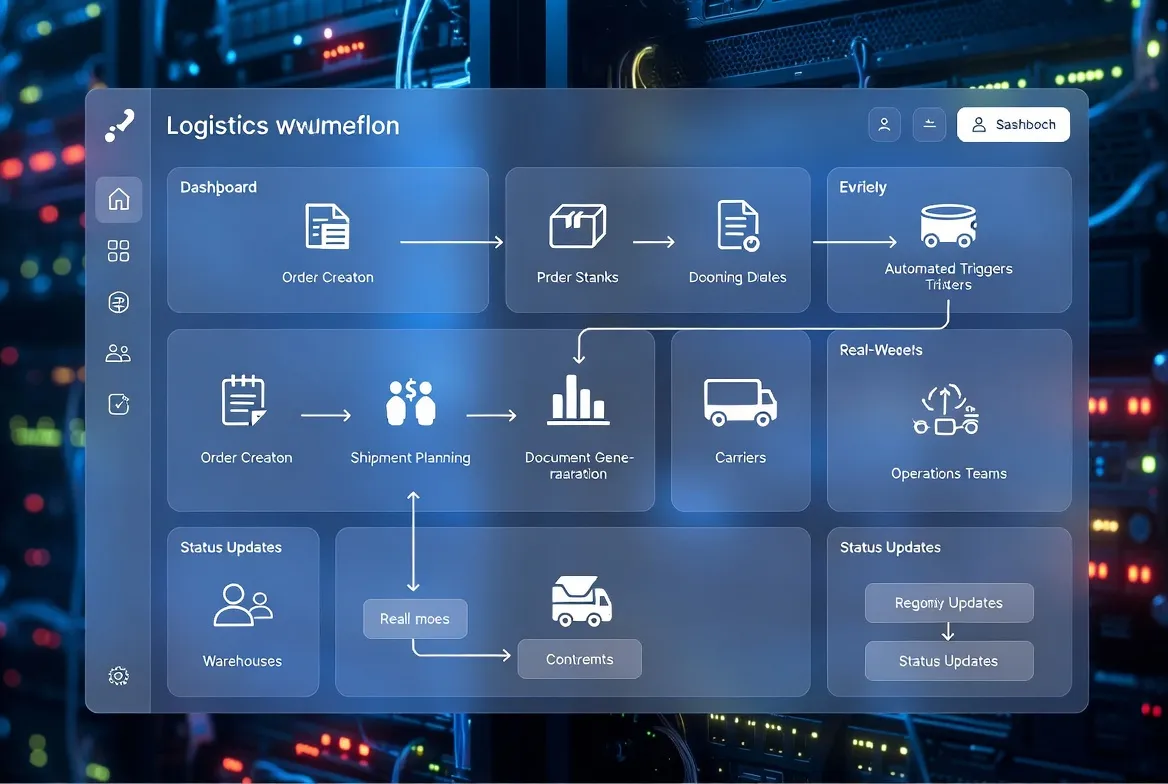
The document management workflow typically begins when a new shipment record is created in the freight forwarding system. Shipment data such as cargo details, route information, and customer data becomes the foundation for generating operational documents.
Once shipment information is confirmed, the system can generate required documents through predefined templates. These documents may include booking confirmations, shipping instructions, and bills of lading. Additional supporting documents can be uploaded directly into the system and linked to the shipment record.
During the shipment lifecycle, documents may be shared with external stakeholders such as overseas agents, customs brokers, and customers. A centralized documentation platform allows authorized users to access the same files, reducing reliance on email attachments and manual document exchange.
Digital document storage also enables easy retrieval of historical shipment records. Logistics companies can quickly locate documents associated with past shipments for auditing, compliance verification, or customer inquiries.
Business Value of Digital Document Management
Implementing freight documentation software provides significant operational and strategic benefits for logistics companies.
One of the most immediate benefits is improved efficiency. By automating document generation and centralizing file storage, companies reduce the time spent managing paperwork and searching for documents. This allows operations teams to focus on shipment coordination rather than administrative tasks.
Digital documentation also improves data accuracy and consistency. Because documents are generated directly from system data, discrepancies between operational records and documentation are minimized. This reduces disputes with partners and improves the reliability of logistics processes.
Additionally, centralized documentation improves transparency across the organization. Teams working in different departments or locations can access the same shipment records and associated documents, supporting better collaboration and faster decision-making.
Integration with Broader Digital Logistics Platforms
Freight documentation platforms often function as part of a broader digital logistics ecosystem. Modern freight forwarding systems integrate documentation management with shipment operations, financial settlement, and partner collaboration.
For example, shipment management modules generate operational data that feeds directly into document templates. Financial modules may use document data to support billing and invoice generation. Tracking modules may reference documentation for shipment identification and compliance verification.
Digital documentation systems can also integrate with external platforms such as customs systems, logistics partner platforms, and supply chain visibility tools. This integration enables automated data exchange and reduces the need for manual document processing across different systems.
Best Practices for Implementing Freight Documentation Software
To successfully implement digital freight documentation platforms, logistics companies should follow several operational best practices.
First, document templates should be standardized across the organization. Standardization ensures that documents generated by different branches or teams follow the same structure and data format. This improves consistency and simplifies collaboration with partners.
Second, companies should establish clear document management policies. These policies may include rules for document naming, storage, version control, and user access permissions. A well-defined structure ensures that documents remain organized and easy to locate.
Finally, documentation platforms should be integrated with the company’s core freight forwarding system rather than operated as a standalone tool. Integration ensures that document data remains synchronized with shipment operations, financial processes, and partner collaboration workflows.
As logistics operations continue to become more data-driven and globally connected, digital freight documentation platforms play an increasingly important role in improving operational transparency, reducing administrative complexity, and supporting efficient freight forwarding processes.
.webp "How Freight Forwarders Manage Container Operations Efficiently")