


Feb 24,2022
What Impact does the Selection and Judgment of Shipping Software Have on the Enterprise?
Introduction
In modern logistics, data is generated at every stage—from order creation and warehouse handling to transportation and final delivery. However, in many organizations, this data is scattered across multiple systems, creating silos that limit visibility and efficiency.
Logistics data integration addresses this challenge by connecting systems, synchronizing information, and enabling seamless data flow across the entire supply chain. As a result, companies can improve operational performance, reduce manual work, and make more informed decisions.
What Is Logistics Data Integration
Logistics data integration refers to the process of connecting different systems—such as ERP, WMS, TMS, and freight management platforms—so that data can be shared and synchronized automatically.
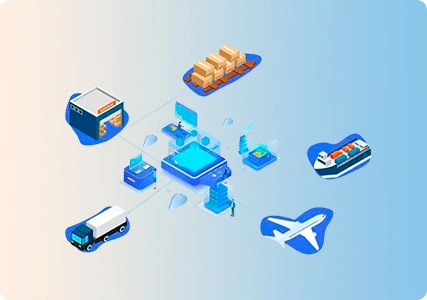
Instead of manually transferring information between systems, integrated platforms allow data to flow in real time across:
Order management systems
Warehouse management systems
Transportation and carrier systems
Financial and billing systems
Customer and partner platforms
This creates a unified data environment where all stakeholders work with consistent and up-to-date information.
Why Logistics Data Integration Is Important
1. Eliminating Data Silos
Disconnected systems lead to fragmented information. Integration ensures that all systems operate on the same dataset.
2. Reducing Manual Data Entry
Without integration, teams often re-enter the same data multiple times. Integration automates data transfer, reducing workload and errors.
3. Improving Data Accuracy
When data is synchronized across systems, inconsistencies are minimized, leading to more reliable operations.
4. Enhancing Operational Visibility
Integrated data allows companies to track shipments, inventory, and financials in real time.
5. Supporting Scalable Growth
As logistics operations expand, integrated systems can handle increased complexity without additional manual processes.
How Logistics Data Integration Works
Logistics data integration is achieved through a combination of technologies and system architectures.
1. API-Based Connectivity
Modern platforms use APIs to connect different systems, enabling real-time data exchange between internal and external applications.
2. Data Mapping and Standardization
Data from different systems is standardized into a consistent format, ensuring compatibility and accurate interpretation.
3. Event-Driven Synchronization
When a change occurs in one system—such as a shipment status update—it automatically triggers updates in connected systems.
4. Centralized Data Platforms
Some logistics solutions act as a central hub, aggregating data from multiple sources and distributing it to relevant systems.
5. Integration with External Ecosystems
Logistics platforms connect with carriers, customs systems, and third-party service providers to enable end-to-end data exchange.
For example, advanced logistics platforms can integrate ERP systems, warehouse systems, and carrier networks into a single ecosystem, enabling seamless data sharing and operational coordination across global supply chains.
Key Features of Logistics Data Integration Platforms
1. Multi-System Connectivity
Ability to connect with ERP, WMS, TMS, financial systems, and external platforms.
2. Real-Time Data Synchronization
Ensures that all systems are updated instantly when changes occur.
3. Scalable Integration Architecture
Supports increasing data volume and system complexity as the business grows.
4. Data Transformation Capabilities
Converts data formats to ensure compatibility between different systems.
5. Security and Access Control
Protects sensitive data while enabling controlled access for different users and partners.
6. Monitoring and Error Handling
Tracks data flows and identifies integration issues for quick resolution.
Benefits of Logistics Data Integration
1. Increased Efficiency
Automation eliminates repetitive manual tasks, allowing teams to focus on higher-value activities.
2. Improved Decision-Making
Real-time, accurate data enables better operational and strategic decisions.
3. Enhanced Collaboration
Integrated systems allow different departments and partners to work with shared information.
4. Faster Response to Disruptions
With real-time visibility, companies can quickly identify and respond to delays or exceptions.
5. Reduced Operational Costs
Automation and improved accuracy lower administrative and operational expenses.
6. Better Customer Experience
Accurate tracking and timely updates improve service reliability and customer satisfaction.
Conclusion
Logistics data integration is a fundamental capability for modern supply chain operations. By connecting systems and enabling real-time data flow, companies can eliminate inefficiencies, improve accuracy, and gain full visibility into their operations.
As logistics networks become more complex and data-driven, organizations that invest in integrated data platforms will be better positioned to optimize performance, scale their operations, and maintain a competitive advantage in the global market.

.webp "What Is a Freight Rate Management System?")