Apr 20,2026
How Multi-Role Collaboration Works in Logistics Platforms
Introduction
Logistics collaboration platforms for logistics ecosystem integration are digital systems that connect and unify multiple systems, partners, and service providers into a single operational environment. These platforms enable seamless data exchange, coordinated workflows, and end-to-end visibility across the entire logistics ecosystem.
In modern logistics, where operations rely on a wide range of systems—such as ERP, WMS, TMS—and external partners, integration is critical. Collaboration platforms serve as the backbone that links all components together, eliminating data silos and enabling efficient, scalable operations.
What is a Logistics Collaboration Platform for Logistics Ecosystem Integration
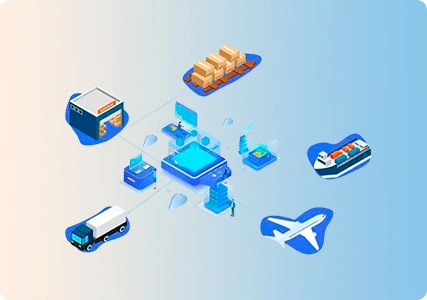
A logistics collaboration platform for ecosystem integration is a centralized digital infrastructure that connects:
Internal systems (ERP, WMS, financial systems)
External logistics partners (carriers, agents, warehouses)
Third-party service providers (customs, tracking platforms)
eCommerce platforms and customer systems
The goal is to create a fully connected logistics ecosystem where data flows seamlessly between all participants and systems.
Unlike traditional point-to-point integrations, these platforms provide a hub-based architecture, allowing companies to manage all integrations and collaborations from a single interface.
Why Logistics Ecosystem Integration Matters
Logistics operations today are highly fragmented. Companies often rely on multiple systems and partners that do not communicate effectively. Common challenges include:
Data silos across systems and departments
Manual data transfer between platforms
Inconsistent or duplicated data
Lack of real-time visibility across the supply chain
High integration costs and complexity
These challenges lead to:
Operational inefficiencies
Increased error rates
Delays in decision-making
Limited scalability
A logistics collaboration platform addresses these issues by enabling standardized integration and centralized data management.
How Logistics Collaboration Platforms Work
1. Integration Hub Architecture
The platform acts as a central hub that connects various systems and partners through:
APIs
Data connectors
EDI interfaces
This reduces the need for multiple point-to-point integrations.
2. Unified Data Layer
All data from different sources is consolidated into a single data model, including:
Shipment data
Order information
Tracking events
Financial data
This ensures consistency and accuracy across the ecosystem.
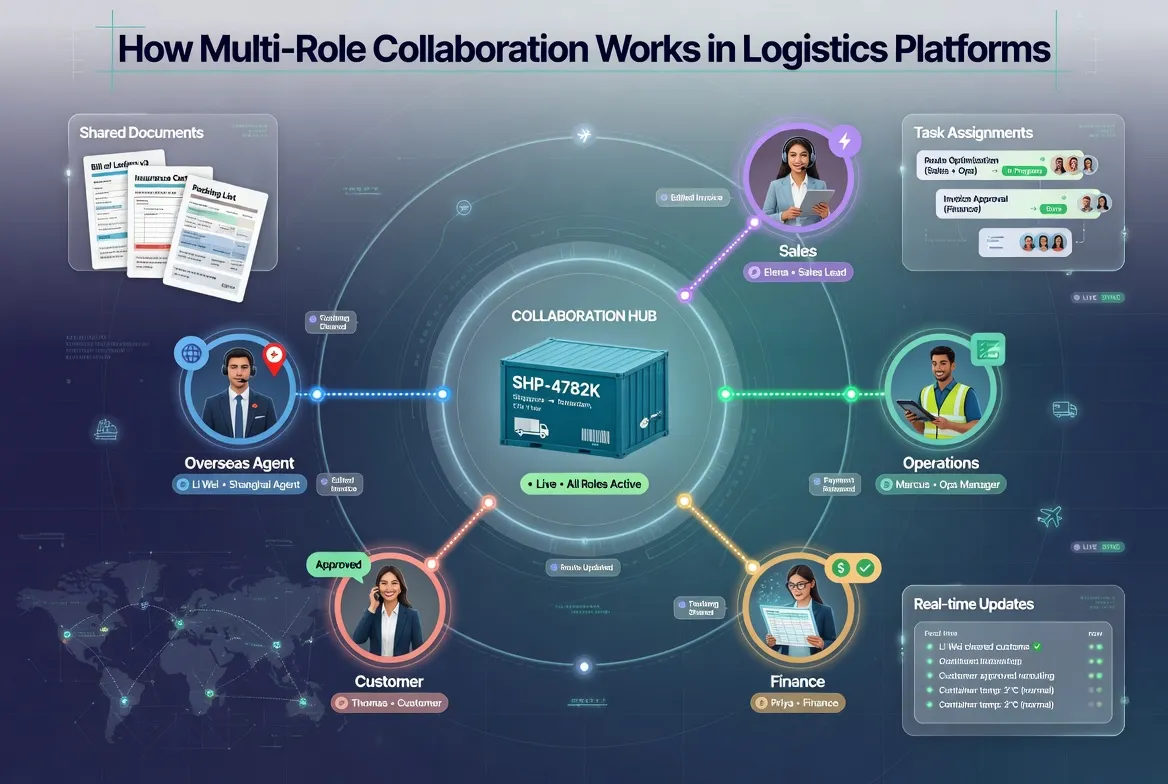
3. Multi-Role Collaboration
Stakeholders across the ecosystem collaborate within the platform:
Internal teams manage operations
External partners update statuses and perform tasks
Customers access shipment visibility
This enables seamless upstream and downstream coordination.
4. Real-Time Data Synchronization
The platform continuously synchronizes data between systems and partners, ensuring:
Real-time updates
Reduced manual input
Accurate operational insights
5. Workflow Automation Across Systems
Automation spans across integrated systems, enabling:
Automated task assignment
Event-driven workflows
AI-based data recognition and processing
6. Financial Data Integration
Operational and financial data are linked, allowing:
Automated billing generation
Cost tracking across systems
Reconciliation between multiple entities
Key Features / Key Capabilities
Ecosystem Integration
API and EDI connectivity
Integration with ERP, WMS, TMS, and external platforms
Centralized integration management
Unified Data Management
Single source of truth for all logistics data
Standardized data formats
Real-time data synchronization
End-to-End Visibility
Unified shipment timeline across systems
Multi-source tracking integration
Real-time monitoring of operations
Workflow Automation
Cross-system workflow automation
AI-driven data recognition
Automated notifications and alerts
Multi-Party Collaboration
Role-based access for all stakeholders
Upstream and downstream connectivity
Centralized communication
Benefits for Logistics Companies
Eliminated Data Silos
Seamless data flow across systems
Reduced duplication and inconsistencies
Improved data accuracy
Improved Operational Efficiency
Reduced manual data entry
Faster processing of shipments and tasks
Streamlined workflows across systems
Enhanced Visibility and Control
Real-time insight into operations
Better tracking across the entire ecosystem
Improved decision-making
Reduced Integration Complexity
Centralized integration management
Lower IT maintenance costs
Faster onboarding of new systems and partners
Scalability
Easy expansion of system capabilities
Support for growing partner networks
Adaptability to changing business needs
Best Practices / Use Cases
Use Case 1: Connecting ERP and Logistics Systems
Companies integrate ERP systems with logistics platforms to synchronize order, shipment, and financial data.
Use Case 2: Cross-Border Logistics Integration
Integration with customs systems, carriers, and tracking platforms ensures seamless international operations.
Use Case 3: eCommerce Logistics Ecosystems
Logistics providers connect with eCommerce platforms, warehouses, and last-mile carriers to enable end-to-end fulfillment.
Best Practices
Use standardized APIs for integration
Define a unified data model
Automate data synchronization processes
Monitor integration performance regularly
Ensure data security and access control
Conclusion
Logistics collaboration platforms for logistics ecosystem integration are essential for building connected and efficient supply chains. By unifying systems, partners, and data into a single platform, these solutions eliminate fragmentation and enable seamless operations.
As logistics becomes increasingly digital and interconnected, ecosystem integration will be a key factor in achieving scalability, efficiency, and competitive advantage.
Frequently Asked Questions
What is logistics ecosystem integration?
It is the process of connecting multiple logistics systems, partners, and platforms into a unified environment where data and workflows are synchronized.
How do collaboration platforms enable integration?
They act as a central hub, connecting systems and partners through APIs and data connectors, while providing a unified data model and workflows.
Why is ecosystem integration important in logistics?
It eliminates data silos, improves efficiency, enhances visibility, and enables scalable operations.
What are the benefits of integrated logistics ecosystems?
Benefits include improved data accuracy, faster operations, better visibility, reduced costs, and easier scalability.
Who needs logistics ecosystem integration platforms?
Freight forwarders, 3PL providers, cross-border eCommerce logistics companies, and enterprises with complex logistics networks.
About WallTech
WallTech provides digital logistics solutions that support ecosystem integration through advanced connectivity, real-time visibility, and workflow automation. Its platforms enable logistics companies to connect internal systems and external partners within a unified environment, ensuring seamless data flow and coordinated operations. With capabilities such as end-to-end shipment tracking, AI-driven data processing, and automated financial workflows including billing and reconciliation, WallTech helps organizations eliminate data silos, improve efficiency, and scale their logistics ecosystems effectively.
If you're exploring ways to improve your logistics operations, feel free to connect with us to learn more about our solutions and system capabilities.