Apr 07,2026
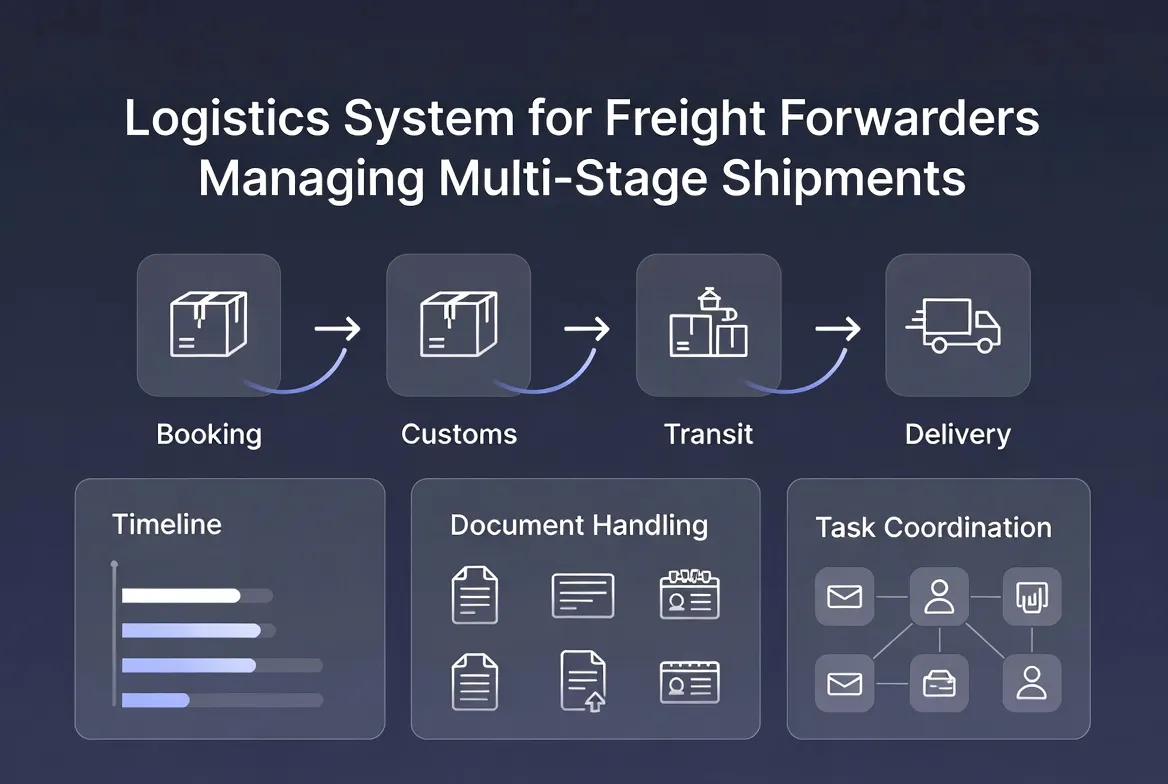
Logistics System for Freight Forwarders Managing Multi-Stage Shipments
Introduction
Freight systems coordinate logistics agent networks by providing a centralized digital platform that connects origin and destination agents, enabling real-time data sharing, standardized workflows, and synchronized shipment management. These systems ensure that all agents involved in a shipment can collaborate efficiently through shared visibility, automated processes, and structured communication.
In international freight forwarding, agent networks are essential for handling operations across different countries. However, without digital coordination, these networks often rely on fragmented communication methods, leading to inefficiencies and operational risks. Freight systems solve this by creating a unified environment where all agents operate on the same data and processes.
What is a Logistics Agent Network?
A logistics agent network is a group of independent logistics partners located in different regions who collaborate to handle shipments across global trade lanes. These agents typically include:
Origin agents managing pickup and export operations
Destination agents handling import clearance and delivery
Regional partners coordinating local logistics activities
Specialized agents for customs, documentation, or compliance
Agent networks are widely used by freight forwarders to extend their global reach without owning physical infrastructure in every location.
Why Agent Network Coordination Matters
Managing a distributed agent network presents several operational challenges:
1. Fragmented communication
Agents often communicate via email or messaging tools, leading to delays and misalignment.
2. Lack of standardized processes
Different agents may follow different workflows, causing inconsistencies.
3. Limited visibility
Freight forwarders struggle to track shipment progress across multiple agents.
4. Data inconsistency
Manual data entry across systems leads to errors and duplication.
5. Operational inefficiencies
Coordinating multiple agents manually increases workload and slows down execution.
Effective coordination is critical to ensure smooth handoffs between agents and maintain service quality across the entire shipment lifecycle.
How Freight Systems Coordinate Agent Networks
Freight systems coordinate logistics agent networks through a structured, platform-based approach:
1. Centralized shipment management
All shipment data is created and maintained in a single system, accessible to all relevant agents.
2. Multi-role access and permissions
Each agent is assigned specific roles and permissions, ensuring they can view and update relevant information.
3. Real-time milestone tracking
Agents update shipment milestones (e.g., pickup, departure, customs clearance, delivery), which are visible to all stakeholders.
4. Standardized workflows
The system enforces consistent processes across all agents, reducing variability and errors.
5. Automated notifications and alerts
Agents receive automatic updates on tasks, delays, or exceptions, improving responsiveness.
6. Integrated financial coordination
Costs, revenues, and settlements between agents are managed within the same system.
This approach ensures seamless coordination across geographically distributed partners.
Key Features / Key Capabilities
Freight systems designed for agent network coordination typically include:
1. Multi-agent collaboration framework
Enables coordination between origin and destination agents
Supports upstream and downstream data sharing
2. End-to-end visibility
Provides a unified timeline of shipment milestones
Tracks shipments across all regions and handoffs
3. Workflow automation
Automates task assignments and process flows
Reduces manual coordination efforts
4. AI-driven data recognition
Extracts data from documents automatically
Improves data accuracy and efficiency
5. Document management
Centralized storage and sharing of shipping documents
Controlled access for different agents
6. Financial automation
Automated billing and invoicing between agents
Simplified reconciliation processes
These capabilities enable freight forwarders to manage agent networks more effectively and consistently.
Benefits for Logistics Companies
Coordinating agent networks through freight systems delivers several benefits:
Improved coordination across regions
Agents operate within a unified system, reducing communication gaps.
Enhanced visibility and control
Freight forwarders gain real-time insight into all shipment stages.
Reduced operational errors
Standardized workflows and automation minimize inconsistencies.
Faster response to exceptions
Real-time alerts enable quicker issue resolution.
Scalability of agent networks
Companies can onboard new agents without increasing complexity.
Better service quality
Consistent processes across agents improve overall customer experience.
Best Practices / Use Cases
To effectively coordinate logistics agent networks, companies should adopt the following practices:
1. Standardize operational workflows
Ensure all agents follow the same processes within the system.
2. Define clear roles and responsibilities
Assign tasks and permissions to avoid confusion.
3. Enable real-time updates
Encourage agents to update milestones promptly.
4. Automate repetitive processes
Reduce manual workload through workflow automation.
5. Integrate systems across partners
Connect freight systems with agents’ local systems where possible.
Use case example:
A freight forwarder manages shipments from Asia to North America using multiple agents:
Origin agent handles export operations
Ocean carrier manages international transport
Destination agent handles customs clearance and delivery
With a freight system:
All agents access the same shipment data
Milestones are updated in real time
Documents are shared centrally
Financial transactions are automated
This ensures smooth handoffs and reduces delays.
Conclusion
Freight systems play a vital role in coordinating logistics agent networks by providing a centralized platform for collaboration, visibility, and automation. By replacing fragmented communication with structured workflows, these systems enable freight forwarders to manage global agent networks more efficiently.
As logistics operations continue to expand globally, effective agent coordination will be essential for maintaining service quality and operational efficiency.
Frequently Asked Questions
What is a logistics agent network?
It is a group of regional logistics partners who collaborate to handle shipments across different countries and regions.
How do freight systems coordinate agent networks?
They provide centralized platforms for data sharing, real-time tracking, and workflow automation across all agents.
Why is agent coordination important in logistics?
It ensures smooth handoffs, reduces errors, and improves visibility across the shipment lifecycle.
What are the benefits of using freight systems for agent coordination?
They improve efficiency, enhance transparency, reduce manual work, and support scalable operations.
About WallTech
WallTech provides digital logistics solutions that help freight forwarders coordinate global agent networks through unified platforms. Its systems enable end-to-end collaboration, real-time shipment visibility, and automated workflows, ensuring that all agents operate within a consistent and efficient framework. By integrating upstream and downstream partners into a single system, WallTech supports logistics companies in improving operational control, reducing complexity, and scaling their global networks.
If you're exploring ways to improve your logistics operations, feel free to connect with us to learn more about our solutions and system capabilities.